How is AI Transforming Health Equity in India? MoS Anupriya Patel at AI Impact Summit
Synopsis
Join Union Minister Anupriya Patel as she unveils how Artificial Intelligence is reshaping India's healthcare landscape. Discover her insights from the AI Impact Summit on leveraging technology to bridge health disparities and ensure equitable access to healthcare for all.
Key Takeaways
AI can bridge health disparities in India.
A strategic approach to technology is needed for effective healthcare.
The Media Disease Surveillance System enhances disease monitoring.
Inclusivity and health equity are key goals for the future.
AI integration is crucial for a developed nation by 2047.
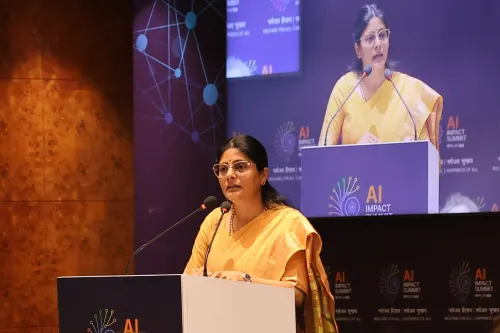
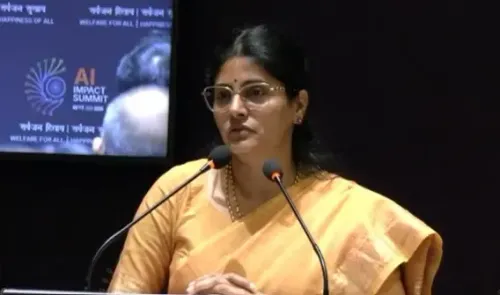
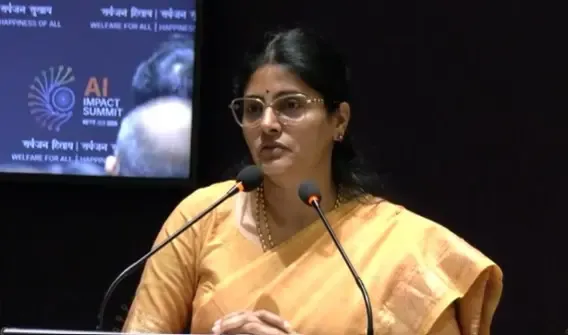
New Delhi, Feb 17 (NationPress) The Union Minister of State for Health and Family Welfare, Anupriya Patel, emphasized the groundbreaking influence of Artificial Intelligence (AI) within India’s healthcare landscape. She stated that technology should act as a force multiplier to enhance inclusivity and promote health equity.
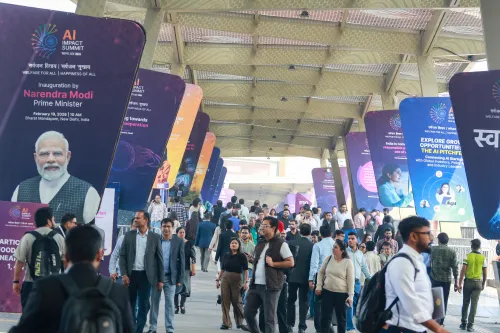
During her address at the AI Impact Summit in the national capital, Patel articulated that the true potential of AI lies in its capacity to mitigate health disparities and bolster India’s governance framework.
“The genuine assessment of AI's power is reflected in its ability to tackle health inequities. This aligns with our governance model, wherein AI becomes both an enabler and a force multiplier, aiding us in achieving our goals for inclusivity and health equity,” she remarked.
Patel highlighted the government’s long-term aspirations, noting that India aims to evolve into a developed nation by 2047, with health being a key focus.
“As we progress towards a vision of a developed nation by 2047, health is a fundamentally important pillar. India faces unique challenges, including our vast and diverse population, the rural-urban divide, and the dual burden of communicable and non-communicable diseases. Addressing these challenges necessitates the strategic implementation of technologies,” Patel stated.
She emphasized that India's strategy transcends mere technology adoption, representing a calculated response to systemic healthcare issues.
“We have achieved comprehensive technological integration within our national healthcare framework, viewing it not merely as technology adoption but as a strategic move to meet our unique challenges. Today, AI is embedded across the health sector, from disease surveillance to prevention, diagnosis, and treatment. It is omnipresent, demonstrating AI's transformative capabilities,” she observed.
Patel cited examples, including AI-driven initiatives like the Media Disease Surveillance System.
“One notable application of AI is the Media Disease Surveillance System, which monitors digital news in 13 languages, generates disease alerts, and facilitates real-time data management. This illustrates the power of AI in enhancing our disease control efforts and strengthening our surveillance capabilities,” she explained.
The Minister reiterated the importance of leveraging AI responsibly to reinforce India’s public health framework and ensure equitable healthcare delivery nationwide.
Point of View
It is evident that the integration of AI in India's healthcare system is a crucial step towards addressing longstanding health disparities. The Minister's emphasis on strategic technology adoption signals a proactive approach to public health, aligning with global standards of health equity. This initiative has the potential to not only transform healthcare delivery but also ensure that no one is left behind as India advances.
NationPress
20 Sept 2026
Frequently Asked Questions
What is the role of AI in healthcare?
AI serves as a crucial tool for enhancing healthcare delivery, enabling better disease surveillance, diagnostics, and treatment, and addressing health inequities.
How does India plan to use AI in its healthcare system?
India aims to integrate AI strategically across its healthcare framework to respond to unique challenges and promote health equity.
What is the Media Disease Surveillance System?
It is an AI-driven tool that monitors digital news in multiple languages, generating disease alerts and managing real-time data for better disease control.
Why is health equity important?
Health equity ensures that all individuals have fair access to healthcare, regardless of their background, which is essential for a developed nation.
What are the long-term healthcare goals for India?
India aims to become a developed nation by 2047, with health equity as a central pillar of its vision.