Akhilesh Yadav invokes 'nari ka shraap' in sharp attack on UP govt

Synopsis
Samajwadi Party president Akhilesh Yadav invoked the concept of a wronged woman's curse on 16 October 2026, attacking the Uttar Pradesh government over alleged fake encounters, public humiliation of a grieving mother, professor and journalist, and oppression of PDA communities.
Key Takeaways
Samajwadi Party president Akhilesh Yadav posted a sharp attack on the Uttar Pradesh government on 16 October 2026 .
He invoked the cultural concept of nari ka shraap (a woman's curse) as a moral warning to those in power.
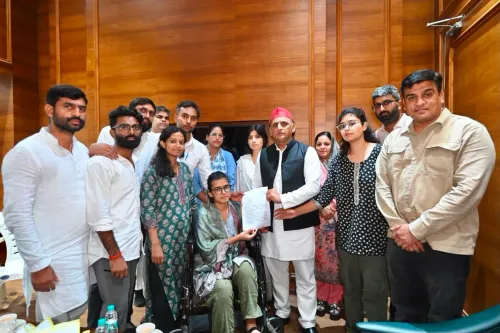
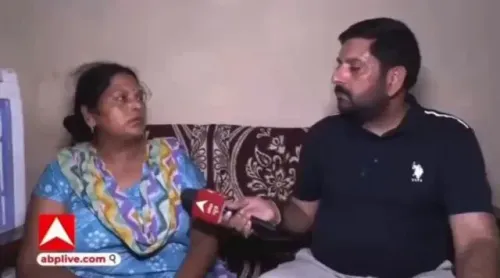
The post specifically accused the government of ordering fake encounters , destroying homes, and publicly humiliating a grieving mother, a professor, and a journalist.
Akhilesh tied the attack to the oppression of PDA communities — Backward Classes, Dalits, and Minorities — which form the Samajwadi Party's core electoral coalition.
The closing chant 'Nahin chahiye!
Nahin chahiye!' ('We don't want this!') signals language crafted for campaign mobilisation ahead of the next UP assembly elections.
No ruler, however powerful, escapes the curse of a wronged woman — that is the sharp moral frame Samajwadi Party president Akhilesh Yadav deployed on Friday, 16 October 2026, in a pointed broadside aimed squarely at the Uttar Pradesh government, accusing it of fake encounters, public humiliation of grieving mothers, and systematic oppression of PDA (Pichhda, Dalit, Alpasankhyak) communities.
Posting in Hindi, Akhilesh wrote: 'हमारे देश में नारी के श्राप से कोई भी नहीं बच पाया है, वो अपने को चाहे कितना भी बड़ा और महत्वपूर्ण समझे' — 'In our country, no one has ever escaped the curse of a woman, no matter how powerful they consider themselves.' The statement opens not with a policy brief but with a cultural warning rooted deep in Indian moral tradition: hubris meets its reckoning.
The litany of accusations
Akhilesh did not stop at the rhetorical invocation. He laid out a specific list of grievances: homes destroyed, fake encounters engineered, a grieving mother publicly humiliated alongside a professor and a journalist, and the deliberate oppression of PDA society to preserve one man's dominance. His closing refrain was a two-beat verdict — 'नहीं चाहिए, नहीं चाहिए!' ('We don't want this! We don't want this!') — structured like a chant, built for a crowd.
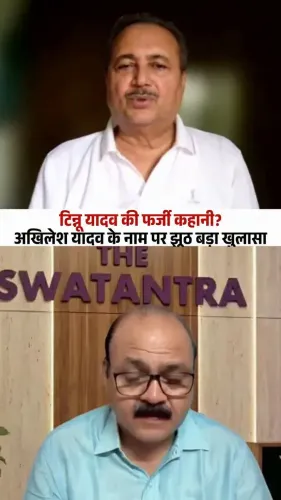
The references to a 'sad mother, professor, and journalist' being 'publicly humiliated' point to incidents that have generated significant opposition anger in Uttar Pradesh, though the research available does not confirm the identities or dates of specific episodes being referenced here.
PDA: the coalition Akhilesh is defending
The PDA framing is central to the Samajwadi Party's current political architecture. PDA — Pichhda (backward classes), Dalit, Alpasankhyak (minorities) — has been the party's articulated social coalition since before the 2022 Uttar Pradesh assembly elections, and Akhilesh has sharpened that messaging with each subsequent electoral cycle. By placing PDA communities at the heart of his attack, he is simultaneously issuing a political warning and reinforcing a loyalty pledge to a vast and diverse voter base.
The fake-encounter charge is not new in UP opposition politics. References to alleged staged police killings have surfaced repeatedly across multiple election cycles in the state, with opposition parties arguing the practice disproportionately targets marginalised communities. Akhilesh's post threads that long-running grievance into a wider moral argument about the character of governance itself.
The curse as political weapon
Using the concept of nari ka shraap — a woman's curse — as a political frame is a deliberate rhetorical choice. It draws on a deep cultural script in which a wronged mother's grief carries almost supernatural consequence for the powerful. By opening there, Akhilesh is not making a policy argument. He is making a civilisational one: that the current dispensation has crossed a moral line no government can survive. It is the kind of framing designed to travel — across WhatsApp forwards, through village squares, into drawing rooms where policy language never lands.
With the next Uttar Pradesh assembly elections on the horizon, expect this messaging to harden into a full campaign pitch. The question for the ruling side is whether any of the specific incidents Akhilesh is gesturing at will crystallise into the kind of defining image that shifts an electorate.
Point of View
Moving beyond routine policy criticism into cultural and emotional territory that tends to resonate deeply in rural and semi-urban Uttar Pradesh. The invocation of a wronged woman's suffering as a civilisational judgment — rather than a legal or administrative complaint — suggests the party is sharpening a campaign-ready narrative rather than seeking legislative dialogue. The PDA framing keeps the coalition intact while the encounter and humiliation charges inject urgency and grievance energy into what might otherwise be a slow pre-election news cycle. Whether the specific incidents Akhilesh is referencing acquire documented visibility will determine how far this particular narrative travels.
NationPress
16 Oct 2026
Frequently Asked Questions
What did Akhilesh Yadav say in his 16 October 2026 post?
Akhilesh Yadav said no powerful person escapes the curse of a wronged woman, and accused the UP government of fake encounters, home demolitions, public humiliation of a grieving mother, professor and journalist, and oppression of PDA communities, ending with the chant 'Nahin chahiye!' (We don't want this).
What is PDA in Akhilesh Yadav's politics?
PDA stands for Pichhda (Other Backward Classes), Dalit, and Alpasankhyak (minorities) — a social coalition that the Samajwadi Party has articulated as its core political base, especially since the 2022 Uttar Pradesh assembly elections.
What does 'nari ka shraap' mean and why did Akhilesh use it?
'Nari ka shraap' means a woman's curse and carries deep moral weight in Indian cultural tradition, implying that injustice against women brings inevitable downfall to the powerful. Akhilesh used it to frame his attack as a civilisational judgment rather than a routine political critique.
Is Akhilesh Yadav's fake encounter charge against UP government new?
No. References to alleged fake encounters by UP police have been a recurring element in opposition commentary across multiple Uttar Pradesh election cycles, with parties including the Samajwadi Party arguing such incidents disproportionately affect marginalised communities.
What are the next elections in Uttar Pradesh after this post?
The next Uttar Pradesh state assembly elections are the key electoral event being watched, and political observers see Akhilesh's sharpening language as early campaign positioning ahead of that contest.