Akhilesh Yadav Questions Air Force Role in NEET Re-exam Paper Transport
Synopsis
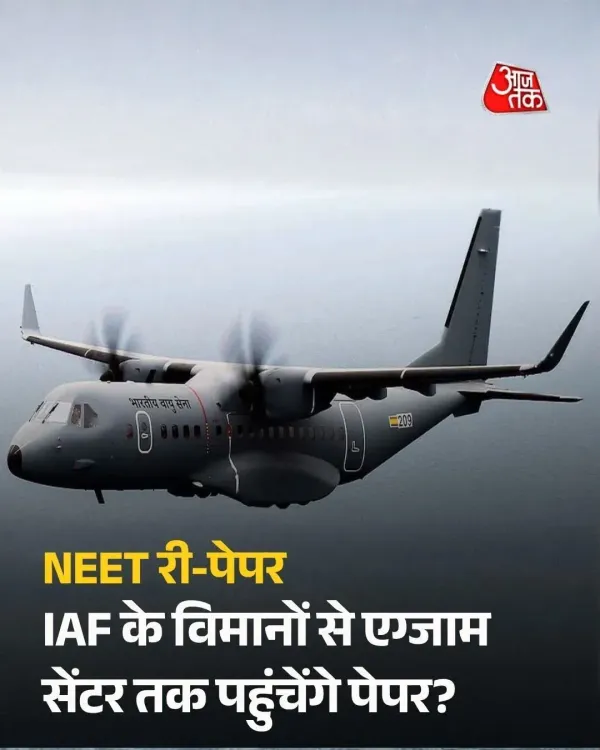
Samajwadi Party president Akhilesh Yadav on 29 May 2026 questioned the government's plan to use the Indian Air Force for NEET re-exam paper transport, saying it reveals failures across the Education Ministry, postal department, and Home Ministry, while raising fresh concerns about paper confidentiality and answer-sheet integrity.
Key Takeaways
Samajwadi Party president Akhilesh Yadav criticised the reported plan to use the Indian Air Force to transport NEET re-examination question papers.
Yadav argued the move is an indirect admission that the Ministry of Education , the postal department , and the Home Ministry 's police apparatus have all failed.
He raised a security paradox: publicly announcing where papers will be printed and how they will be transported could itself enable misuse by bad actors.
Yadav also questioned whether answer-sheet handling and evaluation integrity — beyond paper transport — have been adequately addressed.
The NTA , established in 2017 , has faced repeated paper-leak allegations across NEET, JEE, and CUET, prompting CBI probes and Supreme Court intervention since at least 2024 .
Parliamentary scrutiny during the monsoon session and pending Supreme Court hearings are expected to keep pressure on the government over NTA reforms.
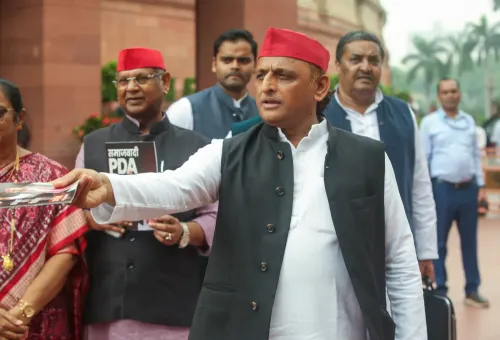
Samajwadi Party president Akhilesh Yadav on Friday, 29 May 2026, sharply questioned the central government's decision to use the Indian Air Force for transporting question papers for the NEET re-examination, arguing the move amounts to an implicit admission of failures across multiple ministries.
Context
Yadav's post responds to reports that the Union Ministry of Education plans to deploy the Indian Air Force to ferry NEET question papers for a re-examination — an extraordinary security measure that follows a prolonged controversy over alleged paper leaks in the national medical entrance test. Translating his remarks, Yadav wrote that 'shiksha mantri ji ghuma phirakar ye keh rahe hain' [the Education Minister is, in a roundabout way, saying] that his own ministry bears no responsibility, that all blame lies with the postal department, and that the police apparatus under the Home Ministry is 'neither effective nor credible any more.'
The National Eligibility cum Entrance Test (NEET) is the sole national entrance examination for MBBS and BDS admissions across India, conducted by the National Testing Agency (NTA), an autonomous body under the Ministry of Education.
Policy Backdrop
The NTA was established in 2017 to centralise major entrance examinations previously administered by the CBSE and other bodies. Since then, recurring allegations of paper leaks and evaluation irregularities in NEET, JEE, and CUET have fuelled opposition criticism of the centralised testing model. In 2024, widespread NEET paper-leak allegations triggered nationwide student protests, CBI investigations, and multiple petitions before the Supreme Court seeking cancellation or fresh examinations.
The Supreme Court has intervened in NEET-related disputes since at least 2019, issuing orders for stronger security protocols and accountability mechanisms. The decision to involve the Indian Air Force — a defence service not ordinarily part of civilian examination logistics — signals an escalation in the security architecture being contemplated for the re-examination.
Stakeholders and Impact
Yadav also amplified a concern he attributed to NEET aspirants themselves: that publicly disclosing where question papers will be printed and how they will be transported defeats the very confidentiality such operations require. He asked whether those capable of engineering a leak could not exploit this publicly available information. The remark points to a tension between transparency in governance and operational secrecy in high-stakes examinations.
Beyond paper transport, Yadav raised the unresolved question of answer-sheet handling and evaluation integrity — 'kopion ki herapheri aur mulyankan ka kya?' [what about the manipulation of answer sheets and assessment?] — suggesting that logistical fixes alone do not address the full scope of alleged malpractice. Medical college seats across India, state governments with their own counselling processes, and hundreds of thousands of aspirants remain directly affected by any disruption to the NEET cycle.
What's Next
Pending Supreme Court hearings on NEET petitions and the upcoming monsoon session of Parliament are expected to bring further scrutiny of NTA governance and ministerial accountability. Opposition parties, including the Samajwadi Party, are likely to press for a parliamentary debate on examination reforms. If the Air Force deployment proceeds, it will set a precedent for how India manages the security of sensitive national examinations — and raise fresh questions about whether institutional trust in civilian agencies has been irreparably eroded.
Point of View
The postal department, and the Home Ministry's police in a single critique, he frames the re-examination crisis as a systemic governance failure rather than an isolated administrative lapse. The security-paradox argument — that publicising confidential logistics defeats their purpose — is rhetorically effective because it turns the government's own transparency against it. This fits a broader opposition pattern of using NTA controversies to question the credibility of centralised examination machinery introduced under the current dispensation. With Supreme Court hearings and a parliamentary session on the horizon, the episode is likely to sustain pressure on the Education Minister and the NTA well beyond the re-examination itself.
NationPress
15 Sept 2026
Frequently Asked Questions
Why is the Indian Air Force being used for NEET re-exam paper transport?
According to reports cited by Akhilesh Yadav, the government plans to use the Indian Air Force to securely transport NEET re-examination question papers, a move seen as a response to earlier paper-leak allegations that implicated the postal department's handling of sensitive materials.
What is Akhilesh Yadav's criticism of the NEET re-exam logistics?
Yadav argues that deploying the Air Force implicitly admits failures in the Education Ministry, the postal department, and the Home Ministry's police, and that publicly disclosing how papers will be transported undermines the very confidentiality required to prevent leaks.
What happened in the NEET paper leak controversy?
In 2024, widespread allegations of NEET question paper leaks triggered nationwide student protests, a CBI investigation, and multiple Supreme Court petitions seeking cancellation or a fresh examination. The National Testing Agency, which conducts NEET, faced intense scrutiny over its security protocols.
What is the National Testing Agency and who oversees it?
The National Testing Agency is an autonomous body established in 2017 under the Union Ministry of Education to conduct major national entrance examinations including NEET, JEE, and CUET.
What are the next steps in the NEET re-examination controversy?
Pending Supreme Court hearings on NEET petitions and likely parliamentary questions during the monsoon session are expected to bring further scrutiny of NTA governance, ministerial accountability, and the security arrangements for the re-examination.