Akhilesh Yadav demands NEET overhaul, targets BJP
Synopsis
Samajwadi Party president Akhilesh Yadav on 25 July 2026 attacked the BJP-led government over NEET, arguing that only a change in political intent — and ultimately the ruling party — can bring genuine reform to India's controversial medical entrance examination.
Key Takeaways
Akhilesh Yadav posted on 25 July 2026 demanding NEET reform, linking it directly to removing the BJP from power.
His post used a Hindi wordplay: 'NEEYAT बदले तो NEET बदले' — 'change the intent, then NEET will change.' NEET became the sole national medical entrance test after a 2016 Supreme Court order ending state-level exams.
The National Testing Agency (NTA) faced scrutiny after 2024 allegations of paper leaks, prompting a government review.
Regional parties including the Samajwadi Party have long argued NEET disadvantages state-board and non-English-medium students.
The hashtag #No_More_BJP frames the NEET critique as part of broader opposition electoral mobilisation.
Samajwadi Party president Akhilesh Yadav on Saturday, 25 July 2026, renewed his attack on the National Eligibility cum Entrance Test (NEET), demanding a change in the ruling dispensation's intent as a prerequisite for any meaningful reform of the examination system.
In a sharp, wordplay-driven post on X, Yadav wrote: 'NEEYAT बदले तो NEET बदले!' — meaning 'Only if the intent (neeyat) changes will NEET change' — pairing it with the hashtag #No_More_BJP. The formulation directly links the fate of the controversial medical entrance test to the political character of the government conducting it.
Context
NEET has remained a flashpoint in Indian education politics since it was made the sole gateway for MBBS and BDS admissions following a 2016 Supreme Court ruling that struck down state-specific medical entrance tests. Critics, particularly from regional parties and non-English-medium student communities, have long argued the single national exam entrenches structural disadvantages for students from state boards.
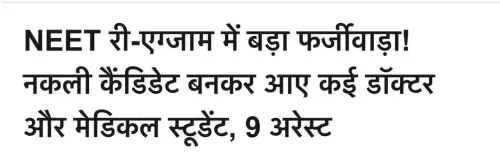
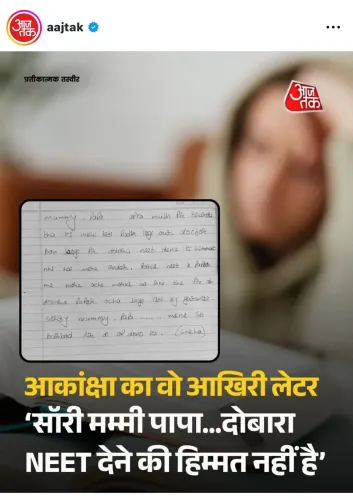
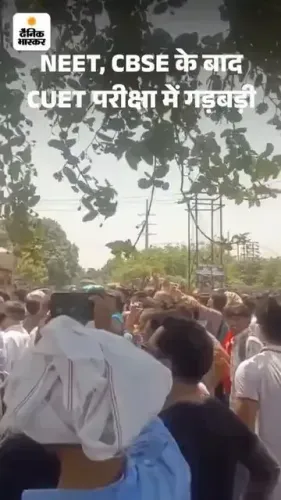
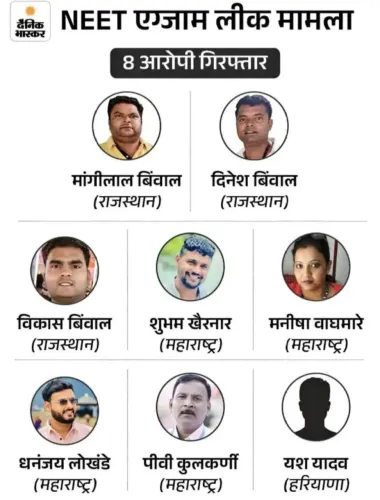
Controversy intensified after 2024, when widespread allegations of paper leaks and administrative irregularities prompted the central government to constitute a high-level committee to review the functioning of the National Testing Agency (NTA), the body under the Ministry of Education that administers NEET. The episode eroded public confidence in centralised testing and handed opposition parties a sustained political argument.
Policy Backdrop
The debate over NEET sits at the intersection of federalism, equity, and education policy. Regional parties across Tamil Nadu, Maharashtra, and Uttar Pradesh have repeatedly demanded the restoration of state-level medical entrance examinations, arguing that centralisation disproportionately benefits students from urban, English-medium backgrounds with access to expensive coaching.
The Bharatiya Janata Party (BJP)-led central government has defended NEET as a transparency measure that eliminates capitation fees and standardises merit assessment across the country. Reforms to NTA's examination security protocols have been under discussion, but no legislative overhaul had been announced as of the time of Yadav's post.
Stakeholders and Impact
The primary stakeholders are lakhs of medical aspirants — many from Uttar Pradesh's semi-urban and rural districts — who prepare for NEET under significant financial and social pressure. For these students and their parents, any systemic uncertainty around the exam has direct consequences on admissions timelines and career prospects.
Akhilesh Yadav's post is aimed squarely at this constituency. The Samajwadi Party has historically positioned itself as a champion of backward-class and rural students in UP, and framing NEET reform as contingent on removing the BJP from power is consistent with that electoral calculus. The hashtag #No_More_BJP makes the political intent explicit, situating the critique within broader opposition mobilisation.
What's Next
Parliamentary debates on NTA reforms and the conduct of the next NEET cycle will be closely watched by opposition benches, with parties like the SP likely to press for either decentralisation of medical admissions or a comprehensive overhaul of examination security norms. Any state-level legislative move in opposition-ruled states to seek exemption from NEET would add further pressure on the Centre.
Yadav's post signals that NEET will remain a live political weapon for the Samajwadi Party, with the party tying the examination's credibility directly to the question of who governs at the Centre — a framing that is likely to intensify as the next electoral cycle approaches.
Point of View
Making NEET reform inseparable from voting out the BJP. The post lands at a moment when NTA's credibility has already been dented by the 2024 paper-leak controversy, giving the critique real traction beyond partisan audiences. By anchoring the message in a Hindi pun accessible to UP's vernacular electorate, Yadav also signals that the Samajwadi Party intends to fight the next cycle on education equity as much as on caste arithmetic. The broader pattern — Tamil Nadu, Maharashtra, and now UP opposition voices converging on NEET — suggests the exam could become a federal flashpoint if the Centre does not move decisively on NTA reform.
NationPress
24 Oct 2026
Frequently Asked Questions
What did Akhilesh Yadav say about NEET?
Akhilesh Yadav posted on 25 July 2026 that NEET can only change if the BJP government's intent (neeyat) changes, using a Hindi wordplay to demand both exam reform and a change in political power at the Centre.
Why is NEET controversial in India?
NEET replaced state-level medical entrance tests after a 2016 Supreme Court order, but critics argue it disadvantages students from state boards and non-English mediums. Allegations of paper leaks in 2024 further damaged trust in the exam's administration by the National Testing Agency.
What is the Samajwadi Party's position on NEET?
The Samajwadi Party opposes the current centralised NEET framework, arguing it is structurally unfair to rural and state-board students, particularly in Uttar Pradesh, and has called for reform or decentralisation of medical admissions.
What happened with NTA and NEET paper leaks?
In 2024, widespread allegations of paper leaks and irregularities in NEET surfaced, prompting the central government to form a high-level committee to review the National Testing Agency's functioning and examination security protocols.
Will NEET be scrapped or reformed?
As of Akhilesh Yadav's post in July 2026, no legislative overhaul of NEET had been announced. Parliamentary debates on NTA reforms and the next exam cycle remain key events to watch, with opposition parties pressing for decentralisation or stronger security norms.