Telangana CM Revanth Reddy hails ISRO's GSLV-F18 NVS-03 launch
Synopsis
Telangana Chief Minister Revanth Reddy congratulated ISRO after GSLV-F18 successfully placed the NVS-03 NavIC navigation satellite into geostationary orbit on 31 October 2026, hailing the mission as a national milestone and praising its benefits for transport, aviation, maritime and emergency services.
Key Takeaways
GSLV-F18 successfully launched the NVS-03 navigation satellite into its designated geostationary orbit on 31 October 2026 .
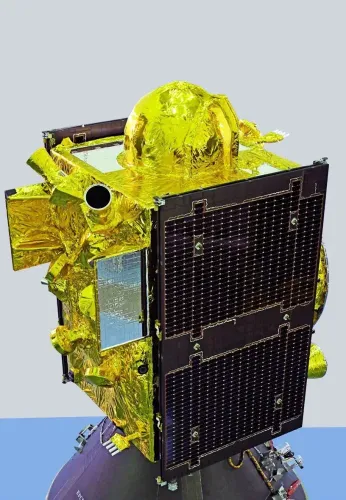
NVS-03 is the third satellite in the NavIC (Navigation with Indian Constellation) series, India's indigenous positioning system.
The NavIC programme was approved in 2006 ; the first satellite launched in 2013 and the constellation became operational in 2018 .
Telangana CM Revanth Reddy congratulated ISRO scientists and engineers and called the launch 'a moment of honour for the nation.' Key sectors expected to benefit include transportation, aviation, maritime navigation, monitoring, and emergency response .
The launch was conducted from Satish Dhawan Space Centre, Sriharikota , ISRO's primary orbital launch facility.
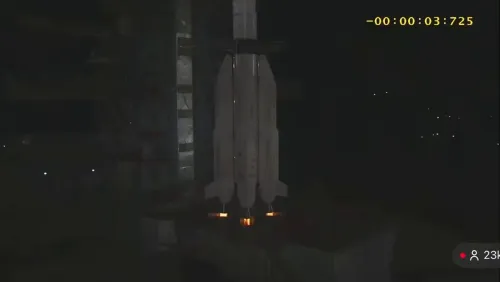
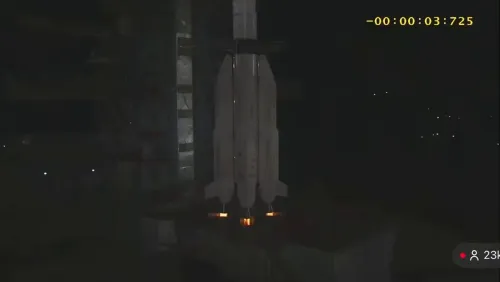
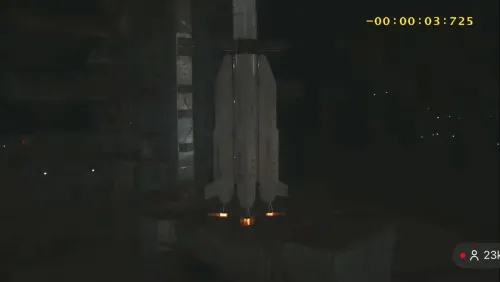
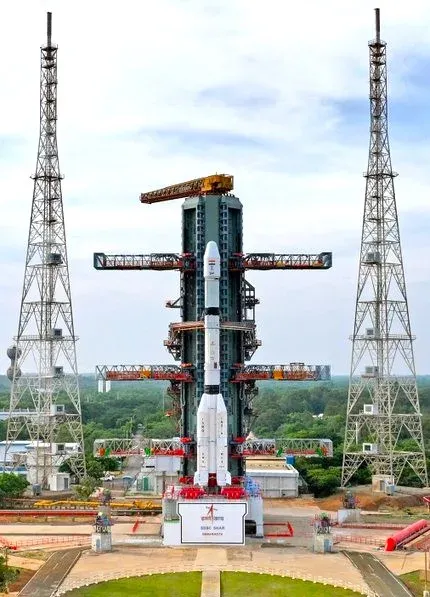
Another navigation satellite, another leap forward for India's homegrown positioning grid — and this time, Telangana Chief Minister Revanth Reddy was among the first to salute the achievement. The Chief Minister's Office of Telangana posted congratulations on 31 October 2026 after ISRO successfully launched the NVS-03 navigation satellite aboard the GSLV-F18 rocket from the Satish Dhawan Space Centre (SDSC), Sriharikota, placing the spacecraft into its designated geostationary orbit.
What GSLV-F18 put into orbit — and why it matters
NVS-03 is the third satellite in the Navigation with Indian Constellation (NavIC) series, India's indigenous answer to GPS and GLONASS. The constellation's roots trace back to 2006, when India approved the programme to secure strategic independence in positioning and timing services. The first satellite, IRNSS-1A, lifted off in 2013, and the constellation was declared operational for civilian and restricted military use in 2018. NVS-03 is the latest building block in that two-decade endeavour.
CM Revanth Reddy lauded ISRO's scientists and engineers for 'successfully placing the satellite into its designated geostationary orbit, marking another significant milestone in strengthening India's navigation capabilities.' He called the mission 'a moment of honour for the nation.'
Sectors that stand to gain from NVS-03
The Chief Minister specifically flagged five domains set to benefit: transportation, aviation, maritime navigation, monitoring, and emergency response. NavIC's regional coverage — centred on the Indian subcontinent and extending roughly 1,500 km around it — makes it particularly suited to high-precision applications across these sectors, where GPS signal dependency has long been flagged as a strategic vulnerability.
For everyday users, a fuller and more robust NavIC constellation means sharper positioning for logistics fleets, more reliable approach guidance for aircraft, safer coastal and inland waterway navigation, and faster location fixes during disaster-relief operations — the kind of resilience that foreign satellite systems cannot guarantee in a crisis.
India's incremental push toward navigation self-reliance
India's broader play here is methodical rather than dramatic: incrementally expand and modernise the seven-satellite NavIC constellation, replace ageing first-generation satellites with the upgraded NVS series, and deepen integration of NavIC signals into national transport and defence networks. Each new launch tightens that architecture.
CM Revanth Reddy extended his best wishes to ISRO for 'many more milestones in its future missions,' closing with a note that has become a quiet refrain in Indian public life: 'India's space journey continues to reach new heights!'
With NVS-03 now in orbit, the question is no longer whether India can build its own navigation grid — it already has. The next chapter is how fast the country integrates it into the infrastructure Indians depend on every single day.
Point of View
Amplifying ISRO milestones is also strategic optics: it aligns a Congress-governed state with a high-approval national achievement, building goodwill without ideological cost. The deeper policy arc is about strategic autonomy — every NVS satellite reduces the leverage foreign GPS operators hold over India's critical systems. The watch item is how quickly NavIC signals move from constellation to compulsion in sectors like aviation and defence logistics.
NationPress
31 Oct 2026
Frequently Asked Questions
What is the NVS-03 satellite and what does it do?
NVS-03 is the third satellite in India's NavIC navigation constellation, designed to provide precise positioning and timing services over the Indian region and surrounding areas, supporting transport, aviation, maritime navigation, and emergency response.
What is NavIC and how is it different from GPS?
NavIC, or Navigation with Indian Constellation, is India's indigenous regional navigation satellite system developed by ISRO to provide strategic independence from foreign systems like the US GPS and Russian GLONASS. It is optimised for coverage over India and roughly 1,500 km beyond its borders.
Why did Telangana CM Revanth Reddy congratulate ISRO?
The Chief Minister's Office of Telangana posted congratulations to acknowledge the successful GSLV-F18 launch of NVS-03, praising ISRO's scientists and engineers and calling the mission a moment of national honour.
When was India's NavIC constellation declared operational?
India's NavIC constellation was declared operational in 2018 for civilian and restricted military use, following the launch of the first satellite, IRNSS-1A, in 2013.