Akhilesh Yadav slams UP Police over Meerut case charges
Synopsis
Samajwadi Party president Akhilesh Yadav on 11 July 2026 condemned the UP Police response to the Meerut murder case, alleging named accused were booked under weak sections while protesters faced serious charges, and cited a viral video of police misconduct as an indictment of the Yogi Adityanath government.
Key Takeaways
Akhilesh Yadav on 11 July 2026 attacked the Uttar Pradesh government over the handling of the Meerut murder case of a young woman.
He alleged named accused were charged under weak legal sections while protesters were booked under serious charges — calling it the 'pinnacle of injustice.' A viral video purportedly showing a senior UP Police officer behaving abusively — including towards the deceased's grieving mother — was cited as damaging the force's image globally.
Yadav invoked the PDA (Pichda, Dalit, Alpasankhyak) coalition, warning that this constituency 'will no longer endure silently.' The hashtag #CC_to_CC signals internal Samajwadi Party mobilisation around the issue.
The case is set to intensify the SP vs BJP contest on women's safety and police accountability ahead of the next Uttar Pradesh assembly cycle.
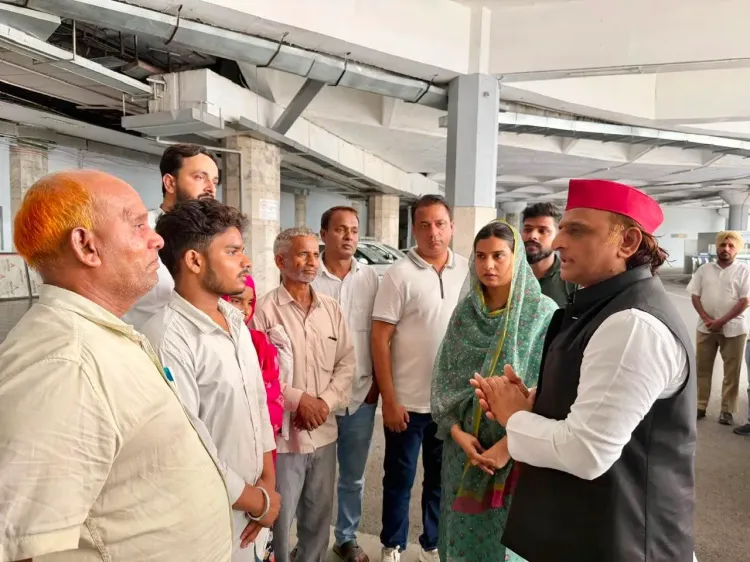
Samajwadi Party president Akhilesh Yadav on Saturday, 11 July 2026 launched a sharp attack on the Uttar Pradesh government and police, alleging that named accused in the murder of a young woman from Meerut were booked under weak sections while protesters demanding justice faced serious charges.
Context
In a post on X, Yadav wrote — 'मेरठ की बेटी के साथ हुए महा-अत्याचार व हत्या' ('the brutal atrocity and murder committed against the daughter of Meerut') — and said the manner in which the case was registered amounted to 'नाइंसाफ़ी की पराकाष्ठा', or 'the pinnacle of injustice.' He alleged that named accused were charged under mild sections of law, while those who took to the streets in protest were slapped with serious criminal charges — a reversal of justice, in his framing.
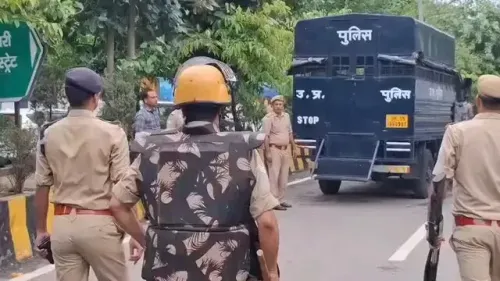
Yadav also referenced a viral video purportedly showing a senior police officer behaving in an arrogant and abusive manner towards ordinary citizens, including, he alleged, the grieving mother of the deceased. He said the video had spread globally and was damaging the image of Uttar Pradesh Police.
Policy Backdrop
The Bharatiya Janata Party has governed Uttar Pradesh since 2017 under Chief Minister Yogi Adityanath, whose administration has repeatedly highlighted a 'law-and-order turnaround' as a central achievement. The Samajwadi Party, as the principal opposition in the state, has consistently contested that narrative, citing cases of alleged police excess and inadequate action in crimes against women.
Opposition parties across India have long used the framing of 'weak chargesheet for the accused, strong charges for the protesters' to question state law-enforcement impartiality. The pattern tends to intensify after high-profile crimes involving women, when public protests and media scrutiny peak simultaneously.
Stakeholders and Impact
Yadav invoked the PDA — a coalition shorthand his party uses for Pichda, Dalit, Alpasankhyak (backwards, Dalits, minorities) — declaring, 'पीडीए अब सहेगा नहीं, कहेगा!' ('PDA will no longer endure silently — it will speak out!'). This signals that the Samajwadi Party intends to mobilise its core electoral base around the Meerut case.
Women's groups and protest communities in Meerut are the most immediately affected stakeholders. Yadav's post also expressed solidarity with rank-and-file police personnel who, he said, were embarrassed by the conduct of senior officers and continue to serve with sensitivity and a human touch.
The hashtag #CC_to_CC appended to the post is a political signalling device used within Samajwadi Party circles, suggesting the message is directed from one command centre to another — party workers and ground-level leaders.
What's Next
The Samajwadi Party's invocation of the PDA framework suggests the party may escalate protests or seek judicial intervention in Meerut in the coming days. Any formal response from the Uttar Pradesh government or a court taking cognisance of the chargesheet could become the next flashpoint.
With assembly elections in Uttar Pradesh on the political horizon, the Meerut case is likely to remain a contested terrain between the ruling BJP and the Samajwadi Party, with women's safety, police accountability, and the conduct of senior officers as the core fault lines.
Point of View
Using a viral video as exhibit A. By anchoring the attack to the PDA framework, Yadav is doing more than expressing outrage; he is converting a law-and-order episode into an electoral grievance for his core base. The move follows a well-established opposition playbook in Uttar Pradesh, where high-profile crimes against women have repeatedly served as inflection points for political mobilisation. The BJP's silence or response in the next 48 hours will be as telling as the original incident.
NationPress
10 Oct 2026
Frequently Asked Questions
What is the Meerut daughter murder case that Akhilesh Yadav is referring to?
Akhilesh Yadav referred to the alleged brutal assault and murder of a young woman from Meerut, Uttar Pradesh. He described it as a 'maha-atyachar' (grave atrocity) and criticised the police for filing weak charges against the named accused while booking protesters under serious sections.
What did Akhilesh Yadav say about UP Police in his 11 July 2026 post?
Yadav alleged that senior UP Police officers were behaving arrogantly and abusively towards ordinary citizens, including the grieving mother of the Meerut victim. He cited a viral video as evidence and said it was damaging the reputation of UP Police globally.
What is PDA and why did Akhilesh Yadav mention it?
PDA stands for Pichda, Dalit, Alpasankhyak — a coalition of backwards classes, Dalits, and minorities that forms the Samajwadi Party's core electoral base. Yadav's declaration that 'PDA will no longer stay silent' signals an intent to politically mobilise this constituency around the Meerut case.
What does #CC_to_CC mean in Akhilesh Yadav's post?
The hashtag #CC_to_CC is a Samajwadi Party internal signalling device, generally understood to mean communication from one command centre to another — a call to party workers and district-level leaders to activate on the issue.
How has the BJP government in UP responded to Akhilesh Yadav's allegations?
As of the time of publication, no formal response from the Uttar Pradesh government or Chief Minister Yogi Adityanath to Akhilesh Yadav's specific allegations had been reported.