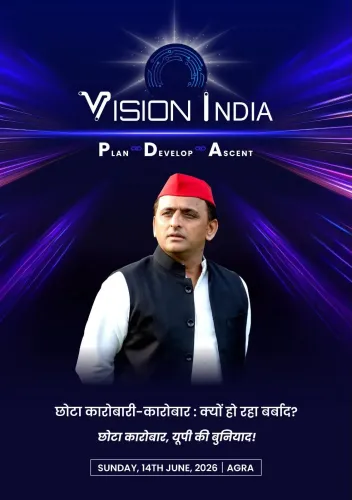
Akhilesh Yadav demands complete justice in sharp post
Synopsis
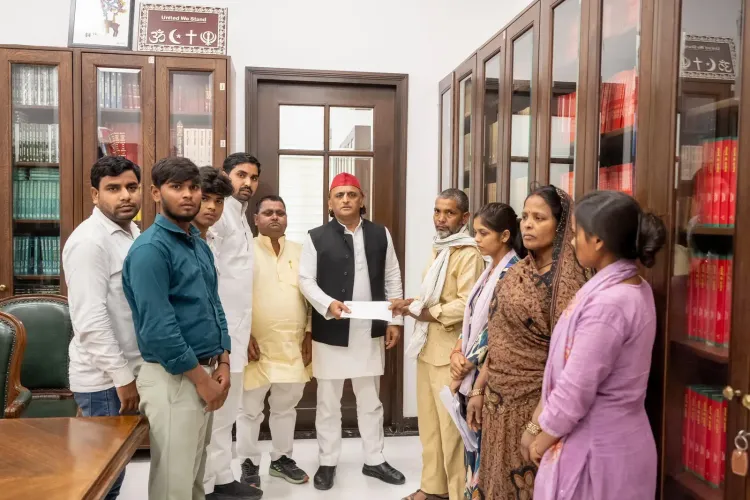
Samajwadi Party president Akhilesh Yadav posted a terse but pointed Hindi message on 25 May 2026 — 'If there is justice, let it be complete' — renewing the party's pressure on the BJP-led Uttar Pradesh government over equity and governance, with no specific trigger officially identified.
Key Takeaways
Akhilesh Yadav posted न्याय हो तो पूरा हो! ('If there is justice, let it be complete!') on 25 May 2026 .
The message signals the Samajwadi Party's continued critique of governance and justice delivery in Uttar Pradesh .
No specific triggering event was officially stated in the post; the demand is broadly framed.
The party's core constituency — OBC communities and marginalised groups — is the primary audience for this messaging.
Such slogans frequently precede formal parliamentary or legislative follow-up by Samajwadi Party leaders.
The post reflects a wider opposition pattern of using concise Hindi phrases on social media to signal dissatisfaction with the ruling BJP administration.
Samajwadi Party president Akhilesh Yadav on Monday, 25 May 2026, posted a pointed Hindi message on X calling for justice to be delivered in full, signalling the party's continuing pressure on the Uttar Pradesh government over equity and governance concerns.
Context
Yadav's post — न्याय हो तो पूरा हो! ('If there is justice, let it be complete!') — is a compact but emphatic demand. The phrasing implies that justice, as currently being dispensed, is seen by the party as partial, selective or incomplete. While the specific trigger for the post has not been officially stated, such messaging is consistent with the Samajwadi Party's long-standing posture as a watchdog on law-and-order and welfare delivery in the state.
Indian opposition leaders frequently deploy short, resonant Hindi slogans on social media to register dissent and mobilise public sentiment without committing to a single specific grievance. The brevity here amplifies rather than limits the message's reach.
Policy Backdrop
The Samajwadi Party, founded in 1992, has built its political identity around the concept of samajik nyay (social justice), with a particular focus on Other Backward Classes (OBCs), minorities and other marginalised communities in Uttar Pradesh. The party has repeatedly challenged the BJP-led state government's record on equitable policing, welfare scheme implementation and protection of vulnerable groups.
Calls for 'complete justice' resonate strongly in a state where high-profile cases involving marginalised communities have periodically drawn national attention. The Samajwadi Party has used such moments to question both the pace and impartiality of the justice system under the current administration.
Stakeholders and Impact
OBC communities and other marginalised groups — the core constituency of the Samajwadi Party — are the primary audience for this message. For them, the demand for 'complete' justice is a signal that their concerns are being voiced at the national level by a prominent opposition figure.
The post also puts indirect pressure on the Uttar Pradesh government and, by extension, the judiciary, to demonstrate transparent and even-handed action on pending social-justice or law-and-order matters. Political observers note that such messaging often precedes or accompanies formal parliamentary or legislative interventions by the party.
What's Next
Attention will now turn to whether Akhilesh Yadav or the Samajwadi Party follows up this post with a more detailed statement, a press conference or a parliamentary question identifying the specific case or issue at hand. The Uttar Pradesh government may face questions from opposition benches in the state legislature or from civil-society groups seeking clarity on which matter prompted the demand.
The post underscores a broader pattern: as the political cycle in Uttar Pradesh intensifies ahead of future electoral contests, demands for accountability on justice and governance are likely to grow louder from the state's principal opposition party.
Point of View
Widening its resonance among OBC and marginalised voters. It follows a well-worn Samajwadi Party playbook of framing the BJP-led Uttar Pradesh government as indifferent or selective in delivering justice. The timing, mid-week and outside any obvious news cycle, suggests the party is maintaining a steady drumbeat of accountability messaging rather than reacting to a single event. If a specific case surfaces in coming days, this post will serve as a ready-made political anchor.
NationPress
9 Oct 2026
Frequently Asked Questions
What did Akhilesh Yadav post on 25 May 2026?
Akhilesh Yadav posted the Hindi phrase न्याय हो तो पूरा हो! — meaning 'If there is justice, let it be complete!' — on X on 25 May 2026 , demanding full and impartial justice.
What does 'complete justice' mean in Samajwadi Party politics?
For the Samajwadi Party , 'complete justice' refers to even-handed delivery of legal and welfare rights to OBC communities , minorities and other marginalised groups, a cause the party has championed since its founding in 1992 .
Is Akhilesh Yadav referring to a specific case?
No specific case or event was named in the post. The research available does not verify a single triggering incident, and the message is broadly framed as a governance critique.
What is the Samajwadi Party's position on justice in Uttar Pradesh?
The Samajwadi Party has consistently argued that the BJP -led Uttar Pradesh government is selective in enforcing the law and falls short on welfare delivery for marginalised communities, making social justice a central plank of its opposition campaign.
Will Akhilesh Yadav follow up this post with a formal statement?
No formal follow-up has been announced, but the party typically follows such social-media signals with press conferences, legislative questions or public rallies when a specific issue is being highlighted.