Akhilesh Yadav alleges BJP shielding allies from probe
Synopsis
Samajwadi Party president Akhilesh Yadav on 23 June 2026 alleged that emerging disclosures of BJP wrongdoing would prompt the ruling party to accelerate cover-up efforts rather than allow genuine investigation, intensifying the opposition's accountability offensive.
Key Takeaways
Akhilesh Yadav posted on 23 June 2026 alleging a fresh 'layer' of BJP wrongdoing has come to light.
He warned that further disclosures would cause the ruling party to shift from 'investigation' to 'cover-up' mode.
The post targets the BJP and its allies, accusing them of what he called 'great sins' ( महापाप ).
The allegation fits a broader opposition pattern of accusing BJP governments of using probe agencies selectively since 2017 .
The issue is expected to surface in the monsoon session of Parliament and the Uttar Pradesh assembly.
Samajwadi Party president Akhilesh Yadav on Tuesday, 23 June 2026, launched a sharp attack on the Bharatiya Janata Party, alleging that fresh disclosures of wrongdoing by the ruling party and its associates would accelerate attempts to suppress rather than investigate the matter.
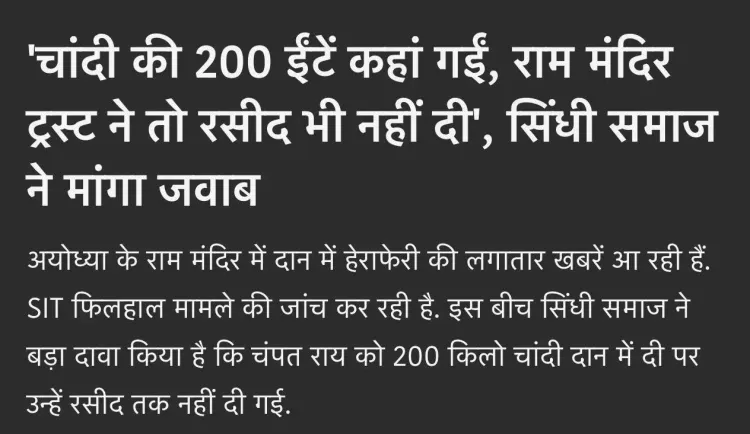
Writing in Hindi on X, Yadav said: 'एक परत और खुली…' ('Another layer has peeled open…'), adding that if the layers of what he called the 'great sins' of BJP members and their allies kept unravelling, the work of 'covering up' would replace 'investigation' and would intensify rapidly.
Context
The post follows a recurring pattern in which Akhilesh Yadav uses social media to allege that investigative agencies are deployed selectively — targeting opposition figures while protecting those aligned with the ruling establishment. The metaphor of 'peeling layers' suggests he is responding to a specific disclosure or development, though the precise trigger has not been publicly confirmed.
The Samajwadi Party has consistently accused the BJP government — both at the centre and in Uttar Pradesh — of weaponising probe agencies since coming to power in 2017, when the BJP defeated the SP to form the state government.
Policy Backdrop
Since 2017, central investigative agencies have opened or revived several cases linked to the previous SP administration in Uttar Pradesh. The SP, in turn, has alleged that these actions are politically motivated and that parallel wrongdoing by BJP-affiliated individuals receives little scrutiny.
This contest over the independence and timing of probes by agencies such as the CBI and ED has become a defining fault line in Uttar Pradesh politics and, more broadly, in national opposition discourse. Yadav's post fits squarely within that long-standing narrative.
Stakeholders and Impact
The statement is directed at the BJP leadership and its allies, while signalling to opposition supporters that accountability demands will continue. Investigating agencies find themselves named — implicitly — as institutions whose conduct is under public and political scrutiny.
For voters in Uttar Pradesh, India's most populous state and a key electoral battleground, allegations of selective enforcement carry significant resonance ahead of future assembly and national elections. Civil-society groups and legal observers tracking institutional independence are also stakeholders in this debate.
What's Next
Yadav's remarks are likely to be amplified in opposition messaging during the forthcoming monsoon session of Parliament, where demands for judicial oversight of pending probes and debates on agency autonomy are expected. The Uttar Pradesh assembly may also see similar pressure from SP legislators.
Whether the specific 'layer' Yadav alludes to leads to formal demands — such as a Supreme Court-monitored inquiry or a parliamentary committee reference — will depend on how the underlying matter develops in the coming days.
Point of View
He shifts the burden of proof onto the BJP before any formal response can be mounted. The 'peeling layers' metaphor is designed to sustain a drip-feed narrative that keeps governance accountability in the news cycle. This tactic has proven durable for the SP — it simultaneously rallies the base and pressures agencies to demonstrate neutrality. The broader arc points to an intensifying battle over institutional credibility that will likely define the next electoral cycle in Uttar Pradesh.
NationPress
23 Jun 2026
Frequently Asked Questions
What did Akhilesh Yadav say about BJP on 23 June 2026?
Akhilesh Yadav alleged that fresh disclosures of wrongdoing by BJP members and their allies would cause the ruling party to accelerate cover-up efforts rather than allow a genuine investigation.
What does 'jaanch' and 'dhaank' mean in Akhilesh Yadav's post?
In his Hindi post, Yadav used 'jaanch' (investigation) and 'dhaank' (cover-up or concealment) to contrast what he said should happen versus what he alleged the BJP would do in response to emerging disclosures.
Why does Akhilesh Yadav frequently accuse BJP of shielding allies from probes?
Since the BJP came to power in Uttar Pradesh in 2017, the Samajwadi Party has consistently alleged that central agencies target opposition figures while protecting BJP-aligned individuals, making this a central plank of SP's political messaging.
Which agencies are implicated in the BJP probe controversy in Uttar Pradesh?
The CBI and the Enforcement Directorate (ED) are the agencies most often cited in opposition allegations of selective investigation in Uttar Pradesh and at the national level.
Will Akhilesh Yadav raise this issue in Parliament?
Based on established patterns, the SP and allied opposition parties are expected to raise demands for independent or court-monitored probes during the monsoon session of Parliament and in the Uttar Pradesh assembly.