Jaishankar Meets Mongolia's Enkhbayar, Eyes Mining and Energy Ties
Synopsis
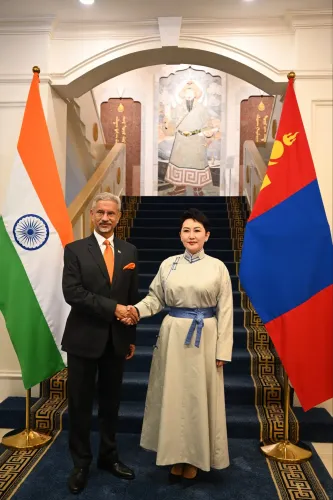
Union External Affairs Minister Dr. S. Jaishankar met Mongolia's Minister and Chief Cabinet Secretary Battumur Enkhbayar on 23 June 2026, discussing new avenues in mining, energy, technology and human resources under the India-Mongolia Strategic Partnership.
Key Takeaways
Jaishankar met Mongolia's Battumur Enkhbayar on 23 June 2026 , covering mining, energy, technology and human resources.
India and Mongolia have held a Strategic Partnership since May 2015 , when PM Modi announced a $1 billion line of credit during his Ulaanbaatar visit.
The two armies have conducted the joint exercise Nomadic Elephant annually since 2004 .
Mongolia holds major reserves of coal, copper, uranium and rare earth minerals, making it a priority in India's critical minerals diplomacy.
India's ITEC programme has long provided Mongolian officials and students training in IT, English and governance.
Follow-up MoUs on mining blocks and possible announcements at the UN General Assembly 2026 are being watched.
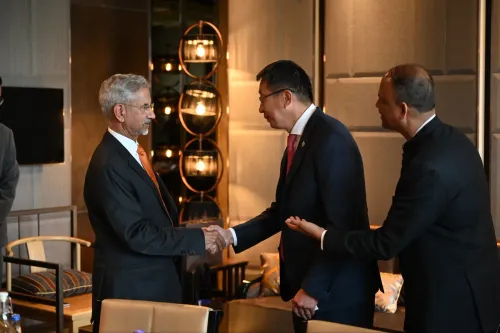
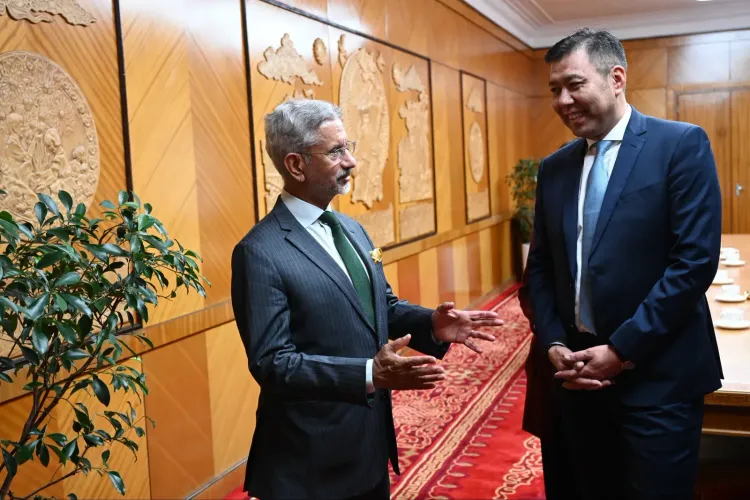
Union External Affairs Minister Dr. S. Jaishankar met Battumur Enkhbayar, Minister and Chief Cabinet Secretary of Mongolia, on the evening of Tuesday, 23 June 2026, holding discussions on bilateral cooperation spanning mining, energy, technology and human resources.
Context
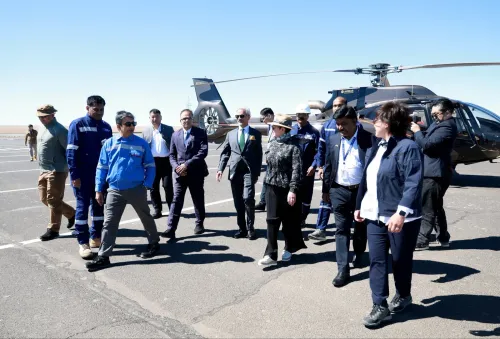
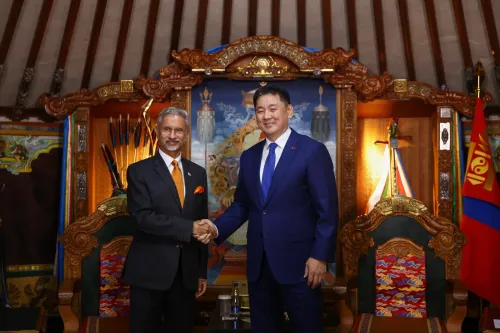
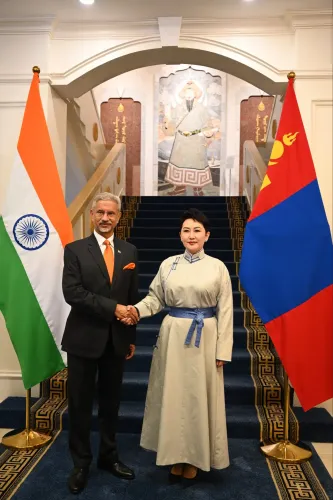
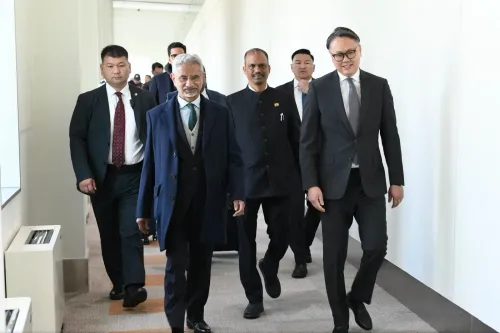
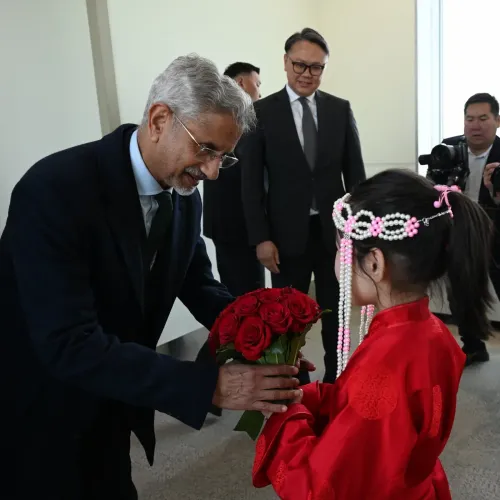
Jaishankar described the meeting as productive, noting on X that he was 'pleased to meet Minister and Chief Cabinet Secretary Battumur Enkhbayar of Mongolia this evening.' The two sides discussed 'new avenues in mining, energy, technology and Human resources,' according to the minister's post, which was accompanied by photographs from the meeting.
The engagement signals continued Indian diplomatic attention to Mongolia, a landlocked nation bordered by China and Russia that holds substantial reserves of coal, copper, uranium and rare earth minerals — resources of growing strategic interest to New Delhi.
Policy Backdrop
India and Mongolia elevated their ties to a Strategic Partnership during Prime Minister Narendra Modi's landmark visit to Ulaanbaatar in May 2015 — the first-ever visit by an Indian prime minister to Mongolia. That visit saw India announce a $1 billion line of credit covering infrastructure, energy and other development priorities.
Defence cooperation has been a steady pillar of the relationship, with both armies conducting the joint exercise Nomadic Elephant annually since 2004, focused on counter-insurgency and peacekeeping operations. On the civilian side, India's Indian Technical and Economic Cooperation (ITEC) programme has provided Mongolian officials and students with training in IT, English and governance since the early 2000s.
The June 2026 conversation on mining and energy fits into a broader Indian effort to secure access to critical minerals and diversify supply chains, building partnerships with resource-rich nations on China's periphery while offering technology and capacity-building as an alternative to other major powers.
Stakeholders and Impact
Indian mining and energy companies stand to benefit if the discussions translate into formal agreements on accessing Mongolian mineral blocks, particularly in coal, copper and uranium. Mongolian professionals and students are also stakeholders, given India's longstanding ITEC scholarships and training slots that form part of the human resources dimension cited in Jaishankar's post.
For Mongolia, deeper engagement with India offers economic diversification and a counterbalance to its overwhelming dependence on its two giant neighbours for trade and transit. India's technology and capacity-building offer is a tangible incentive for Ulaanbaatar to deepen the partnership.
What's Next
Analysts will watch for follow-up Memoranda of Understanding on specific uranium or rare-earth mining blocks, which would give the June discussions concrete form. Possible announcement windows include the next India–Central Asia dialogue or the sidelines of the UN General Assembly session later in 2026.
As India accelerates its critical minerals diplomacy globally, the Jaishankar–Enkhbayar meeting reinforces that Mongolia remains a quiet but consistent priority in New Delhi's neighbourhood-plus outreach strategy.
Point of View
New Delhi is deploying its classic 'comprehensive partnership' template — combining economic incentives with soft-power tools — to deepen access to a resource-rich buffer state on China's northern flank. The explicit mention of 'new avenues' suggests the two sides are moving beyond the framework agreements of 2015 toward sector-specific deals. If follow-up MoUs materialise, this meeting could mark a quiet but significant step in India's effort to secure rare-earth and uranium supply chains independently of dominant global suppliers.
NationPress
23 Jun 2026
Frequently Asked Questions
Why did Jaishankar meet Mongolia's Enkhbayar in June 2026?
EAM Dr. S. Jaishankar met Battumur Enkhbayar, Mongolia's Minister and Chief Cabinet Secretary, on 23 June 2026 to discuss bilateral cooperation in mining, energy, technology and human resources, building on the India-Mongolia Strategic Partnership established in 2015.
What is India's relationship with Mongolia?
India and Mongolia share a Strategic Partnership elevated during PM Modi's May 2015 visit to Ulaanbaatar, which included a $1 billion line of credit. The two countries also conduct an annual joint military exercise called Nomadic Elephant and cooperate under India's ITEC training programme.
Why is Mongolia important to India's foreign policy?
Mongolia holds large reserves of coal, copper, uranium and rare earth minerals. India views deeper ties with Mongolia as part of its critical minerals diplomacy and as a way to diversify supply chains, while also engaging a nation that borders both China and Russia.
What is the Nomadic Elephant exercise between India and Mongolia?
Nomadic Elephant is an annual India-Mongolia joint military exercise that has been held since 2004, focusing on counter-insurgency and peacekeeping operations.
What could come next from the Jaishankar-Enkhbayar talks?
Analysts are watching for follow-up Memoranda of Understanding on uranium or rare-earth mining blocks. Possible announcement windows include the next India-Central Asia dialogue or the UN General Assembly session in late 2026.