Akhilesh Yadav Blames BJP Corruption for UP Waterlogging
Synopsis
SP president Akhilesh Yadav blamed BJP corruption — not rainfall — for waterlogging across UP cities including Lucknow, Varanasi and Prayagraj, and promised river desilting to restore natural flow if SP returns to power.
Key Takeaways
Akhilesh Yadav posted on 27 September 2026 attributing urban waterlogging in Uttar Pradesh to corruption-driven drainage failure, not excess rainfall.
He cited Lucknow , Gorakhpur , Varanasi , and Prayagraj as cities where the 'Smart City' tag has not translated into functional drainage.
Silt accumulation in rivers, caused by pollution and direct drain discharge, was identified as a key reason rivers can no longer absorb monsoon flows.
Yadav dismissed embankment-building as an ineffective stopgap and pledged large-scale river desilting and deepening if SP wins power.
He warned of disease risk from contaminated floodwater and highlighted severe impact on riverine communities and river-based livelihoods.
He closed with a political slogan: 'भाजपा जाएगी, नदी जीवन पाएगी' — 'When the BJP goes, the rivers will get life.'
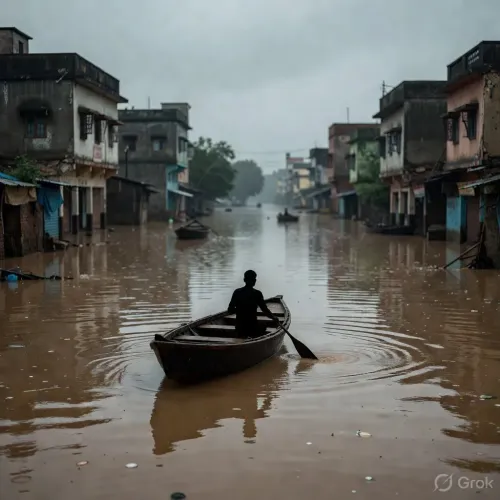
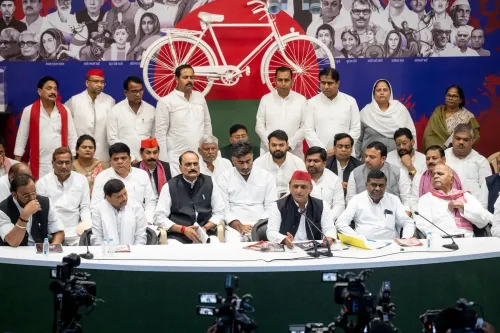
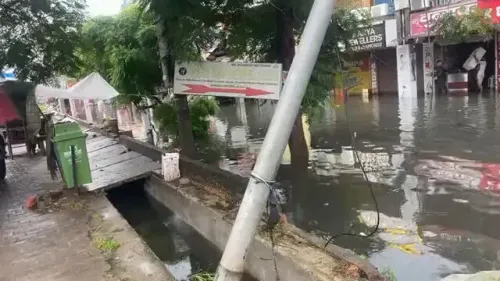
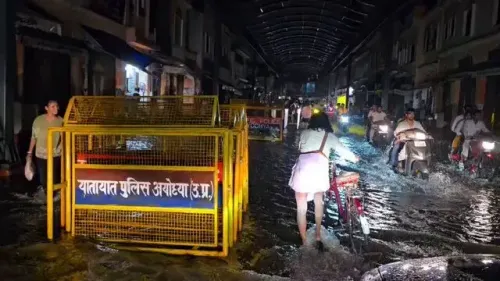
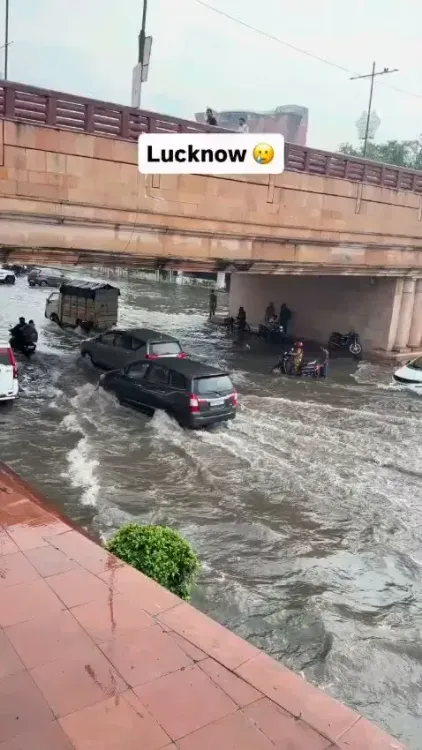
Monsoon rains did not break Uttar Pradesh's cities — broken drains did. On Sunday, 27 September 2026, Samajwadi Party president Akhilesh Yadav launched a pointed broadside at the BJP state government, arguing that corruption-riddled drainage infrastructure — not rainfall — is the root cause of the catastrophic waterlogging drowning Lucknow, Varanasi, Prayagraj, and Gorakhpur.
Posting on X in Hindi, Yadav declared: 'नाली से लेकर नाले तक गंदगी से जाम हैं तो पानी निकलेगा कहाँ से' — 'From the smallest gutter to the largest drain, everything is choked with filth — where is the water supposed to go?' The charge is blunt: dysfunctional drainage is not an act of nature but an act of governance failure.
Silted Rivers, Blocked Cities — the Compounding Crisis
Beyond waterlogged streets, Yadav pointed to a deeper ecological unravelling. Rivers across Uttar Pradesh, he argued, have seen their natural flow severely impeded by silt deposits built up from years of pollution and the unchecked discharge of drains directly into riverbeds. The result: rivers that can no longer absorb or carry the monsoon surge.
He dismissed the common administrative response — building embankments to hold back swollen rivers — as no solution at all. 'Restraining a flooding river with a bund is not an effective remedy,' he wrote, signalling that engineering shortcuts cannot substitute for sustained ecological restoration.
SP's River-Desilting Pledge: What Akhilesh Is Promising
Yadav did not stop at criticism. He outlined a concrete SP commitment for if the party returns to power: dredging and deepening rivers so they flow avirala — uninterrupted, in their natural course — and can self-purify through their own aquatic ecosystems. The promise is ecologically significant. A river deepened of silt can carry greater volume, recharge groundwater more effectively, and support the riverine biodiversity that acts as a natural filtration system.
The Namami Gange programme, launched by the central government in 2014, has pursued Ganga rejuvenation over more than a decade. Opposition leaders, including SP, have consistently argued its on-ground results in Uttar Pradesh fall short — a claim the post implicitly renews without naming the scheme directly.
The Human Cost Along the Riverbanks
Yadav reserved particular emphasis for communities whose livelihoods are woven into the river economy — fisherfolk, farmers on floodplains, and small traders dependent on riverine commerce. These populations, he noted, have been 'badly affected' as rivers overflow their banks and contaminated water breeds disease in low-lying neighbourhoods.
The public-health dimension sharpens the stakes. Stagnant, sewage-mixed floodwater in dense urban corridors is a textbook vector for cholera, leptospirosis, and dengue — risks Yadav flagged explicitly, urging the government to act before the outbreak curve steepens.
He closed with a sharp political couplet that distils his entire argument into a single line: 'भाजपा जाएगी, नदी जीवन पाएगी' — 'When the BJP goes, the rivers will get life.' In seven words, a governance critique becomes an election promise.
With Uttar Pradesh watching its 'Smart Cities' — Gorakhpur, Varanasi, Prayagraj — knee-deep in monsoon water, the question Yadav is forcing onto the agenda is a simple one: what exactly was built, and where did the money go?
Point of View
Undermining one of the central government's flagship urban branding exercises with on-ground imagery of flooded streets. The closing couplet signals that the riverine economy and flood governance will be live electoral themes heading into the next UP cycle — and Yadav is staking his party's identity on them early.
NationPress
27 Sept 2026
Frequently Asked Questions
Why does Akhilesh Yadav blame BJP for waterlogging in UP cities?
Akhilesh Yadav argues that waterlogging in cities like Lucknow, Varanasi and Prayagraj is caused by corruption-driven collapse of drainage infrastructure under the BJP state government — not by unusually heavy rainfall.
What is the SP plan for river desilting in Uttar Pradesh?
The Samajwadi Party has promised to dredge and deepen rivers to restore uninterrupted natural flow, allowing rivers to self-purify through their ecosystems and carry monsoon water without flooding.
Which UP cities are worst affected by waterlogging in 2026?
According to Akhilesh Yadav's post, Lucknow (the state capital), Gorakhpur, Varanasi, and Prayagraj are among the worst-affected cities, including several officially designated 'Smart Cities'.
How does river silt cause flooding in Uttar Pradesh?
Years of pollution and direct drain discharge into rivers have deposited silt that narrows riverbeds, slows flow, and reduces the volume of water rivers can carry — causing them to overflow during heavy monsoon rains.
What did Akhilesh Yadav say about the Namami Gange programme?
Yadav did not name Namami Gange directly, but his critique of ongoing river pollution, silt accumulation and failed drainage in UP implicitly challenges the decade-long central government river-rejuvenation effort's on-ground results in the state.