Akhilesh Yadav brands BJP promises hollow, calls Modi 'Jumlenath'
Synopsis
Samajwadi Party president Akhilesh Yadav posted a sharp Hindi couplet on 16 October 2026, calling PM Modi 'Jumlenath' and warning that anyone who trusts BJP's promises will be cheated — reviving a cornerstone opposition attack on BJP governance.
Key Takeaways
Samajwadi Party president Akhilesh Yadav posted a sharp Hindi couplet on 16 October 2026 attacking BJP's electoral promises.
He called Prime Minister Narendra Modi by the nickname 'Jumlenath' — a mock honorific meaning 'Lord of Empty Promises.' The post stated that anyone who trusts BJP's promises 'will also be swindled,' framing it as a self-indicting admission by Modi himself.
The term jumla has been a recurring weapon in opposition rhetoric against the BJP since 2014 , particularly in Uttar Pradesh .
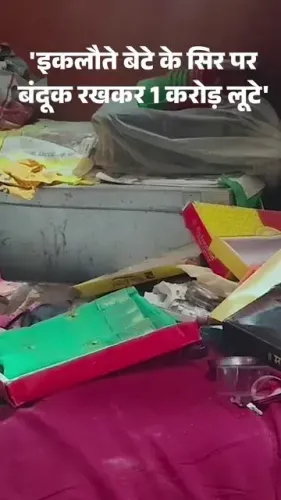
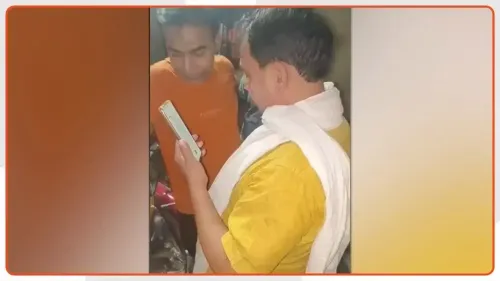
The post included a video, amplifying the text-based political attack with visual content.
No immediate BJP response to the post was available at the time of publication.
A single nickname, one sharp couplet, and a verdict delivered in six words — Samajwadi Party president Akhilesh Yadav on Friday, 16 October 2026, turned to social media to deliver what has become his party's sharpest recurring indictment of the ruling Bharatiya Janata Party: that its promises are designed to deceive, and even the trusting will be cheated.
Posting in Hindi, Akhilesh wrote: 'BJP ke wadon par jo kare vishwas, wo bhi thaga jayega, keh gaye Jumlenath' — 'Whoever trusts BJP's promises will also be swindled, says Jumlenath.' The rhyming couplet is pointed political verse: a one-line verdict on governance, gift-wrapped as a folk saying, attributed sarcastically to Prime Minister Narendra Modi himself under the nickname 'Jumlenath.'
What 'Jumlenath' means — and why it lands
The word jumla entered Indian political vocabulary in the years after 2014, used by opposition voices to describe electoral pledges they argued were never meant to be fulfilled — hollow slogans rather than policy commitments. Attaching the suffix -nath, a title borne by several prominent figures in Uttar Pradesh politics, turns it into a mock honorific: the 'Lord of Empty Promises.' It is a construction Akhilesh and the Samajwadi Party have deployed repeatedly, and its longevity in political discourse is evidence of how effectively it has embedded itself in the opposition's rhetorical arsenal against the BJP.
The post carries a video — context Akhilesh apparently intends viewers to watch alongside the caption — reinforcing the message with visual content the text alone frames as a damning admission.
SP's strategy: make broken promises the headline
For the Samajwadi Party, attacking BJP's unfulfilled promises is not a new tactic — it is a structural pillar of their messaging, especially in Uttar Pradesh, where both parties compete fiercely for government credibility. The SP's argument is straightforward: central government election cycles are built on aspirational pledges — jobs, prices, development — that voters in states like UP feel the absence of most acutely. By framing the BJP's own record as a self-confession ('keh gaye Jumlenath' — 'Jumlenath himself has said so'), Akhilesh tries to strip the BJP of its most powerful asset: the benefit of the doubt.
The rhetorical move is old but the repetition is deliberate. In Indian politics, a nickname sticks when it is repeated often enough to feel like settled fact. The SP is betting that Jumlenath does exactly that.
With no immediate BJP counter-statement on the post, the couplet lands in a vacuum — which, for opposition messaging, is often the cleanest outcome possible.
Point of View
Where development gaps are most politically legible — suggests the party views 'promise fatigue' among BJP voters as an electoral opening. By attributing the concession to Modi himself, Akhilesh attempts to neutralise the PM's personal brand as the guarantor of delivery. Whether the strategy translates to votes depends entirely on whether a rival credibility case has been built alongside the attack.
NationPress
16 Oct 2026
Frequently Asked Questions
What does 'Jumlenath' mean in Indian politics?
'Jumlenath' combines the Hindi word jumla — used to describe empty electoral promises — with the honorific suffix -nath , creating a mock title meaning 'Lord of Empty Promises.' Opposition parties, especially the Samajwadi Party, have used it as a nickname for PM Narendra Modi to question the BJP's record on delivering campaign pledges.
What did Akhilesh Yadav post about BJP promises on 16 October 2026?
Akhilesh Yadav posted a Hindi couplet stating that whoever trusts BJP's promises 'will also be swindled,' sarcastically attributing the line to PM Modi under the nickname Jumlenath. The post included a video and was shared from his official X account.
What is the Samajwadi Party's main criticism of the BJP?
The Samajwadi Party, led by Akhilesh Yadav, regularly argues that BJP governments — at the centre and in Uttar Pradesh — make large electoral promises on jobs, prices, and development that go unfulfilled, leaving voters, particularly in UP, without the outcomes they were promised.
Has Akhilesh Yadav used the term Jumlenath before?
Yes. 'Jumlenath' has been a recurring feature of Samajwadi Party rhetoric against the BJP for several years. The SP and other opposition parties have used the term consistently to frame BJP's governance record as one of unfulfilled commitments.
Did the BJP respond to Akhilesh Yadav's Jumlenath post?
No immediate BJP response to the specific post was available at the time of publication. The Samajwadi Party's attack follows a long-established opposition pattern that the BJP has historically countered by highlighting central government schemes and development metrics.