Akhilesh Yadav Mocks Gorakhpur Flooding With Water Taxi Jibe
Synopsis
Samajwadi Party president Akhilesh Yadav on 15 July 2026 mocked the UP government with a sarcastic question asking if water taxis would run on Gorakhpur's submerged streets, highlighting the annual monsoon flooding crisis in the Chief Minister's home city against a backdrop of high-profile urban transport schemes.
Key Takeaways
Akhilesh Yadav posted a sarcastic one-liner on 15 July 2026 asking whether water taxis would operate on Gorakhpur's flooded streets.
Gorakhpur , located in eastern Uttar Pradesh, faces chronic monsoon waterlogging from rivers including the Rapti .
The post juxtaposes water taxi schemes promoted under India's inland waterways push against persistent civic flooding failures.
Gorakhpur is the political base of Chief Minister Yogi Adityanath , amplifying the opposition's symbolic attack.
The National Waterways Act, 2016 underpins India's river-based transport expansion, which critics say diverts attention from basic flood infrastructure.
The post continues a pattern of Samajwadi Party opposition commentary targeting eastern UP flood mismanagement each monsoon season.
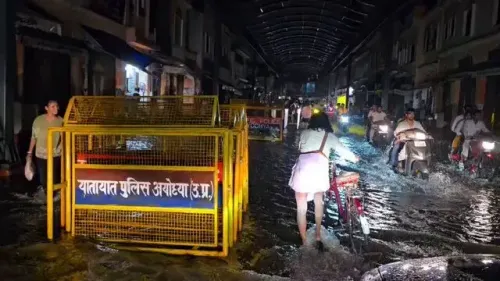
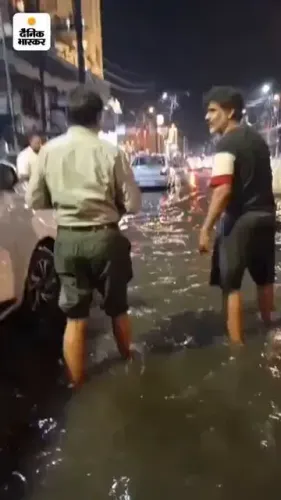
Samajwadi Party president Akhilesh Yadav on Wednesday, 15 July 2026, took a sharp dig at the Uttar Pradesh government over chronic waterlogging in Gorakhpur, posting a pointed rhetorical question on X that linked the city's flooded streets to a high-profile urban water taxi initiative.
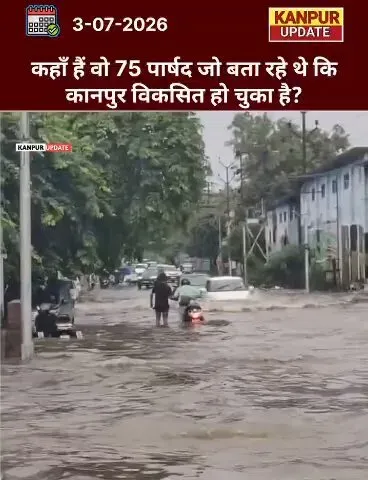
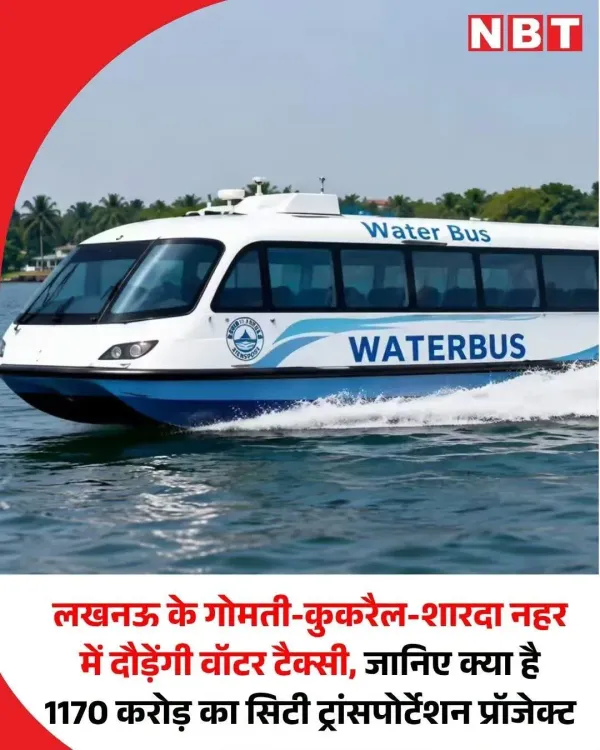
In his post, Yadav wrote in Hindi: 'क्या वॉटर टैक्सी जलमग्न गोरखपुर की सड़कों पर भी दौड़ेगी?' — translated: 'Will the water taxi also run on the submerged streets of Gorakhpur?' The one-line question, accompanied by an image, was a sarcastic reference to water taxi schemes being promoted in Indian cities under inland waterways development, contrasted against the annual monsoon inundation that leaves large parts of Gorakhpur underwater.
Context
Gorakhpur, a major city in eastern Uttar Pradesh, sits in a flood-prone belt fed by rivers including the Rapti. Every monsoon season, low-lying localities in the city experience severe waterlogging and flooding, disrupting daily life for hundreds of thousands of residents. The city is also the political home base of Chief Minister Yogi Adityanath, making it a symbolically charged target for opposition commentary.
Yadav, who served as Chief Minister of Uttar Pradesh from 2012 to 2017 and is currently a Lok Sabha MP, has consistently used monsoon flooding in eastern UP as a lens to question the state government's development priorities. His posts during the rainy season frequently highlight the gap between announced infrastructure projects and ground-level civic failures.
Policy Backdrop
The National Waterways Act, 2016 significantly expanded India's inland water transport framework, opening the door to river-based mobility projects across several states, including those with rivers flowing through eastern Uttar Pradesh. Water taxi services have since been positioned both as urban commuter solutions and as tourism assets in select Indian cities.
Critics of such schemes, including opposition parties, argue that investment in high-visibility transport projects can overshadow more urgent needs such as stormwater drainage upgrades, riverbank management, and flood-resilient urban planning — particularly in cities like Gorakhpur where annual inundation remains unresolved. The Rapti and adjoining drainage systems have long been cited in flood management discussions concerning the region.
Stakeholders and Impact
The most directly affected are the flood-hit residents of Gorakhpur and surrounding districts in eastern Uttar Pradesh, who face property damage, disrupted transport, and public health risks each monsoon. Urban commuters in the region have repeatedly called for permanent drainage solutions rather than seasonal relief measures.
Yadav's post also speaks to a wider constituency of voters across the Purvanchal region — eastern UP — where the Samajwadi Party has been working to consolidate support ahead of future electoral cycles. Framing flood mismanagement as a governance failure in the Chief Minister's own city carries particular political weight.
What's Next
Attention will now turn to the state government's response — both in terms of immediate 2026 monsoon relief operations in Gorakhpur and any formal announcements regarding inland water transport projects in Uttar Pradesh. Any rollout of water taxi services in the state is likely to face renewed scrutiny given the optics Yadav's post has highlighted.
With the monsoon season at its peak and eastern UP cities under stress, the pressure on the Yogi Adityanath administration to demonstrate both flood mitigation capacity and infrastructure delivery will intensify in the weeks ahead.
Point of View
He forces a comparison that puts the ruling dispensation on the defensive without making a single verifiable claim. The choice of Gorakhpur is deliberate; as Chief Minister Yogi Adityanath's home turf, any governance failure there carries outsized symbolic weight. This fits a broader Samajwadi Party strategy of using monsoon season as an annual audit of the BJP government's development narrative in Purvanchal.
NationPress
15 Jul 2026
Frequently Asked Questions
Why is Gorakhpur so prone to flooding every monsoon?
Gorakhpur sits in a low-lying belt in eastern Uttar Pradesh fed by rivers including the Rapti, making it highly vulnerable to seasonal inundation. Inadequate stormwater drainage and river management have meant that waterlogging recurs in the city almost every monsoon season.
What did Akhilesh Yadav say about Gorakhpur flooding?
On 15 July 2026, Akhilesh Yadav posted a sarcastic question in Hindi asking whether water taxis would also run on the submerged streets of Gorakhpur, mocking the UP government's infrastructure priorities against the backdrop of annual flooding.
What is the water taxi scheme Akhilesh Yadav is referring to?
Water taxi services are river-based urban transport initiatives being promoted in select Indian cities under the country's inland waterways development framework, which was significantly expanded by the National Waterways Act of 2016. Yadav used the concept sarcastically to contrast modern mobility projects with Gorakhpur's unresolved flooding.
Is Gorakhpur the Chief Minister's constituency?
Yes, Gorakhpur is closely associated with Chief Minister Yogi Adityanath, making opposition criticism of flooding there particularly pointed. The city holds symbolic importance for the BJP government in Uttar Pradesh.
What is Akhilesh Yadav's political position?
Akhilesh Yadav is the national president of the Samajwadi Party and a sitting Lok Sabha MP. He previously served as Chief Minister of Uttar Pradesh from 2012 to 2017 and is one of the principal opposition voices in the state.