Rajnath Singh hails India-UK trade pact coming into force
Synopsis
Union Defence Minister Rajnath Singh on 15 July 2026 hailed the India-UK Comprehensive Economic and Trade Agreement entering into force, saying it will boost exports, benefit MSMEs, and open new opportunities for Indian professionals in the UK — advancing the Modi government's Viksit Bharat vision.
Key Takeaways
The India–UK Comprehensive Economic and Trade Agreement entered into force on 15 July 2026 , according to Union Defence Minister Rajnath Singh .
The agreement is expected to boost Indian exports and create expanded market access for MSMEs in the United Kingdom.
Indian professionals working in the UK are among the direct beneficiaries, with the pact opening new avenues for jobs and professional mobility.
Negotiations were formally launched in January 2022 following the UK's exit from the European Union.
The deal aligns with the Modi government 's broader strategy of accelerating bilateral trade agreements with developed economies post-2014.
Implementation details — including tariff schedules and rules-of-origin provisions — will be closely watched by industry and trade bodies.
Union Defence Minister Rajnath Singh on Wednesday, 15 July 2026 welcomed the India–UK Comprehensive Economic and Trade Agreement (CETA) entering into force, calling it a significant step in strengthening India's economic growth and global partnerships.
Context
Posting on X, Rajnath Singh stated that the agreement 'will boost exports, create new opportunities for MSMEs, support Indian industries, and benefit professionals working in the UK, opening new avenues for jobs and investment.' He attributed the milestone to the 'visionary leadership' of Prime Minister Narendra Modi and linked it to the government's Viksit Bharat vision — the ambition to transform India into a developed economy by 2047.
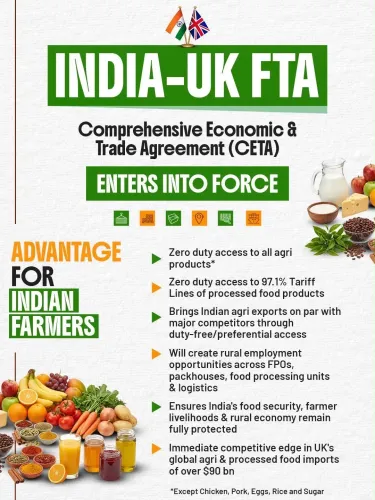
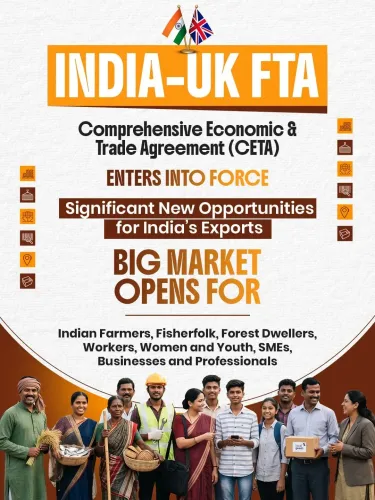
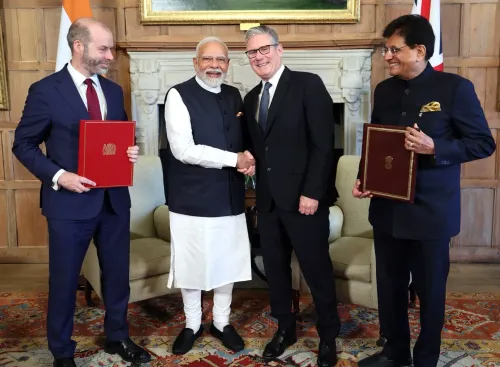
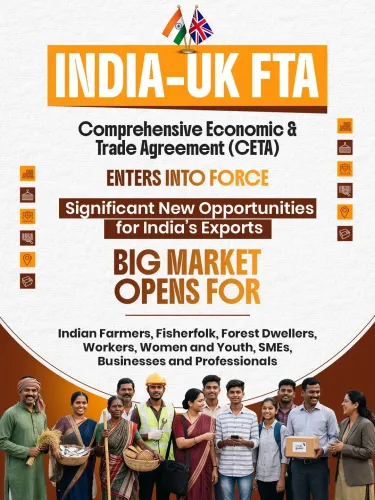
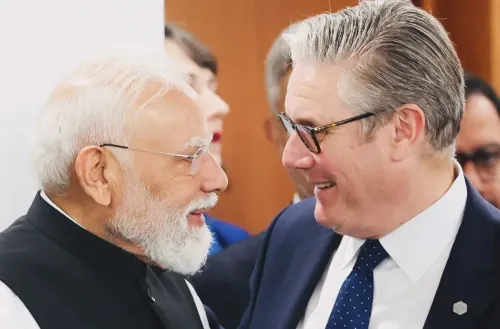
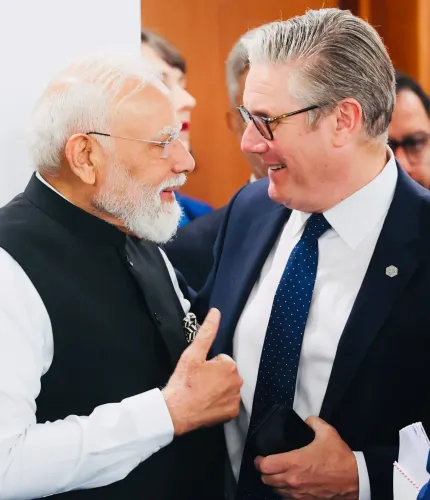
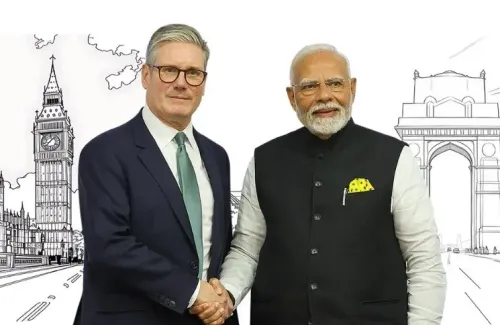
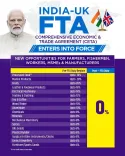
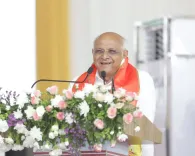
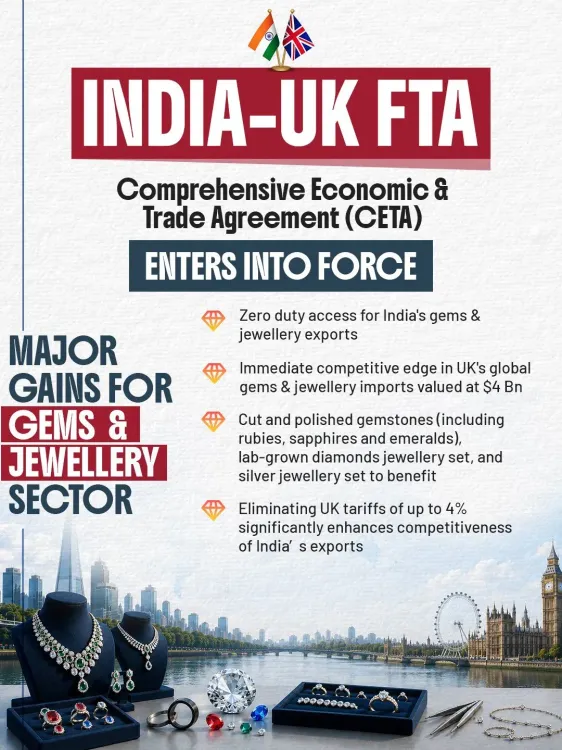
The post, tagged #IndiaUKFTA, was accompanied by four images and drew attention from trade and industry observers watching for implementation signals from the government.
Policy Backdrop
India and the United Kingdom formally launched negotiations for a bilateral free trade agreement in January 2022, capitalising on the opening created by Brexit — the UK's exit from the European Union. The talks aimed to reduce tariffs, ease market access for goods and services, and create a framework for professional mobility between the two countries.
The Modi government has made bilateral trade agreements a centrepiece of its economic strategy since 2014, concluding or reviving pacts with partners including the UAE, while pursuing parallel negotiations with the EU and other major economies. The India–UK deal fits into this broader push to diversify export destinations and attract investment into domestic manufacturing and services.
India's micro, small and medium enterprises (MSMEs) — which form the backbone of the country's export economy — are among the primary beneficiaries identified by the government, as reduced tariff barriers are expected to open British markets to a wider range of Indian goods.
Stakeholders and Impact
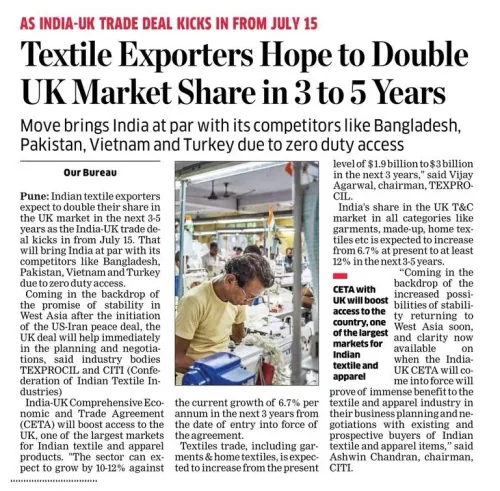
MSME exporters across sectors such as textiles, engineering goods, pharmaceuticals and processed foods are expected to gain from improved market access and lower duties in the UK. The agreement also carries significant implications for Indian professionals working or seeking to work in the UK, with provisions anticipated to ease the movement of skilled workers and services providers.
Indian industries competing with other exporting nations in the British market stand to benefit from a more level playing field, particularly as the UK continues to negotiate its own post-Brexit trade architecture. Investment flows in both directions — Indian companies expanding into the UK and British firms entering India — are also expected to receive a boost under the new framework.
What's Next
Attention will now shift to the granular details of implementation: sector-wise tariff schedules, rules-of-origin provisions, and any domestic legislative or regulatory changes required to give full effect to the agreement on both sides. Industry bodies and trade associations are expected to study the fine print closely to identify immediate opportunities and any transitional challenges.
For New Delhi, the India–UK CETA represents a template for similar agreements under active negotiation, and its early performance will be closely watched as a benchmark for India's broader trade liberalisation agenda under the Viksit Bharat framework.
Point of View
Signalling the government's intent to present the agreement as a whole-of-Cabinet achievement rather than a technocratic trade event. The emphasis on MSMEs and professional mobility is a deliberate political choice, targeting two voter-relevant constituencies — small business owners and the Indian diaspora — ahead of the pact's implementation phase. Coming after years of protracted negotiations, the agreement's entry into force would mark a significant acceleration of India's post-Brexit trade diplomacy. The framing also sets a template for how the government is likely to communicate future trade deals as deliverables of the Modi administration's long-term economic vision.
NationPress
15 Jul 2026
Frequently Asked Questions
What is the India-UK Comprehensive Economic and Trade Agreement?
The India-UK Comprehensive Economic and Trade Agreement (CETA) is a bilateral free trade agreement between India and the United Kingdom aimed at reducing tariffs, boosting trade in goods and services, and facilitating the movement of professionals between the two countries. Negotiations were formally launched in January 2022 after the UK left the European Union.
When did the India-UK FTA come into force?
According to Union Defence Minister Rajnath Singh's post on X, the India-UK Comprehensive Economic and Trade Agreement came into force on 15 July 2026.
How will the India-UK trade deal benefit MSMEs?
The agreement is expected to reduce trade barriers and tariffs in the UK market, giving Indian micro, small and medium enterprises (MSMEs) improved access to British consumers and buyers across sectors such as textiles, engineering goods, pharmaceuticals and processed foods.
What does the India-UK FTA mean for Indian professionals in the UK?
The agreement is expected to open new avenues for Indian professionals working or seeking to work in the United Kingdom, potentially easing the movement of skilled workers and services providers between the two countries.
What is Viksit Bharat and how does the India-UK trade deal relate to it?
Viksit Bharat is the Indian government's vision to transform India into a fully developed economy by 2047. The Modi government has positioned bilateral trade agreements, including the India-UK CETA, as instruments of this vision by expanding export markets, attracting investment and integrating India more deeply into the global economy.