Akhilesh Yadav raises land rights alarm for UP farmers
Synopsis
Samajwadi Party president Akhilesh Yadav posted a sharp Hindi rhetorical question on November 1, 2026, invoking the mythological figure Angad to highlight the plight of UP farmers losing their land to development projects.
Key Takeaways
Akhilesh Yadav posted on November 1, 2026 , asking where the mythological Angad would plant his feet if no land remained — a direct allegory for dispossessed farmers.
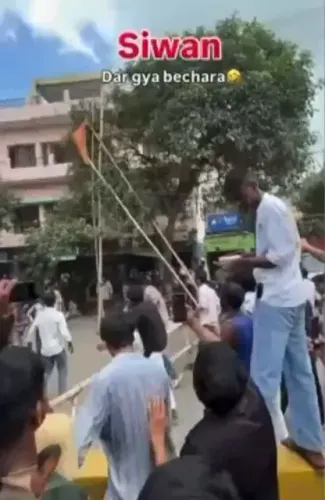
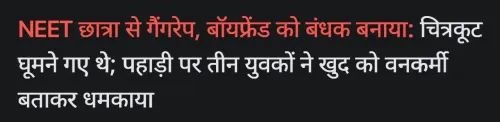
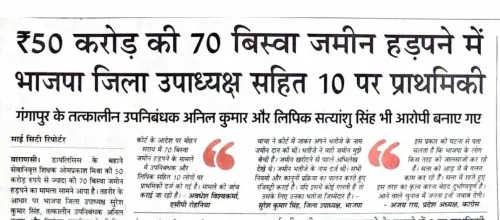
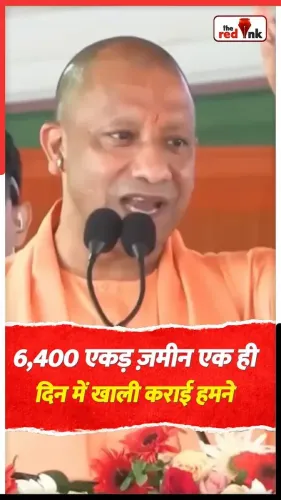
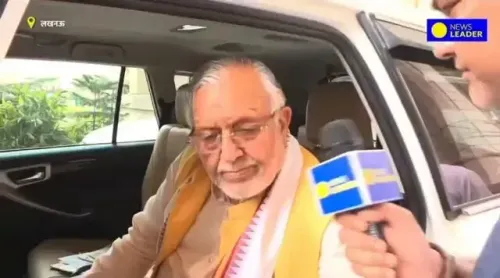
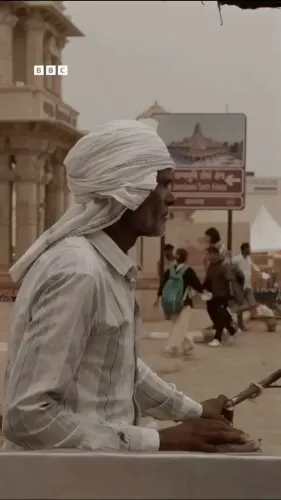
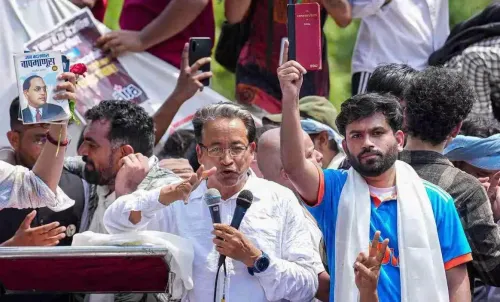
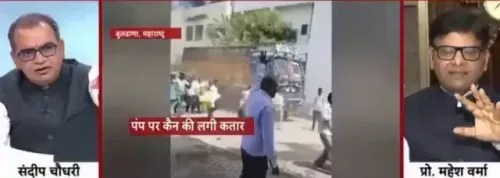
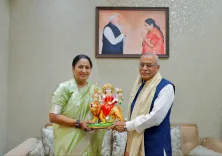
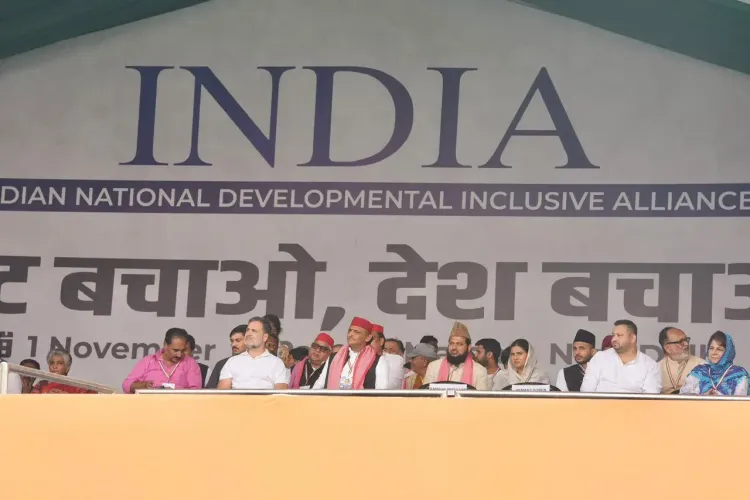
The post was accompanied by four images , suggesting it is tied to a specific on-ground situation in Uttar Pradesh .
The Samajwadi Party has consistently positioned agrarian land rights as a core political issue, particularly in western and central UP .
Agricultural land in UP has faced sustained acquisition pressure from expressway corridors, industrial clusters, and urban expansion projects over the past decade.
Compensation delays and inadequate rehabilitation for smallholder farmers remain unresolved policy gaps in the state.
The Angad metaphor frames dispossessed farmers as stripped not just of land but of the very capacity to resist — sharpening the political charge.
A single, cutting line — and Samajwadi Party president Akhilesh Yadav put the entire land-acquisition debate back on the table. On Sunday, November 1, 2026, the former Chief Minister of Uttar Pradesh and sitting Lok Sabha MP posted a rhetorical question in Hindi that landed like a charge sheet against the state's land-use policies.
The post reads: 'Jab zameen hi nahin bachi toh Angad paon kahan rakhega?' — 'When no land remains, where will Angad plant his feet?' The invocation of Angad — the legendary figure from the Ramayana whose feet could not be moved by any force — is deliberate and pointed. Yadav is asking: if a farmer's land itself has been taken, what immovable ground does he have left to stand on?
The land beneath the allegory
The metaphor is rooted in a real and long-running conflict. Uttar Pradesh, India's most populous state, has seen sustained pressure on agricultural land over the past decade — from expressway corridors and industrial clusters to urban expansion around cities like Lucknow, Noida, and Agra. Acquisition proceedings, compensation disputes, and the pace of rehabilitation have repeatedly brought farmers and the state government into confrontation.
Yadav's Samajwadi Party has made agrarian grievances a core political plank, especially in the western and central UP belts where smallholder farmers are most exposed to large-scale land-use changes. The four images attached to the post — though their precise content cannot be independently verified — suggest the statement is pegged to a specific, on-ground situation rather than being abstract commentary.
Why the Angad frame cuts deep
Choosing the Angad metaphor over a routine policy statement is a strategic act. Angad's immovability is not merely physical — in the Ramayana it represents righteous, unshakeable resolve. By asking where Angad would 'place his feet' if the ground itself is gone, Yadav frames the dispossessed farmer not as a supplicant but as someone whose very capacity for resistance has been stripped away. It is a call to notice, not just a political jab.
Regional opposition voices in UP have periodically escalated such rhetoric ahead of local body cycles and ahead of state assembly sessions, when land-policy grievances tend to receive legislative attention. Whether the ruling dispensation in Lucknow responds with a policy clarification or counters on political grounds will signal how seriously this particular episode of public pressure is being taken.
Farmers caught between development and displacement
The broader pattern is well-documented: infrastructure-led growth in UP has delivered highways, logistics parks, and data-centre corridors — but compensation timelines lag, alternative livelihood support is patchy, and smallholders with less than two acres frequently slip through rehabilitation nets. Yadav's post, brief as it is, speaks directly to that gap between headline investment numbers and the lived reality of the farmer whose field disappears under a boundary wall.
With no ground left to stand on, the question Akhilesh Yadav is really asking is simpler and harder than any policy document: whose development is this, exactly?
Point of View
Ahead of potential state legislative sessions, is unlikely to be accidental. Whether it catalyses a concrete policy response or remains political theatre will depend on whether the imagery attached to the post documents a specific, verifiable displacement — giving the opposition a live case to prosecute.
NationPress
1 Nov 2026
Frequently Asked Questions
What did Akhilesh Yadav post about land on November 1 2026?
He posted a Hindi rhetorical question — 'When no land remains, where will Angad plant his feet?' — using the Ramayana figure Angad as a metaphor for farmers in Uttar Pradesh who have lost their agricultural land to development projects.
What is the Angad reference Akhilesh Yadav used?
Angad is a character from the Ramayana renowned for planting his feet so firmly that no one could move him. Yadav used the metaphor to argue that if a farmer's land is gone, even that legendary immovable resolve has nowhere left to stand.
Why is land acquisition a political issue in Uttar Pradesh?
UP has seen large-scale acquisition of agricultural land for expressways, industrial corridors, and urban projects. Farmers, especially smallholders, have repeatedly raised concerns about delayed compensation and inadequate rehabilitation, making it a persistent flashpoint.
What is Samajwadi Party's position on farmer land rights in UP?
The Samajwadi Party, led by Akhilesh Yadav, has consistently opposed what it describes as inadequate compensation and forced acquisition of farmland for state-backed infrastructure and industrial projects in Uttar Pradesh.
Is the UP government likely to respond to Akhilesh Yadav's land post?
Research indicates that opposition statements on land acquisition in UP have periodically prompted state government clarifications, especially ahead of legislative sessions, though no official response to this specific post has been confirmed.