Akhilesh Yadav targets BJP over corruption, asks Ayodhya-Gorakhpur distance
Synopsis
Samajwadi Party president Akhilesh Yadav on 26 June 2026 accused the BJP government in Uttar Pradesh of rigging vote counts, enabling gold and jewellery fraud, and withdrawing criminal cases against its own leaders, closing with a pointed rhetorical jab at Chief Minister Yogi Adityanath via the Ayodhya-Gorakhpur question.
Key Takeaways
Akhilesh Yadav posted on 26 June 2026 attacking the BJP government in Uttar Pradesh on multiple corruption fronts.
He alleged manipulation in vote counting, calling it a betrayal of basic arithmetic integrity.
The post accused the ruling party of enabling short-weighing and theft in the gold and jewellery trade.
Yadav charged that BJP leaders had criminal cases against themselves dropped, shielding them from accountability.
The closing question — 'How far is Ayodhya from Gorakhpur?' — is a widely understood rhetorical dig at CM Yogi Adityanath and the gap between BJP's religious symbolism and governance record.
The post is seen as early campaign messaging ahead of the 2027 Uttar Pradesh assembly elections .
Samajwadi Party president Akhilesh Yadav launched a sharp attack on the Bharatiya Janata Party government in Uttar Pradesh on Friday, 26 June 2026, accusing it of electoral fraud, corruption in gold and silver trading, and shielding its own leaders from criminal cases — ending with a pointed rhetorical question about the distance between Ayodhya and Gorakhpur.
Context
In the post, Akhilesh Yadav wrote in Hindi: 'गणित की पढ़ाई करने का क्या फ़ायदा जब गिनती में ही हेराफेरी हो गई' — 'What is the use of studying mathematics when the counting itself has been manipulated?' He also alleged 'सोने-चाँदी में घटतोली' — short-weighing or adulteration in gold and silver — and 'ज़ेवरातों की चोरी', or theft of jewellery, framing these as emblematic of systemic corruption under the ruling dispensation.
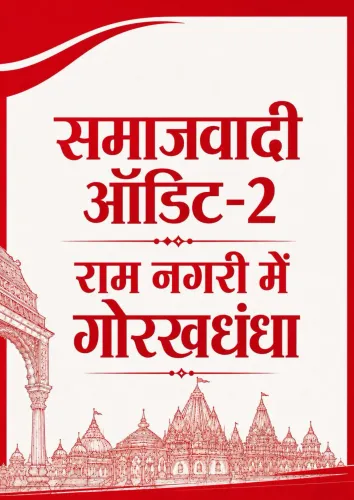
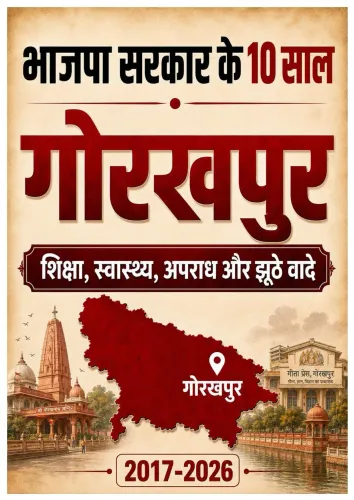
The post closes with a question that has circulated on social media: 'अयोध्या से गोरखपुर कितनी दूर है?' — 'How far is Ayodhya from Gorakhpur?' — widely read as a veiled reference to Chief Minister Yogi Adityanath, whose political base is Gorakhpur, and the BJP's flagship Ram Temple project in Ayodhya, implying a gap between the party's religious symbolism and its governance record.
Policy Backdrop
The BJP has governed Uttar Pradesh continuously since 2017, with Yogi Adityanath as Chief Minister. The Samajwadi Party has consistently alleged that the ruling party withdrew or diluted criminal cases against its own politicians — a charge that formed a central plank of SP's 2022 assembly election campaign as well.
Akhilesh Yadav's reference to 'ख़ुद के ही गुनाहों के मुक़दमे हटाए हैं' — 'those who got cases of their own crimes dropped' — echoes this long-standing opposition narrative. The SP has repeatedly accused the BJP of using state institutions to protect ruling-party members while targeting political opponents.
Stakeholders and Impact
The post is directed at Uttar Pradesh's estimated 15 crore-plus voters, particularly those in constituencies where BJP's governance record on law and order, economic fairness, and institutional integrity is under scrutiny. The Ayodhya-Gorakhpur framing also speaks to voters who have observed the BJP's dual identity — religious nationalism centred on Ayodhya and political consolidation anchored in Gorakhpur.
Opposition parties, civil society groups monitoring electoral integrity, and traders in the gold and silver sector — if the jewellery references allude to a specific regulatory or market episode — are among the stakeholders implicated. The SP's social media outreach with such posts is aimed at consolidating its base ahead of the 2027 Uttar Pradesh assembly elections.
What's Next
With the 2027 Uttar Pradesh assembly polls approaching, the Samajwadi Party is expected to intensify its campaign around corruption allegations, electoral process integrity, and the BJP's governance record. The Ayodhya-Gorakhpur question is likely to recur as a campaign motif, testing whether voters associate the BJP's symbolic achievements with tangible improvements in daily governance.
Any response from the BJP or Chief Minister Yogi Adityanath's office, as well as any Election Commission proceedings related to alleged counting irregularities, will shape the political temperature in the months ahead.
Point of View
SP is attempting to build a composite 'system is rigged' narrative rather than a single-issue critique. This mirrors the party's 2022 playbook but with sharper social-media craft, suggesting SP is moving earlier and more aggressively into campaign mode ahead of 2027. The BJP's silence or counter-response will signal how seriously Lucknow views the opposition's ability to set the pre-election agenda.
NationPress
26 Jun 2026
Frequently Asked Questions
What did Akhilesh Yadav say about BJP corruption on 26 June 2026?
Akhilesh Yadav accused the BJP government in Uttar Pradesh of manipulating vote counts, enabling fraud in the gold and silver trade, and withdrawing criminal cases filed against ruling-party leaders, calling it deep-rooted corruption rather than mere misgovernance.
What does the Ayodhya-Gorakhpur question mean in Akhilesh Yadav's post?
The question 'How far is Ayodhya from Gorakhpur?' is a rhetorical device widely interpreted as highlighting the distance between the BJP's religious-nationalist symbolism centred on Ayodhya and the ground reality of governance in CM Yogi Adityanath's home base of Gorakhpur.
Is Akhilesh Yadav's post related to the 2027 UP assembly elections?
While no election date has been announced, political analysts view the post as part of the Samajwadi Party's early campaign messaging aimed at consolidating opposition voters ahead of the 2027 Uttar Pradesh assembly elections.
What is the Samajwadi Party's main allegation against BJP in UP?
The Samajwadi Party's central allegation is that the BJP has used state power to protect its own leaders by withdrawing criminal cases against them, while simultaneously presiding over electoral irregularities and economic corruption affecting ordinary citizens.
Who is Yogi Adityanath and why is Gorakhpur significant?
Yogi Adityanath is the Chief Minister of Uttar Pradesh and a BJP leader whose political career is rooted in Gorakhpur, where he served as a long-time Member of Parliament; the city is central to his identity, making it a frequent reference point in opposition attacks.