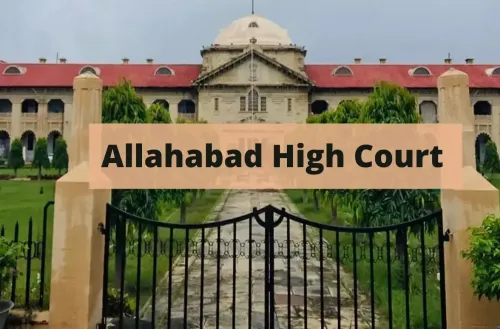
Allahabad HC: Forcing employees to wear Santa Claus caps hurts religious sentiments
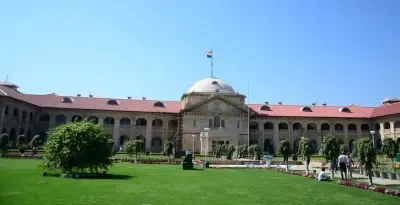
Synopsis
The Allahabad High Court has warned employers against compelling workers to wear Santa Claus red caps, calling it a breach of religious freedom in a democratic society. The observation emerged from a criminal case linked to an Agra retail chain, where the court also corrected a magistrate's legal error in treating a non-cognizable offence as a State case.
Key Takeaways
The Allahabad High Court ruled that forcing employees to wear Santa Claus red caps hurts sentiments of people of different faiths and is impermissible.
Justice Saurabh Srivastava warned the applicant and superiors at 'V Bazar' not to repeat such instructions at the workplace.
The case arose from a charge sheet dated 20 September 2023 under Sections 298 and 504 IPC at Sadar Bazar police station, Agra .
The court held that the Chief Judicial Magistrate erred in treating the non-cognizable offence as a State case; proceedings will continue as a complaint case.
The 21 December 2023 summoning order against the applicant was set aside.
The Allahabad High Court has ruled that employees cannot be compelled by their superiors to wear Santa Claus red caps, observing that such directives risk hurting the sentiments of individuals belonging to different faiths and beliefs. The observation came on 21 September 2026 in a case originating from Agra, as a single-judge bench partly allowed an application challenging criminal proceedings.
Background of the Case
Justice Saurabh Srivastava of the Allahabad High Court passed the observation while partly allowing an application filed by Vikram Singh alias Vishwa Vikram Singh. The applicant had sought quashing of a charge sheet dated 20 September 2023, a cognisance and summoning order dated 21 December 2023 passed by the Chief Judicial Magistrate, Agra, and the entire criminal proceedings. The case had been registered under Sections 298 and 504 of the Indian Penal Code (IPC) at Sadar Bazar police station in Agra.
Key Legal Finding on Criminal Proceedings
The applicant's counsel argued that offences under Sections 298 and 504 IPC are non-cognizable and that, under the explanation to Section 2(d) of the CrPC, the police report filed after investigation ought to be treated as a complaint case rather than a State case. The prosecution did not dispute this legal submission. Accepting the contention, the High Court held that the Chief Judicial Magistrate had committed a legal error by taking cognisance of the charge sheet as a State case. The court accordingly set aside the 21 December 2023 summoning order insofar as it pertained to the applicant, while clarifying that proceedings could continue as a complaint case in accordance with law.
Justice Srivastava stated: 'The charge sheet submitted by the concerned Investigating Officer in the present case under Sections 298, 504 I.P.C. shall be treated as a complaint, and it is to be decided as a complaint, and the learned Magistrate fell in legal error by taking cognisance as a State case.'
The Santa Claus Cap Warning
While examining documents placed on record, the court took note of an alleged instruction by superior authorities of a retail establishment referred to as 'V Bazar', requiring employees to wear Santa Claus red caps. Justice Srivastava observed that the documents 'crystal clearly' showed 'compulsion has been created by the superior authorities of V Bazar for wearing Santa Claus Red Cap.' The court held that such compulsion 'was somehow hurting the sentiments of the different faith and beliefs' and was impermissible in a democratic system where every citizen retains the right to follow their own faith.
The court issued a direct warning: 'Applicant along with his superior authorities are hereby warned not to repeat this type of instructions in shape of disturbing the peaceful and harmonious atmosphere of the working place amongst their employees,' Justice Srivastava stated.
Scope and Implications of the Order
The High Court was careful to limit the scope of its ruling. It stressed that the order was passed in compliance with the mandatory legal provision requiring non-cognizable offences to be treated as complaint cases. The court made clear that its decision on the criminal proceedings would not prevent the competent court from proceeding with the matter as a complaint case, if required, in accordance with law. This comes amid a broader judicial conversation in India about workplace rights and religious freedom, with courts increasingly scrutinising employer directives that may impinge on personal beliefs. The ruling is likely to draw attention from employment law practitioners and HR professionals across sectors.
Point of View
Though technically an aside in a procedural ruling, carries weight: it signals that Indian courts are willing to scrutinise workplace dress codes through the lens of religious freedom, not just employment law. The ruling surfaces a real tension in retail and services industries, where festive branding campaigns often override individual belief. What is notably absent from the order is any enforceable remedy beyond a warning — raising the question of whether such judicial observations, without penal consequence, are sufficient to change employer behaviour. The procedural correction on non-cognizable offences is, ironically, the more legally significant aspect of the judgment, yet it is the Santa cap remark that will command public attention.
NationPress
21 Sept 2026
Frequently Asked Questions
What did the Allahabad High Court rule about Santa Claus red caps?
The Allahabad High Court ruled that employers cannot compel employees to wear Santa Claus red caps, holding that such instructions hurt the sentiments of individuals belonging to different faiths. Justice Saurabh Srivastava warned the concerned employer, referred to as 'V Bazar', not to repeat such directives.
What was the original criminal case about?
The case was registered under Sections 298 and 504 of the IPC at Sadar Bazar police station in Agra. Applicant Vikram Singh alias Vishwa Vikram Singh challenged the charge sheet dated 20 September 2023 and the summoning order dated 21 December 2023 passed by the Chief Judicial Magistrate, Agra.
Why did the High Court set aside the summoning order?
The court found that offences under Sections 298 and 504 IPC are non-cognizable, meaning the police report should have been treated as a complaint case under Section 2(d) of the CrPC, not as a State case. The Chief Judicial Magistrate had erred in taking cognisance as a State case, prompting the High Court to set aside the summoning order against the applicant.
Can the criminal case still proceed?
Yes. The High Court clarified that the proceedings may continue as a complaint case in accordance with law. The court's ruling only corrected the procedural classification of the offence — it did not quash the case entirely.
What is the broader significance of the Santa cap ruling for workplaces?
The observation reinforces that in a democratic country, no employer can override an employee's right to follow their own faith through workplace dress mandates. While the ruling is a caution rather than a binding directive on all employers, it sets a judicial reference point for religious freedom in workplace settings across India.