Amarnath Yatra 2026: Pilgrims reach Srinagar as RFID, registration kick off in Jammu
Synopsis
With 1,600 tokens issued on day one and 18 registration counters active across Jammu, the Amarnath Yatra 2026 is off to a highly organised start. LG Manoj Sinha's flag-off on 3 July sets the clock ticking on a 57-day pilgrimage to a cave shrine at 3,880 metres — one of India's most logistically complex religious events.
Key Takeaways
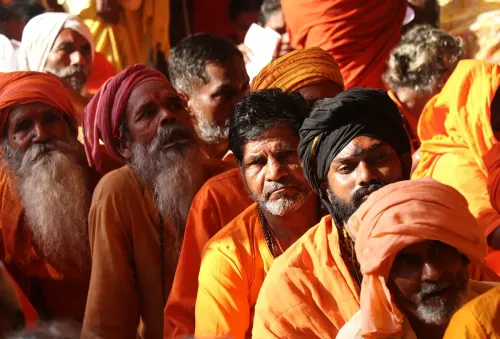
Pilgrims began arriving at the Yatri Transit Camp, Srinagar on 2 July 2026 ahead of the first batch of Amarnath Yatra 2026 .
1,600 tokens were issued on the first day — 800 each for the Pahalgam and Baltal routes.
The Jammu district administration has set up 18 on-the-spot registration and token counters at key locations across the city.
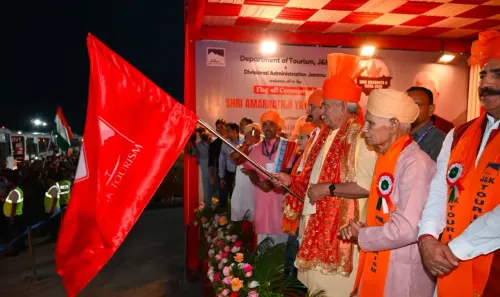
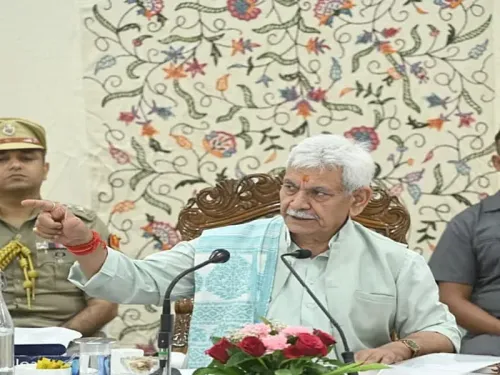
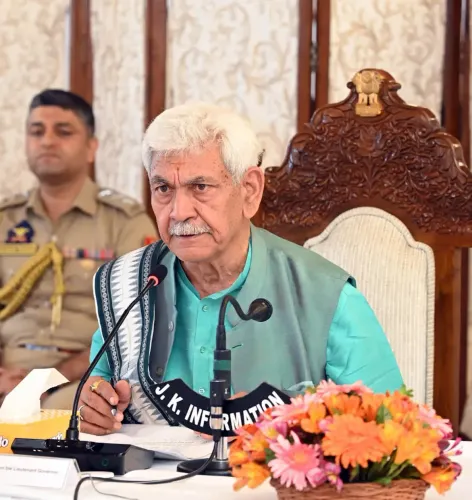
Lieutenant Governor Manoj Sinha will formally flag off the first batch on 3 July 2026 .
The yatra runs until 28 August 2026 , concluding on Shravan Purnima and Raksha Bandhan .
The Amarnath cave shrine is located at 3,880 metres in the Anantnag district of the Kashmir Himalayas.
Pilgrims began converging at the Yatri Transit Camp in Srinagar on Wednesday, 2 July 2026, ahead of the first batch of the Amarnath Yatra 2026, as on-the-spot registration and RFID card issuance got under way simultaneously in Jammu. Authorities confirmed that all logistical and security preparations for the opening batch of the annual pilgrimage have been completed.
Lieutenant Governor Manoj Sinha is scheduled to formally flag off the first batch, marking the official commencement of the Shri Amarnath Ji Yatra (SANJY) 2026, which runs from 3 July to 28 August 2026.
Token Distribution and Registration Process
The registration drive was preceded by token distribution, which began on Tuesday at the Tawi River Front in Jammu city. The administration deployed 10 token distribution counters at the venue to manage the surge of arriving devotees. On the first day alone, 1,600 tokens were issued — 800 allocated for the Pahalgam route and 800 for the Baltal route.
Officials noted that token holders complete their e-KYC and RFID registration on the day following token issuance, a sequenced system designed to ensure transparency and effective crowd management. Token generation begins daily at 6:00 am, with each pilgrim required to queue individually and one token issued per eligible person.
Infrastructure Across Jammu
For SANJY 2026, the Jammu district administration has established 18 on-the-spot registration and token counters across key locations, including the Tawi Riverfront Centre, Geeta Bhawan, Ram Mandir (Purani Mandi), Bhagwati Nagar, and the Railway Station. Officials described the process as being carried out in a streamlined manner to ensure smooth onward movement of pilgrims.
Security Arrangements
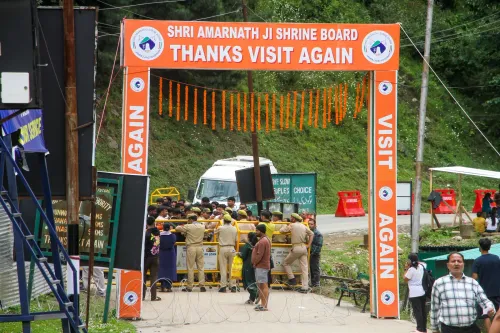
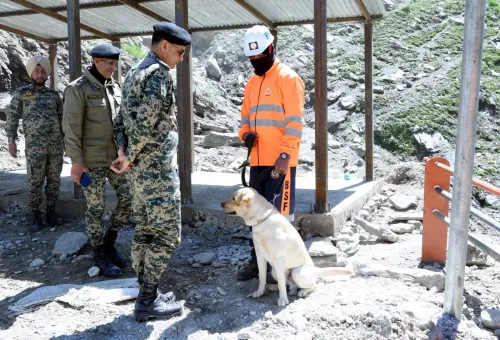
Elaborate security arrangements have been put in place at the Tawi River Front and surrounding areas. Security personnel have been deployed across the venue, with authorities closely monitoring token distribution and registration to prevent crowding and ensure orderly movement.
About the Yatra and the Shrine
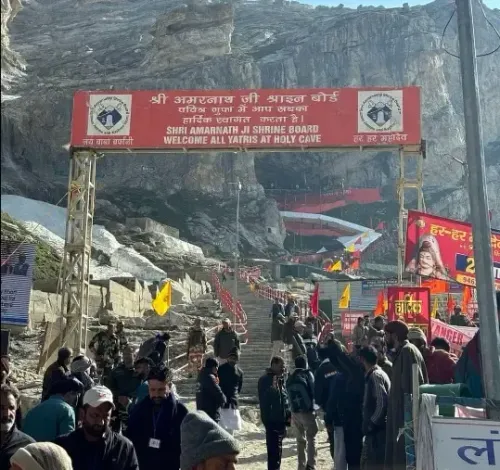
The Amarnath cave shrine sits at an altitude of 3,880 metres in the Anantnag district of the Kashmir Himalayas, housing a naturally formed ice stalagmite revered by devotees as a symbol of Lord Shiva. The formation is believed to wax and wane with the lunar cycle, drawing thousands of pilgrims each year.
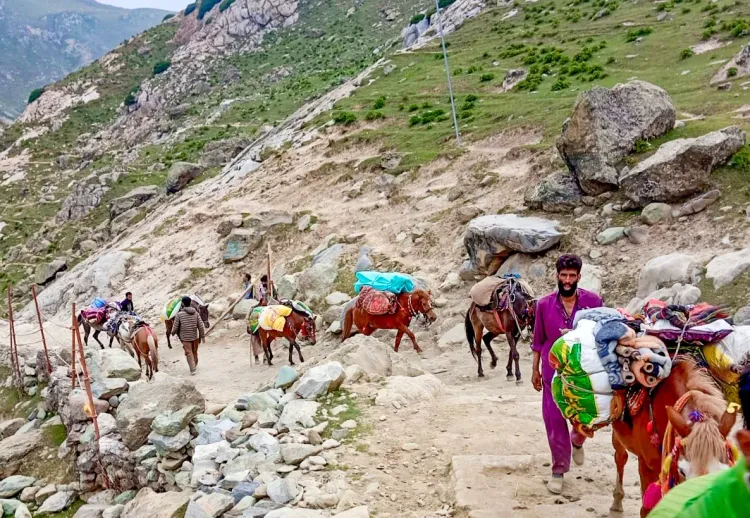
Devotees may choose between two trekking routes: the longer Pahalgam route, which takes approximately four days to reach the shrine, or the shorter Baltal route, which allows a same-day return after darshan. The yatra concludes on 28 August 2026, coinciding with Shravan Purnima and the Raksha Bandhan festival.
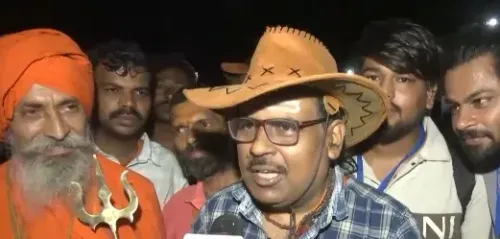
One pilgrim in Jammu, speaking to reporters, captured the mood of the gathering faithful: 'I am very excited; I did not expect that I would get a chance in the first batch.' With registrations now open and the first batch set to depart on 3 July, all eyes are on a smooth and secure start to one of India's most demanding high-altitude pilgrimages.
Point of View
Biometric registration the next — reflects lessons learned from past yatras where bottlenecks at registration points triggered dangerous crowding. Eighteen counters across Jammu is a meaningful logistical upgrade. The harder test, as always, will be crowd management on the mountain routes themselves, where altitude, weather, and sheer pilgrim numbers have historically overwhelmed on-ground capacity. Whether this year's system holds under peak-season pressure will be the real measure of administrative preparedness.
NationPress
29 Sept 2026
Frequently Asked Questions
When does Amarnath Yatra 2026 begin and end?
Amarnath Yatra 2026 begins on 3 July 2026 and concludes on 28 August 2026, coinciding with Shravan Purnima and the Raksha Bandhan festival. Lieutenant Governor Manoj Sinha is scheduled to flag off the first batch of pilgrims.
How does the on-the-spot registration and RFID process work?
Pilgrims first collect a token at one of the designated counters — token generation starts at 6:00 am daily, with one token per eligible person. The following day, token holders complete e-KYC verification and receive their RFID card, after which they may proceed on the yatra.
What are the two routes for the Amarnath Yatra?
Pilgrims can choose between the Pahalgam route, which takes approximately four days to reach the shrine, or the shorter Baltal route, which allows a same-day return after darshan. On the first day of token distribution, 800 tokens were allocated for each route.
Where is the Amarnath cave shrine located?
The Amarnath cave shrine is situated at an altitude of 3,880 metres in the Anantnag district of the Kashmir Himalayas. It houses a naturally formed ice stalagmite believed by devotees to represent Lord Shiva, which reportedly waxes and wanes with the lunar cycle.
How many registration counters have been set up in Jammu for Amarnath Yatra 2026?
The Jammu district administration has established 18 on-the-spot registration and token counters across key locations, including the Tawi Riverfront Centre, Geeta Bhawan, Ram Mandir (Purani Mandi), Bhagwati Nagar, and the Railway Station.