Amarnath Yatra 2025: BSF DG inspects security ahead of July 3 start
Synopsis
With the Amarnath Yatra set to begin on 3 July, BSF DG Praveen Kumar personally walked the route, NSG and SOG staged a counter-terror drill at Raghunath Mandir, and 1,600 pilgrim tokens were issued on the same day — signalling one of the most coordinated pre-Yatra security mobilisations in recent years.
Key Takeaways
BSF DG Praveen Kumar reviewed Amarnath Yatra security arrangements on 30 June , inspecting disaster response, medical aid, and anti-sabotage measures.
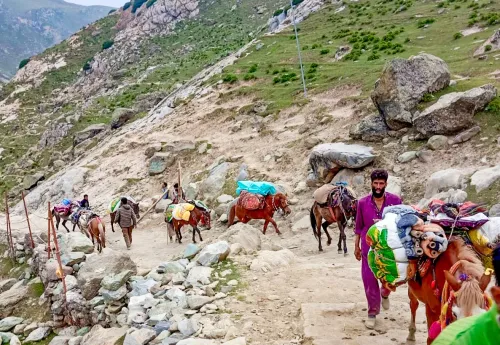
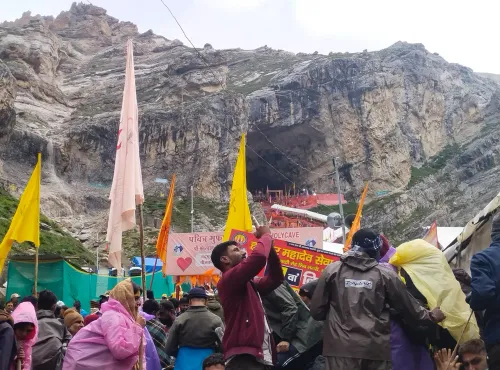
The Shri Amarnath Ji Yatra (SANJY) is scheduled to begin on 3 July and run for two months to the 3,880-metre high cave shrine.
A full-scale dry trial run was conducted along the Yatra route on 29 June to assess convoy movement and security preparedness.
NSG and SOG Jammu conducted a joint counter-terror mock drill at Raghunath Mandir in Jammu, simulating a terrorist attack scenario.
1,600 tokens were issued at the Tawi River Front — 800 each for the Pahalgam and Baltal routes — with registration opening on 1 July .
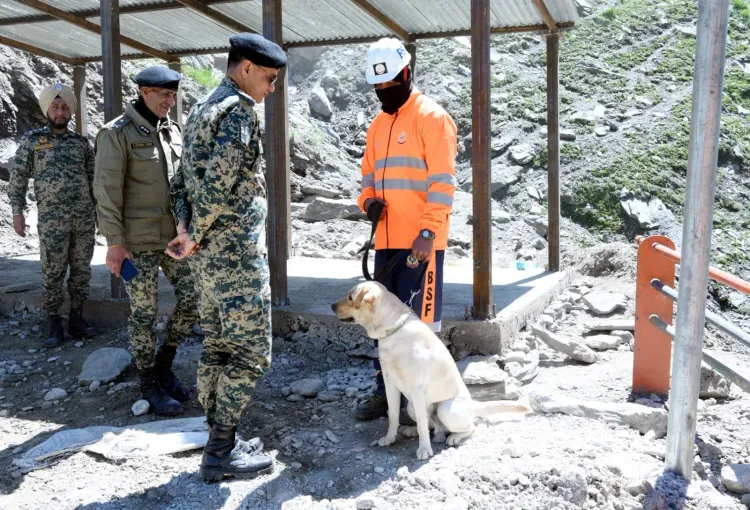
Border Security Force (BSF) Director General Praveen Kumar on Tuesday, 30 June conducted a comprehensive review of security arrangements for the Shri Amarnath Ji Yatra (SANJY), days before the two-month pilgrimage to the Amarnath cave shrine in Jammu and Kashmir commences on 3 July. Officials confirmed that all preparations have been completed for the smooth conduct of the annual pilgrimage to the 3,880-metre high shrine.
DG's Ground Assessment
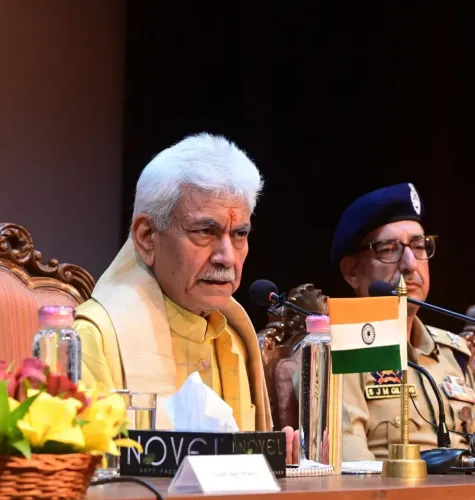
BSF DG Praveen Kumar, accompanied by senior officials, personally visited key locations along the Yatra route to assess operational readiness. His inspection covered disaster response and mountain rescue capabilities, medical assistance for pilgrims, and anti-sabotage measures. Kumar also reviewed coordination mechanisms between the BSF, other central security forces, and civil authorities.
The DG stressed the importance of synergy among all agencies, underscoring that coordinated efforts are essential to ensuring a safe pilgrimage for every devotee. The BSF, as the Central Armed Police Force responsible for guarding India's borders with Pakistan, plays a central role in securing the Yatra route each year.
Dry Run and Counter-Terror Drills
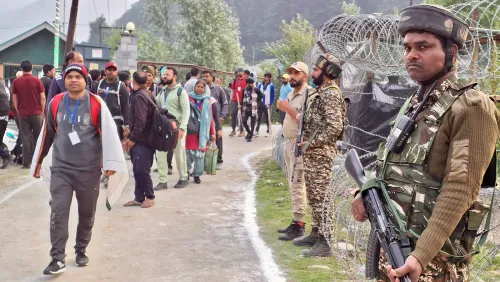
A day before the DG's visit, a full-scale dry trial run was conducted along the Yatra route by security personnel to evaluate convoy movement, security deployment, and overall preparedness ahead of the official commencement.
Separately, in Jammu city, the Special Operations Group (SOG) of Jammu and Kashmir Police and the National Security Guard (NSG) carried out a joint counter-terror mock drill at the historic Raghunath Mandir. The exercise simulated a high-risk terrorist attack scenario, testing rapid intervention, area domination, hostage rescue, casualty evacuation, and inter-agency coordination among SOG Jammu, NSG, and other security agencies.
Token Distribution Begins at Tawi River Front
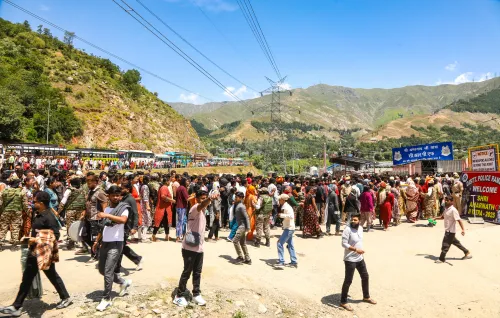
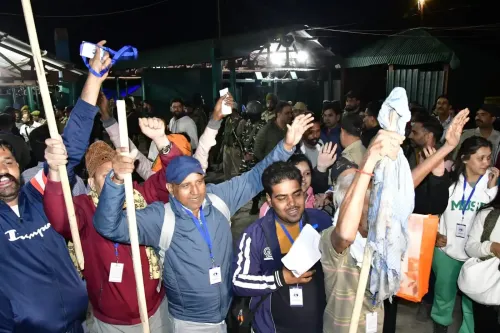
Token distribution for the annual Yatra began on 30 June at the Tawi River Front in Jammu. The administration deployed 10 token distribution counters at the venue, issuing a total of 1,600 tokens — 800 allocated for the Pahalgam route and 800 for the Baltal route.
Officials stated that pilgrims who received tokens on Tuesday will be eligible to complete their formal registration from Wednesday before proceeding on the pilgrimage.
What This Means for Pilgrims
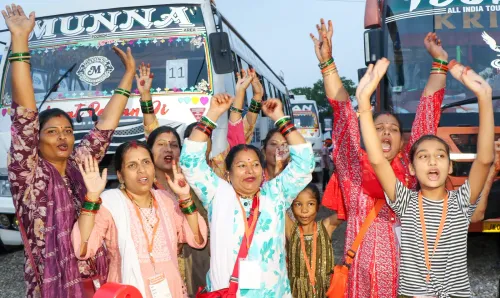
The multi-agency security framework — spanning the BSF, NSG, SOG, and civil administration — reflects the scale of logistical and security planning that the Amarnath Yatra demands each year. Notably, this is one of the highest-altitude pilgrimage routes in India, drawing hundreds of thousands of devotees across a two-month window. The dry runs and mock drills signal that authorities are prioritising both threat response and pilgrim welfare ahead of the 3 July start.
With registration set to open on 1 July and the Yatra formally beginning two days later, security agencies are expected to maintain heightened operational posture throughout the pilgrimage season.
Point of View
An NSG-SOG counter-terror drill, and same-day token distribution on 30 June points to an unusually compressed pre-Yatra security timeline — likely a response to the elevated threat environment in Jammu and Kashmir in recent months. What mainstream coverage tends to underplay is the coordination burden: the Amarnath Yatra involves multiple central forces, state police, civil administration, and disaster response agencies operating across two distinct high-altitude routes simultaneously. The dry run and mock drill suggest authorities are stress-testing that coordination, not merely signalling intent. The real measure of preparedness, however, will be response time and inter-agency communication in an actual incident — something no drill fully replicates.
NationPress
29 Sept 2026
Frequently Asked Questions
When does the Amarnath Yatra 2025 begin?
The Amarnath Yatra 2025 is scheduled to begin on 3 July and will run for approximately two months. The pilgrimage leads devotees to the Amarnath cave shrine situated at an altitude of 3,880 metres in Jammu and Kashmir.
What did BSF DG Praveen Kumar review ahead of the Yatra?
BSF DG Praveen Kumar visited key locations along the Yatra route on 30 June, assessing disaster response and mountain rescue capabilities, medical assistance for pilgrims, anti-sabotage measures, and coordination with other security forces and civil authorities.
What is the Pahalgam and Baltal token distribution for Amarnath Yatra?
Token distribution began on 30 June at the Tawi River Front in Jammu, with 1,600 tokens issued in total — 800 for the Pahalgam route and 800 for the Baltal route. Pilgrims who received tokens can complete formal registration from 1 July.
What counter-terror drills were conducted ahead of the Yatra?
The Special Operations Group (SOG) of Jammu and Kashmir Police and the National Security Guard (NSG) conducted a joint counter-terror mock drill at the historic Raghunath Mandir in Jammu. The drill simulated a high-risk terrorist attack, testing rapid intervention, hostage rescue, and casualty evacuation.
What is the BSF's role in the Amarnath Yatra?
The Border Security Force, as the Central Armed Police Force responsible for guarding India's borders with Pakistan, plays a central role in providing security along the Amarnath Yatra route each year. It coordinates with state police, NSG, and civil authorities to protect pilgrims throughout the two-month pilgrimage.