Ahmedabad AMC preps 42,000 MT hotmix stock for monsoon road repairs

Synopsis
Ahead of the 2025 monsoon, Ahmedabad's civic body has pre-stocked nearly 42,000 metric tonnes of hotmix material, activated an automated SCADA-equipped plant at Piplaj capable of 180 tonnes per hour, and approved infrared and jet patcher tenders across all zones — a scale of preparation that reflects how badly Ahmedabad's roads have historically suffered once the rains arrive.
Key Takeaways
AMC has planned 42,000 metric tonnes of hotmix supply for the 2025 monsoon season, slightly below the 44,333.71 metric tonnes used last year.
The fully automated hotmix plant at Piplaj has a production capacity of 180 tonnes per hour and is equipped with a SCADA system .
Tenders approved across all zones for infrared and jet patcher technologies for rapid road repair.
Raw material stocks include 4,000 MT of 20 mm aggregate, 3,000 MT of 10 mm aggregate, 5,000 MT of 6 mm aggregate, and 3.7 MT of bitumen.
The North Zone was the highest consumer of hotmix last monsoon at 9,831.28 metric tonnes .
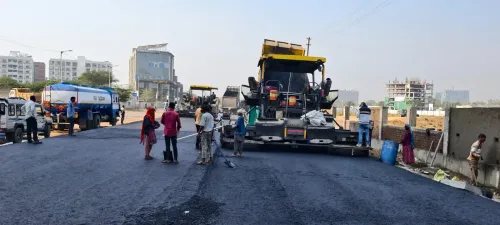
The Ahmedabad Municipal Corporation (AMC) has completed large-scale pre-monsoon preparations for road repair and maintenance across the city ahead of the 2025 monsoon season, stocking construction material, readying machinery, and operationalising its fully automated hotmix plant at Piplaj to respond swiftly to potholes and road damage during heavy rainfall.
Scale of Preparations
The civic body has planned to supply nearly 42,000 metric tonnes of hotmix material during the upcoming monsoon season — slightly below the 44,333.71 metric tonnes consumed across all zones during the previous monsoon. AMC has also approved tenders in all zones for patchwork using infrared and jet patcher technologies to enable rapid repairs even during adverse weather conditions.
Officials confirmed that sufficient hotmix stock has already been arranged in every zone and machinery has been kept on standby for immediate deployment when roads are damaged by rain.
Zone-Wise Usage From Last Monsoon
According to AMC data, the North Zone recorded the highest material usage last season at 9,831.28 metric tonnes, followed by the West Zone at 9,331.46 metric tonnes, the South Zone at 8,389.04 metric tonnes, and the North West Zone at 8,384.33 metric tonnes. The East Zone consumed 4,041.43 metric tonnes, the South West Zone used 3,671.69 metric tonnes, and the Central Zone utilised 534.30 metric tonnes. An additional 151.08 metric tonnes went toward bridge-related projects.
The Hotmix Plant: Capacity and Technology
AMC's fully automated hotmix plant at Piplaj is equipped with a SCADA system and operates through a batch-mix process. A dedicated control cabin manages the entire workflow — once the required data is entered, the process runs automatically. Dry material is loaded into four bins via a loader; aggregates and bitumen are then transferred through conveyor belts as per design specifications and mixed at temperatures between 170 and 175 degrees Celsius before being loaded into dumpers and dispatched to respective zones and wards.
The plant has a production capacity of 180 tonnes per hour, and the bitumen tank can store up to 100 metric tonnes.
Raw Material Stockpile
To ensure uninterrupted operations through the monsoon, AMC has pre-stocked 4,000 metric tonnes of 20 mm aggregate, 3,000 metric tonnes of 10 mm aggregate, and 5,000 metric tonnes of 6 mm aggregate. The corporation has also stored 5,000 metric tonnes of dust stock and 3.7 metric tonnes of bitumen.
With teams and equipment deployed across all zones, the AMC aims to minimise disruption to Ahmedabad's road network during the monsoon months — a period that has historically tested urban infrastructure across Gujarat's largest city.
Point of View
But the real measure will be response time when roads actually flood — not stockpile size. Ahmedabad has faced recurring pothole crises despite similar announcements in past monsoon cycles. The shift to infrared and jet patcher technologies is meaningful, but only if deployment is decentralised and ward-level teams are empowered to act without bureaucratic delays. The SCADA-equipped Piplaj plant is a genuine upgrade; the question is whether last-mile logistics — getting hotmix to a flooded ward at 11 pm — will match the plant's 180-tonne-per-hour promise.
NationPress
25 Sept 2026
Frequently Asked Questions
How much hotmix material has AMC prepared for the 2025 monsoon?
The Ahmedabad Municipal Corporation has planned to supply nearly 42,000 metric tonnes of hotmix material during the 2025 monsoon season. This compares to 44,333.71 metric tonnes consumed during the previous monsoon season.
What technologies is AMC using for monsoon road repair in Ahmedabad?
AMC has approved tenders across all zones for patchwork using infrared and jet patcher technologies, which enable faster repairs even during wet or adverse weather conditions.
Where is AMC's hotmix plant located and what is its capacity?
AMC's fully automated hotmix plant is located at Piplaj in Ahmedabad. It has a production capacity of 180 tonnes per hour and a bitumen tank with a storage capacity of up to 100 metric tonnes.
Which zone used the most road repair material during last monsoon?
The North Zone recorded the highest hotmix usage during the previous monsoon at 9,831.28 metric tonnes, followed by the West Zone at 9,331.46 metric tonnes.
What raw materials has AMC stocked ahead of the monsoon?
AMC has pre-stocked 4,000 metric tonnes of 20 mm aggregate, 3,000 metric tonnes of 10 mm aggregate, 5,000 metric tonnes of 6 mm aggregate, 5,000 metric tonnes of dust stock, and 3.7 metric tonnes of bitumen to ensure uninterrupted plant operations.