Ahmedabad AMC seals spice unit, halts sale of 2,000 kg stock worth ₹12.5 lakh

Synopsis
A single unsafe gravy sample from an Ahmedabad eatery triggered a supply-chain investigation that ended with a spice manufacturing unit sealed and 2,000 kg of Kesarinandan Spices stock — worth ₹12.5 lakh — frozen from sale. The AMC's willingness to trace contamination back to the source signals a sharper enforcement posture on food safety.
Key Takeaways
The Ahmedabad Municipal Corporation (AMC) sealed spice unit Jai Mataji Traders on 14 July after an unsafe food sample was traced to its products.
A stop-sale order covers approximately 2,000 kg of spices — 1,000 kg packaged and 1,000 kg loose — worth an estimated ₹12.5 lakh .
Products involved are chilli powder , turmeric powder , and coriander-cumin powder sold under the Kesarinandan Spices brand.
Three samples have been sent to the Public Health Laboratory for analysis under the Food Safety and Standards Act, 2006 .
The original unsafe sample was collected from Jai Ambe Bhojanalay ; the investigation traced the spices to the Old Madhupura Dhala area unit owned by Vikram Thawani .
The Ahmedabad Municipal Corporation (AMC) on Tuesday, 14 July sealed a spice manufacturing facility and issued a stop-sale order on approximately 2,000 kilograms of spices valued at an estimated ₹12.5 lakh, after a food safety investigation traced an unsafe gravy sample back to the unit. The action marks one of the more significant food-safety enforcement steps by the civic body in recent months.
How the Investigation Unfolded
The chain of events began when AMC's Health Department collected a gravy sample from Jai Ambe Bhojanalay, a local eatery. The Public Health Laboratory subsequently declared the sample 'unsafe', prompting officials to trace the source of the ingredients used in the dish.
The probe led investigators to Jai Mataji Traders, a spice manufacturing unit owned by Vikram Thawani, located in the Old Madhupura Dhala area of Ahmedabad. The unit produces spices marketed under the Kesarinandan Spices brand.
What Officials Found at the Unit
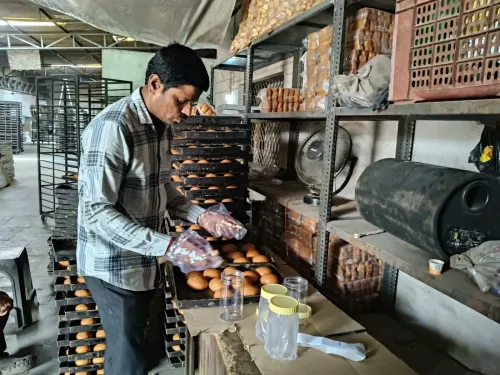
A Food Department team conducted a detailed on-site inspection and found stocks of packed and loose chilli powder, turmeric powder, and coriander-cumin powder bearing the Kesarinandan Spices label. The total stock under the stop-sale order comprises roughly 1,000 kilograms of packaged product and another 1,000 kilograms of loose spices.
Officials collected three samples — chilli powder, turmeric powder, and coriander-cumin powder — from the premises under the provisions of the Food Safety and Standards Act, 2006. All three samples have been dispatched to the Public Health Laboratory for independent analysis. The manufacturing unit itself has been sealed pending the outcome.
What the AMC Said
In an official statement, the AMC said: 'The Food Department of the Ahmedabad Municipal Corporation will not compromise in any manner with public health and will continue to take strict action against activities affecting food safety.' The civic body added that any individual or food business operator found to be endangering public health would face action under the Food Safety and Standards Act and the relevant provisions of the Gujarat Provincial Municipal Corporations (GPMC) Act.
Broader Context and What Comes Next
The crackdown comes amid heightened scrutiny of spice quality across India, following a series of food-safety alerts in recent years targeting adulteration in commonly used kitchen staples. This is the second time in recent months that an AMC food inspection has resulted in a unit being sealed following a restaurant-level sample failure — a pattern that suggests the department is increasingly working backwards through the supply chain rather than stopping at the point of sale.
The laboratory results on the three new samples will determine whether formal prosecution proceedings are initiated against Jai Mataji Traders under the Food Safety and Standards Act. Until then, the stop-sale order remains in force and the unit stays sealed.
Point of View
If sustained, could have a deterrent effect on mid-tier spice producers. However, the real test will come at the prosecution stage: India's food-safety enforcement record is littered with sealed units that quietly reopen once public attention moves on. Whether formal charges are filed against Jai Mataji Traders, and whether those charges hold, will determine if this action is meaningful accountability or routine optics.
NationPress
13 Oct 2026
Frequently Asked Questions
Why did the AMC seal the spice unit in Ahmedabad?
The AMC sealed Jai Mataji Traders after an investigation traced an 'unsafe' gravy sample — collected from Jai Ambe Bhojanalay and flagged by the Public Health Laboratory — to spices manufactured at the unit under the Kesarinandan Spices brand. The sealing is a precautionary measure pending laboratory analysis of fresh samples.
How much stock has been frozen and what is it worth?
Approximately 2,000 kilograms of spices have been placed under a stop-sale order, comprising 1,000 kg of packaged product and 1,000 kg of loose spices. The estimated value of the seized stock is ₹12.5 lakh.
Which products are affected by the stop-sale order?
The stop-sale order covers chilli powder, turmeric powder, and coriander-cumin powder sold under the Kesarinandan Spices brand, both in packaged and loose form.
What happens next in the AMC food safety case?
Three samples — chilli powder, turmeric powder, and coriander-cumin powder — collected from Jai Mataji Traders have been sent to the Public Health Laboratory for analysis. If the samples are found unsafe, formal prosecution proceedings can be initiated against the unit under the Food Safety and Standards Act, 2006.
What law governs the AMC's action against the spice unit?
The AMC acted under the Food Safety and Standards Act, 2006, and can also invoke the Gujarat Provincial Municipal Corporations (GPMC) Act against operators found to be endangering public health.