Why HM Shah and PM Modi Celebrate Tamil Poet-Philosopher Thiruvalluvar?
Synopsis
On Thiruvalluvar Day, Union Home Minister Amit Shah and Prime Minister Narendra Modi honored the revered Tamil poet-philosopher Thiruvalluvar. Their heartfelt tributes highlight the enduring impact of Thiruvalluvar’s teachings on society. Explore the life and legacy of this iconic figure and discover why his works continue to inspire generations.
Key Takeaways
Thiruvalluvar's teachings promote morality and ethics.
The Tirukkural is a masterpiece of Tamil literature.
Celebrated on Thiruvalluvar Day to honor his legacy.
Influences many communities across India.
His life exemplifies the balance between family and spirituality.
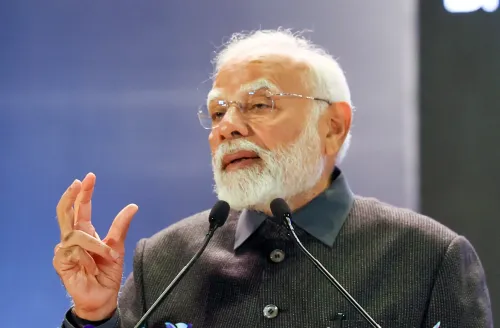
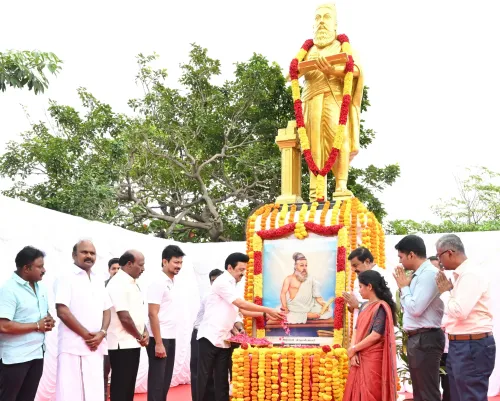
New Delhi, Jan 16 (NationPress) On the momentous occasion of Thiruvalluvar Day, Union Home Minister Amit Shah paid his respects alongside Prime Minister Narendra Modi to the celebrated Tamil poet-philosopher Thiruvalluvar, whose profound works and ideals continue to enlighten countless individuals across generations.
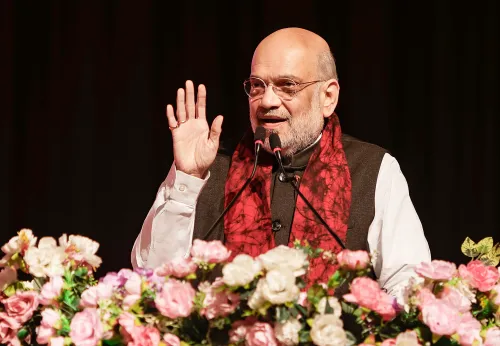
In a post on the social media platform X, Home Minister Shah remarked, "On Thiruvalluvar Day, I extend my heartfelt tributes to the venerable sage. The life and contributions of Thiruvalluvar Ji epitomized the highest virtues of our civilization and illuminated the path towards a righteous life and a harmonious society. His enduring legacy will guide us on our quest for greatness."
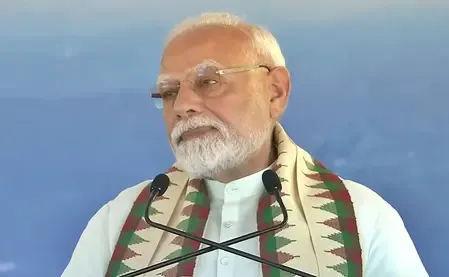
The Prime Minister also shared his thoughts on his official X account, stating, "Today, as we commemorate Thiruvalluvar Day, I pay homage to the multifaceted Thiruvalluvar, whose teachings and ideals inspire countless people. He envisioned a society characterized by harmony and compassion. He embodies the finest aspects of Tamil culture. I encourage everyone to explore the Tirukkural, which showcases the exceptional intellect of the great Thiruvalluvar."
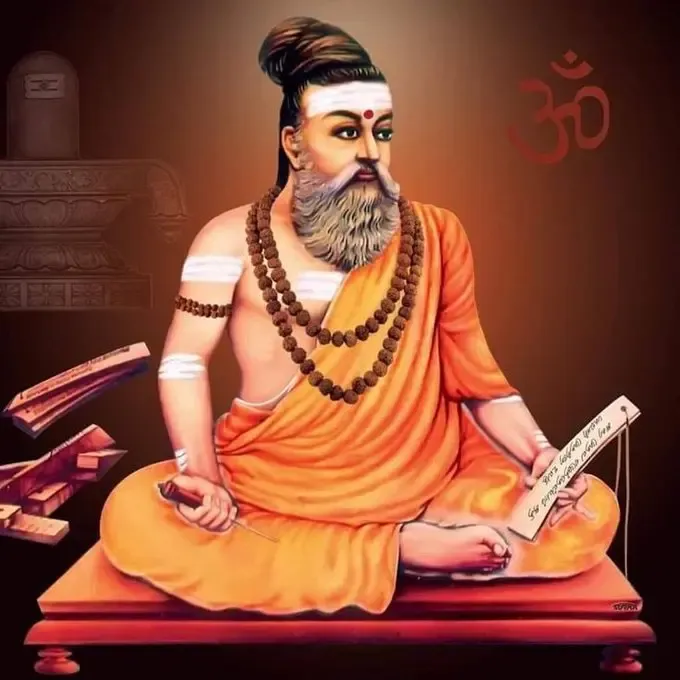
Thiruvalluvar thrived approximately two millennia ago in Mylapore, now part of Chennai.
He was a natural Siddha and poet, known simply as Valluvar, or more broadly as Thiruvalluvar, which translates to 'the devotee of the Valluva caste'.
The Valluvas were traditionally associated with the Pariah community, now known as Harijans, and their profession involved announcing royal decrees by beating drums.
According to tradition, Thiruvalluvar was born to Bhagavan, a Brahmin, and Adi, a Pariah woman whom he wed.
There are conflicting narratives regarding the birthplace and era of Thiruvalluvar.
While some accounts suggest he was born in Madurai, the capital of the Pandyas, his lifetime has been dated between the 4th century BCE and the early 6th century CE.
Scholar Maraimalai Adigal dated his birth to 31 BCE, while Tamil scholar Kamil Zvelebil proposed that Thiruvalluvar and the Tirukkural likely originated between 500 and 600 CE.
Many regard Thiruvalluvar as an incarnation of Brahma.
His wife, Vasuki, is celebrated as a devoted and virtuous woman, epitomizing the ideal spouse who faithfully fulfilled her husband's desires.
Through his life and teachings, Thiruvalluvar exemplified that one could lead a divine life of integrity and purity while remaining a family person.
He demonstrated that renouncing family life is not essential for attaining spiritual excellence.
Also affectionately known as Valluvar, he stands as one of the most esteemed Tamil philosopher-poets.
His masterpiece, the Tirukkural, consists of 1,330 couplets addressing morality, governance, economics, and love.
This text is hailed as one of the pinnacle achievements of Tamil literature and is revered for its universal values and ethical clarity.
In January 1935, the Tamil Nadu government officially acknowledged 31 BCE as Thiruvalluvar's birth year.
Scholarly consensus suggests that Valluvar might have connections with either Jainism or Hinduism.
During his lifetime, Hinduism, Jainism, and Buddhism flourished throughout the Indian subcontinent.
Thiruvalluvar is celebrated as one of the greatest poet-philosophers of the Sangam period.
His work is esteemed to such an extent that it has been referred to by various names, including Tirukkural, Uttaravedam, Tamil Veda, Teyvanul (the divine book), and Potumarai (the common Veda).
Across southern India, Thiruvalluvar is venerated as a saint, and in certain traditions, as a deity.
Many Shaivite communities regard him as the 64th Nayanmar, particularly in areas like Mylapore and Tiruchuli.
Numerous temples dedicated exclusively to Thiruvalluvar exist in South India, with the most renowned located in Chennai's Mylapore, constructed in the early 16th century within the Ekambareeswara-Kamakshi temple complex.
Point of View
It is essential to recognize the significance of Thiruvalluvar's teachings in contemporary society. His emphasis on morality, governance, and compassion is increasingly relevant in our times. Acknowledging leaders like Amit Shah and Narendra Modi paying homage to such influential figures fosters a sense of cultural pride and unity, highlighting the importance of preserving our rich heritage. This celebration serves as a reminder of the values that can guide us towards a better future.
NationPress
19 Sept 2026
Frequently Asked Questions
Who was Thiruvalluvar?
Thiruvalluvar was a celebrated Tamil poet-philosopher known for his work, the Tirukkural, which addresses various aspects of life, ethics, and governance.
What is Thiruvalluvar Day?
Thiruvalluvar Day is celebrated to honor the life and teachings of Thiruvalluvar, reflecting on his contributions to Tamil literature and philosophy.
What is the Tirukkural?
The Tirukkural is Thiruvalluvar's magnum opus, consisting of 1,330 couplets that encompass themes of morality, governance, love, and ethics.
Why is Thiruvalluvar significant?
Thiruvalluvar is significant for his universal values and ethical clarity, which continue to inspire individuals and societies today.
Which community revered Thiruvalluvar?
Thiruvalluvar is revered by various communities in southern India, particularly among Shaivites, who consider him a saint.