Amit Shah Chairs Pre-Diwali Security Review in Ahmedabad
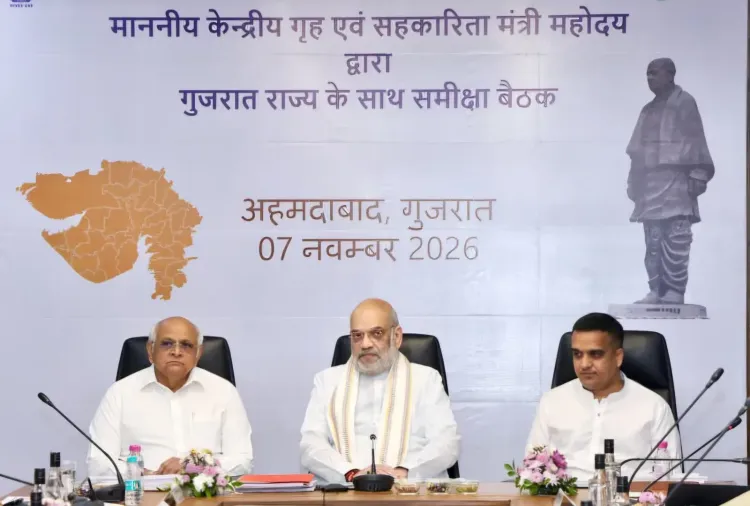
Synopsis
Union Home Minister Amit Shah held a sweeping pre-Diwali security review in Ahmedabad with Gujarat CM Bhupendra Patel and Deputy CM Harsh Sanghvi, issuing directives on narcotics, cyber crime, border security, CAA implementation and the 2029 drug-free India target.
Key Takeaways
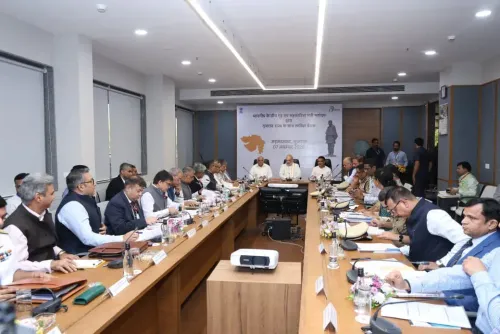
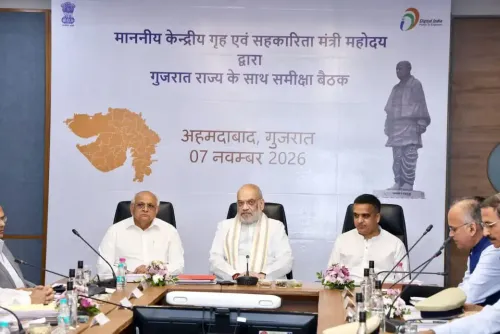
Amit Shah chaired a high-level security review in Ahmedabad ahead of the Diwali festival on November 7, 2026 .
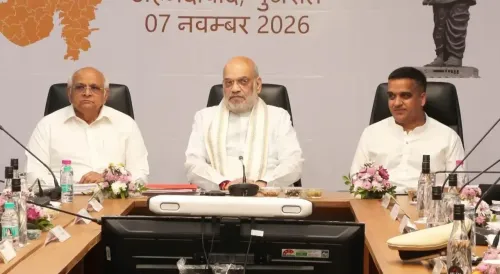
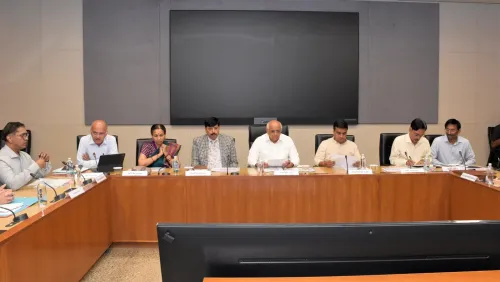
CM Bhupendra Patel and Deputy CM Harsh Sanghvi attended alongside senior officers from central and state security agencies.
The agenda covered 14+ domains : law and order, cyber crime, police modernisation, border and coastal security, narcotics, disaster management, forensics, counter-terrorism, CAA, Census, Agniveer, prisons and special courts.
Shah set a firm 2029 deadline for a drug-free India goal, directing Gujarat to prepare a strict narcotics action plan with intensive enforcement drives and social awareness campaigns.
Shah called for expansion of the 1933 control room network and integration of all agencies into a unified real-time response system.
The meeting reflects the Union Home Ministry's ongoing centre-state security coordination, with Gujarat's coastal and border geography making it a key node in national security reviews.
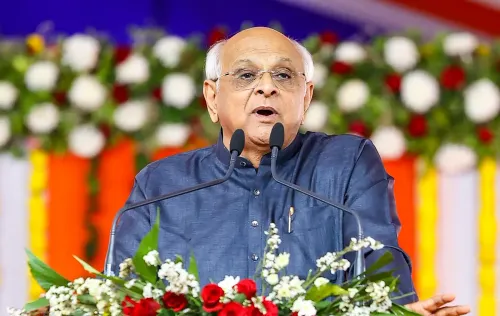
Days before the Diwali festival, Union Home and Cooperation Minister Amit Shah convened a high-level security review in Ahmedabad on Saturday, November 7, 2026, signalling that Gujarat's internal security architecture was due for a thorough top-down audit — from coastal borders to cyberspace.
Who was in the room — and what was on the table
Chief Minister Bhupendra Patel and Deputy Chief Minister Harsh Sanghvi — who also holds the home portfolio — were present alongside senior officers from the Union Home Ministry, the state home department, and multiple security agencies. The meeting was described by the Chief Minister's Office of Gujarat as a 'comprehensive review of law and order, citizen security, and sensitive matters.'
The agenda was notably wide. Amit Shah personally guided discussions on law and order, cyber crime, police modernisation, border and coastal security, narcotics control, disaster management, forensics, counter-terrorism, inter-state cooperation, the criminal justice system, the Citizenship Amendment Act (CAA), the upcoming national Census, the Agniveer Yojana, and the state's prison and special court framework. Few pre-festival meetings carry that kind of range.
The 2029 drug-free India target — and Gujarat's marching orders
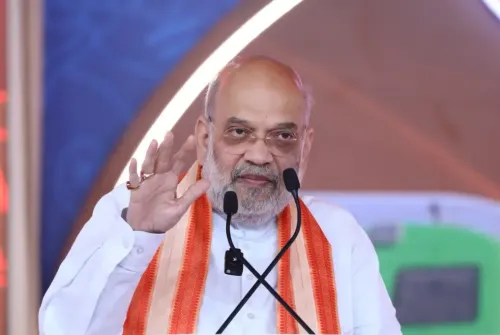
The sharpest directive to emerge from the meeting concerned narcotics. Shah pressed state officials to work with an iron hand against narcotic drugs and controlled substances, with a clear deadline: a nashamukta Bharat (drug-free India) by 2029. He asked agencies to draw up an action plan immediately — one that pairs intensive enforcement drives with broad social-awareness campaigns.
He also called for the expansion of the 1933 control room network, directing every agency to plug into the system to sharpen real-time response. For a coastal state sharing a border with Pakistan, with busy ports and a history of large drug seizures at sea, that instruction carries obvious operational weight.
Why Gujarat, why now
Gujarat is not an incidental venue for a meeting of this seriousness. The state has an international land border with Pakistan and an extensive coastline — both historically cited in border and coastal security reviews. The Union Home Ministry has held periodic state-level security coordination meetings since at least 2021, but the pre-Diwali timing adds another layer: large public gatherings, heightened movement across borders, and elevated risk windows for smuggling or communal incidents make a pre-festival review strategically sensible.
The integration of national schemes — Agniveer, launched in 2022 as a military recruitment reform, and CAA rules notified in 2024 — into a state-level security discussion also reflects how the Home Ministry has been weaving policy implementation into its law-and-order coordination framework rather than treating them as separate silos.
The next indicator to watch: whether Gujarat's home department publishes a formal narcotics action plan, and whether the 1933 control room expansion receives fresh budget allocation. The meeting set the direction — the proof will be in the paperwork that follows.
Point of View
Turning drug control into a measurable deliverable rather than a standing aspiration. For Gujarat, being the site of such a review — with the full cabinet-equivalent troika of Shah, Patel and Sanghvi on the dais — reinforces the state's role as a frontline partner in the Centre's internal security architecture. The bundling of Agniveer and CAA into a law-and-order review also suggests the Ministry is actively monitoring implementation friction on politically sensitive schemes at the ground level.
NationPress
7 Nov 2026
Frequently Asked Questions
What was discussed at Amit Shah's security meeting in Ahmedabad?
The meeting covered law and order, cyber crime, police modernisation, border and coastal security, narcotics control, disaster management, forensics, counter-terrorism, inter-state cooperation, the criminal justice system, CAA, the Census, Agniveer Yojana, and prison and special court matters.
What is the 2029 drug-free India target that Amit Shah mentioned?
The 2029 drug-free India target is a central government commitment to eliminate narcotic drug abuse by 2029. Shah directed Gujarat agencies to draft a strict action plan involving intensive enforcement drives, expansion of the 1933 control room, and broad social-awareness campaigns.
Who attended the high-level security review in Ahmedabad?
Union Home Minister Amit Shah chaired the meeting, with Gujarat Chief Minister Bhupendra Patel and Deputy Chief Minister Harsh Sanghvi present, along with senior officers from the Union Home Ministry, the state home department, and various security agencies.
What is the 1933 control room that was mentioned in the Gujarat security meeting?
The 1933 control room is an emergency response facility in Gujarat. Shah called for its network expansion and integration with all relevant security agencies to strengthen real-time coordination and response capability.
Why was the Gujarat security review held before Diwali?
Pre-festival security reviews are a standard practice under the Union Home Ministry because large public gatherings, increased movement across borders, and elevated risk windows for smuggling and communal incidents make it strategically important to audit and reinforce law-and-order arrangements ahead of major festivals.