Amit Shah Hails ABVP's Odisha Campus Sweep
Synopsis
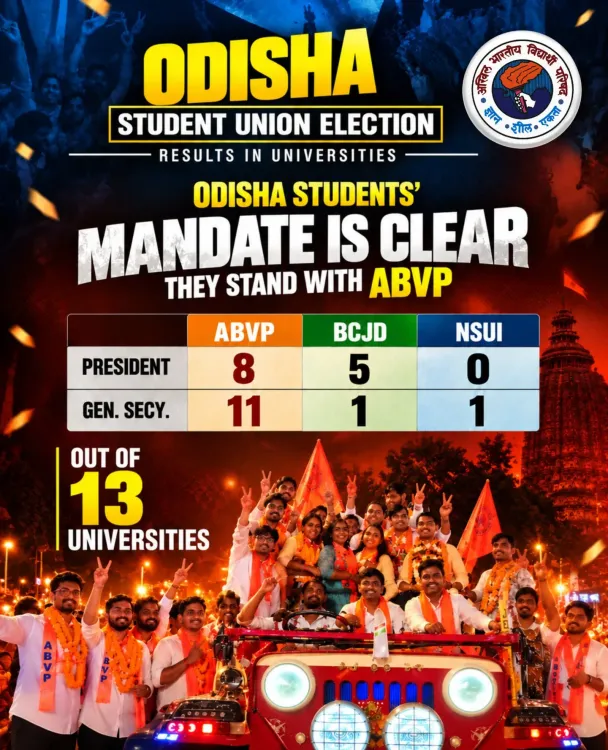
Union Home Minister Amit Shah praised ABVP on 17 October 2026 for sweeping student union elections across 13 Odisha universities, framing the wins — following earlier victories at Punjab and Delhi universities — as proof that India's youth backs a 'Nation First' ideology over what he called forces of lies and anarchy.
Key Takeaways
ABVP won student union elections across 13 universities in Odisha , according to Union Home Minister Amit Shah's post on 17 October 2026 .
Shah linked these wins to earlier ABVP victories at Punjab University and Delhi University in the same academic cycle.
He framed the results as young India endorsing a 'Rashtra Pratham' (Nation First) ideology.
Shah described the wins as a 'stinging reply from the youth to anti-national forces' spreading lies and anarchy.
ABVP is the RSS-affiliated student organisation with a decades-long presence in Indian university politics.
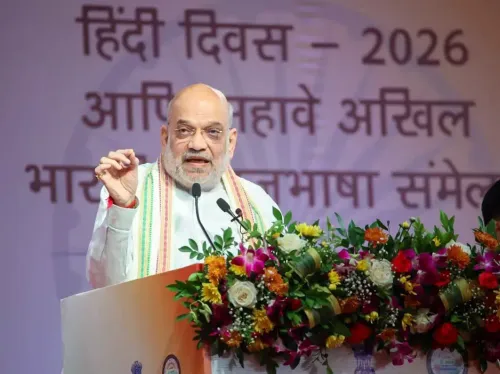
A student-union election wave across 13 Odisha universities has drawn a pointed political reading from the top of India's government. Union Home Minister Amit Shah, on Saturday, 17 October 2026, congratulated the Akhil Bharatiya Vidyarthi Parishad (ABVP) on what he called a resounding victory in the state's college campuses, framing the result as young India's decisive verdict against 'forces that spread lies, confusion and anarchy.'
Three campuses, one narrative — Punjab, Delhi, and now Odisha
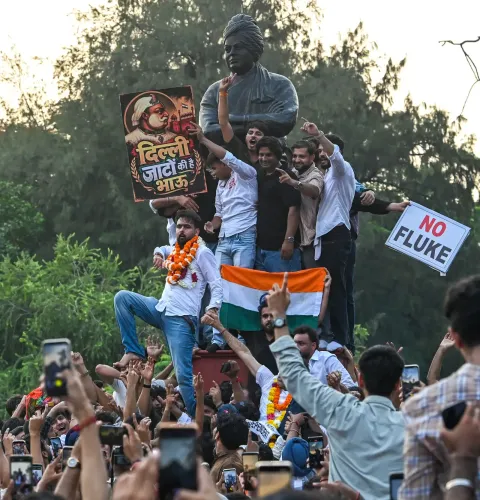
Shah drew a deliberate arc across the electoral calendar. First Punjab University in Chandigarh, then Delhi University — two of the country's highest-profile student-politics battlegrounds — and now the sweep across Odisha. In his post, he wrote: 'Parishad ki yeh jeet deshvirodhee taakaton ko yuvaon ka karraa jawaab hai' — 'This victory of the Parishad is a stinging reply from the youth to anti-national forces.' The sequencing is deliberate: three geographically and culturally distinct campuses, one unbroken ideological thread.
ABVP, the student wing affiliated with the Rashtriya Swayamsevak Sangh (RSS), has competed in university elections across India for decades, making it one of the country's oldest and largest student organisations. Campus elections — formally non-partisan, practically intensely political — have long served as a bellwether for the broader youth mood, and BJP leaders have consistently read ABVP victories as evidence of that mood tilting toward a nationalist orientation.
The 'Rashtra Pratham' message and what Shah is signalling
Shah's language was precise. He did not frame the wins merely as organisational success — he embedded them in an ideological claim: that India's yuva shakti (youth power) stands firmly with the 'Rashtra Pratham' (Nation First) ideology, and not with what he characterised as forces promoting falsehood and chaos. The framing turns campus ballot boxes into a proxy referendum on a much larger political argument.
That argument has real stakes. Student union elections at central universities feed into a pipeline of political cadre, and victories at this level carry symbolic weight well beyond the campuses themselves. A strong ABVP cycle across multiple states in a single academic season lets the party project youth momentum heading into any number of upcoming state and national cycles.
Odisha's campuses as new terrain
Odisha is particularly significant. The state has seen shifting political loyalties in recent years, and student-union results there carry a different flavour than in the Hindi heartland. A win — or series of wins — across 13 universities in the state would represent a meaningful organisational footprint, turning a region once considered competitive into a demonstration of ABVP's national reach.
Whether opponents contest the sweep's scale or the ideological gloss Shah has placed on it, the political message has already been sent — loudly, from the Home Minister's own account, to a national audience.
Point of View
Delhi, and Odisha into a single nationwide youth-mandate narrative. By personally amplifying these campus results, Shah is signalling that the BJP intends to contest the ideological space on university campuses as aggressively as it contests electoral seats. The 'Rashtra Pratham' framing also pre-emptively delegitimises opposition student organisations, casting any future challenge to ABVP as an 'anti-national' project — a framing that will sharpen as more state university elections approach.
NationPress
17 Oct 2026
Frequently Asked Questions
What did Amit Shah say about ABVP's Odisha university wins?
Amit Shah congratulated ABVP workers for a decisive victory in Odisha student union elections across 13 universities, calling it a clear message that India's youth stands with the 'Nation First' ideology and not with forces spreading lies, confusion, or anarchy.
Which universities did ABVP win in 2026 student union elections?
According to Shah's post on 17 October 2026, ABVP won at Punjab University, Delhi University, and across 13 universities in Odisha in the current academic cycle, though the exact Odisha university list was not specified.
What is ABVP and which political group is it associated with?
ABVP, or Akhil Bharatiya Vidyarthi Parishad, is one of India's largest student organisations. It is affiliated with the RSS and is widely seen as aligned with the BJP's ideological ecosystem.
Why do student union elections matter in Indian politics?
Student union elections at major universities are closely watched as indicators of youth sentiment and are a key cadre-building ground for political parties. Results are often used by leaders to make broader claims about public mood, especially ahead of state or national elections.
What does 'Rashtra Pratham' mean in Shah's context?
'Rashtra Pratham' means 'Nation First' in Hindi. Shah used the phrase to describe the ideological position he says Indian youth have endorsed by voting for ABVP, contrasting it with what he called anti-national or anarchic forces on campuses.