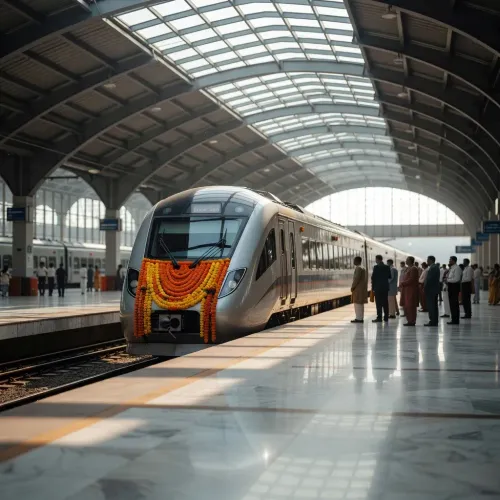
Amit Shah hails India's first LNG train from Sabarmati
Synopsis
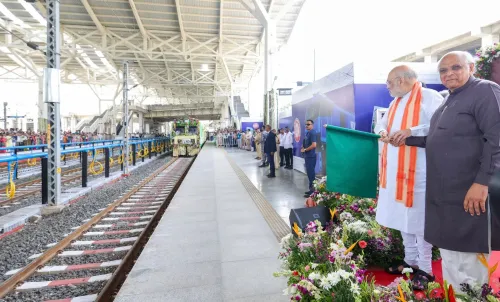
India's first LNG-powered train departed from Sabarmati on September 27, 2026. Union Home Minister Amit Shah praised the launch as a major gain for environmental conservation, marking a significant step in Indian Railways' drive to cut diesel dependence and reduce emissions across its vast network.
Key Takeaways
India's first LNG train was flagged off from Sabarmati Railway Station , Ahmedabad, on September 27, 2026 .
Union Home Minister Amit Shah hailed the launch as 'very beneficial for environmental conservation.' LNG burns significantly cleaner than diesel, reducing particulate matter, nitrogen oxide, and carbon dioxide emissions.
The launch fits within Indian Railways' broader strategy of fuel diversification alongside electrification and hydrogen pilots.
Sabarmati is a key junction on the Western Railway zone, making it a strategically significant launch point.
Future route expansion and railway budget allocations will determine the scale of the LNG fleet rollout .
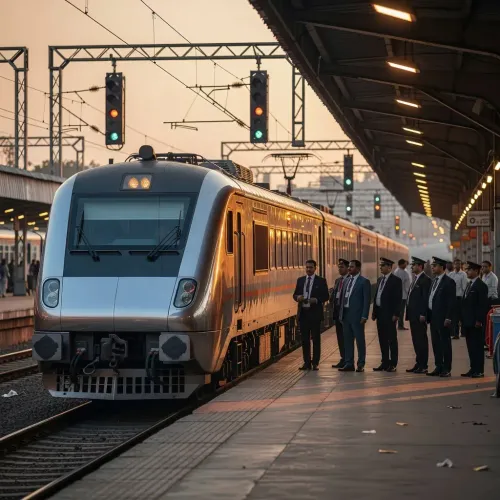
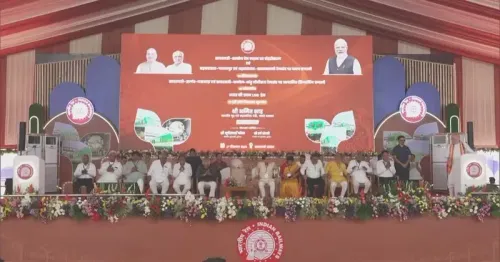
India's railways crossed a green milestone on Sunday, September 27, 2026, as the country's first LNG-powered train rolled out of Sabarmati Railway Station in Ahmedabad, Gujarat — a moment Union Home Minister Amit Shah called a landmark step for environmental conservation.
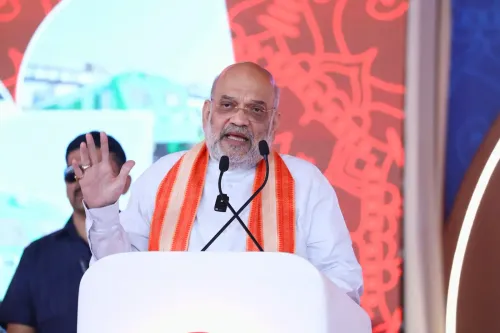
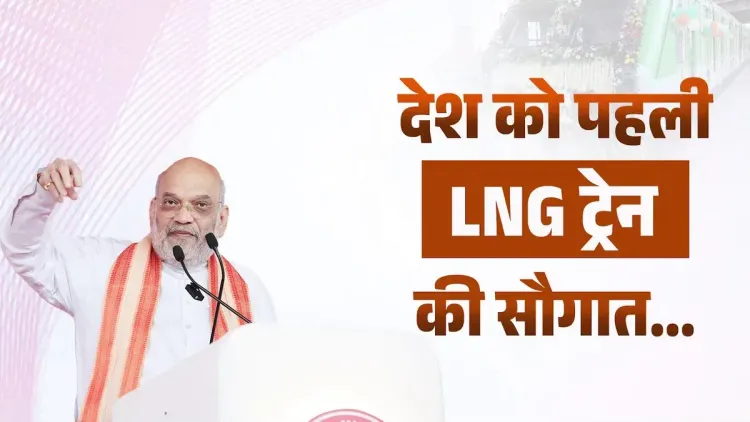
Shah posted on X in Hindi: 'आज साबरमती से शुरू हुई देश की पहली LNG ट्रेन पर्यावरण संरक्षण की दिशा में बहुत कल्याणकारी सिद्ध होगी' — 'The country's first LNG train, flagged off today from Sabarmati, will prove to be very beneficial for environmental conservation.'
Why LNG matters for Indian Railways
Indian Railways, one of the largest rail networks on the planet, has long relied on diesel for non-electrified traction — a significant source of particulate and greenhouse gas emissions. Liquefied Natural Gas (LNG) burns far cleaner than diesel, cutting nitrogen oxide and particulate matter emissions sharply and reducing carbon dioxide output in the bargain. Switching even a portion of the diesel fleet to LNG can meaningfully lower the carbon intensity of public mobility at scale.
The choice of Sabarmati as the launch point is symbolically and operationally deliberate. The station is a major junction on the Western Railway zone and sits at the gateway of Gujarat, a state that has positioned itself as a hub for clean-energy infrastructure over the past decade.
Fitting into India's broader clean-transport push
The LNG train debut is not an isolated experiment — it lands inside a wider national drive to decarbonise heavy transport. Indian Railways has simultaneously pursued large-scale electrification of its network, investment in hydrogen-powered locomotives, and tighter energy-efficiency targets. LNG fills a practical gap: routes where full electrification is not yet economically or technically feasible but where the environmental and fuel-cost case for moving beyond diesel is already strong.
Energy diversification is the other half of the argument. Reducing diesel dependency in the rail sector eases pressure on crude import bills and gives operators access to a fuel whose pricing dynamics differ from oil — a hedge that transport planners have pushed for years.
The real test now is replication. A single inaugural service from Sabarmati is a proof of concept; the route network it seeds, and whether subsequent railway budgets fund a scaled rollout, will determine whether this milestone translates into a movement.
Point of View
Lending the state symbolic weight in the national development narrative. For Indian Railways, LNG represents a pragmatic bridge technology — not a final destination, but a credible step toward net-zero traction on routes where electrification is still years away. The political energy behind the announcement, amplified by a senior Cabinet minister rather than the railway ministry alone, signals that the government views clean-rail as a reputational asset worth owning publicly. Whether this translates into a funded, multi-route rollout — or remains a well-publicised pilot — is the question analysts and green-transport advocates will be watching through the next railway budget.
NationPress
27 Sept 2026
Frequently Asked Questions
What is India's first LNG train and where did it start?
India's first LNG (Liquefied Natural Gas) powered train was launched from Sabarmati Railway Station in Ahmedabad, Gujarat, on September 27, 2026 . It runs on cleaner-burning LNG instead of conventional diesel fuel.
Why is LNG considered better than diesel for trains?
LNG burns far more cleanly than diesel, producing significantly lower levels of particulate matter, nitrogen oxides, and carbon dioxide — making it a greener alternative for traction on routes not yet served by electric overhead lines.
What did Amit Shah say about the LNG train launch?
Union Home Minister Amit Shah posted on X that 'the country's first LNG train, flagged off today from Sabarmati, will prove to be very beneficial for environmental conservation.'
How does the LNG train fit into Indian Railways' green plans?
Indian Railways has pursued multiple clean-energy strategies — large-scale electrification, hydrogen locomotive pilots, and now LNG. LNG serves as a bridge fuel for routes where full electrification is not yet feasible.
Will more LNG trains be introduced in India?
The Sabarmati launch is a proof-of-concept. Further route expansions and fleet scale-up are expected to depend on upcoming railway budget allocations and operational performance data from this inaugural service.