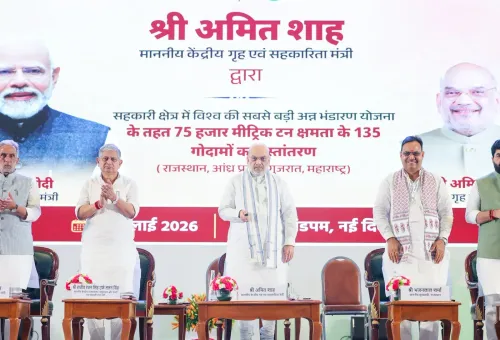
Amit Shah Greets Nation on International Cooperative Day

Synopsis
On International Cooperative Day, Union Home Minister Amit Shah credited PM Modi's leadership for expanding India's cooperative sector, citing a cooperative university, training centres, and new sectoral institutions as part of the 'Sahakar se Samridhi' agenda targeting farmers, women, and small entrepreneurs.
Key Takeaways
Amit Shah extended greetings on International Cooperative Day (July 5, 2026) , observed on the first Saturday of July each year.
He described cooperatives as the foundation of India's culture, collective strength, and self-reliance.
The Ministry of Cooperation was created in July 2021 as India's first dedicated cabinet-level ministry for the sector.
Shah referenced a cooperative university and modern training centres as part of the sector's expansion under PM Modi .
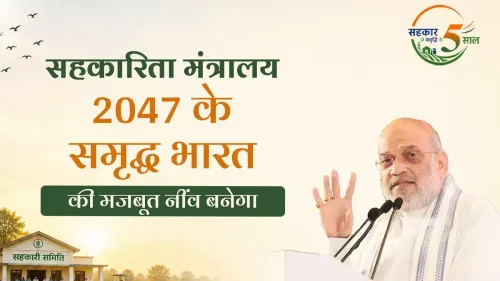
The government's 'Sahakar se Samridhi' slogan links cooperative growth to the Atmanirbhar Bharat self-reliance vision.
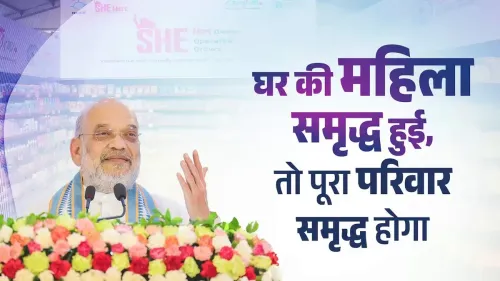
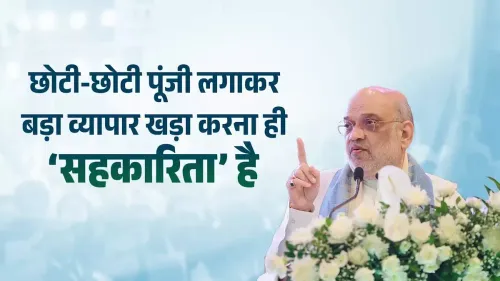
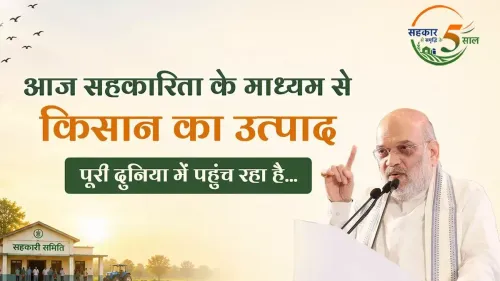
Key beneficiaries identified: farmers, women, small entrepreneurs, and rural workers .
Union Home Minister and Minister of Cooperation Amit Shah extended greetings to the nation on International Cooperative Day on Saturday, July 4, 2026, reaffirming the government's commitment to empowering farmers, women, small entrepreneurs, and workers through the cooperative movement.
Context
In his post, Amit Shah described cooperatives as the foundation of India's culture, collective strength, and self-reliance. He wrote, 'सहकारिता भारत की संस्कृति, सामूहिक शक्ति और आत्मनिर्भरता का आधार है' ['Cooperation is the foundation of India's culture, collective strength, and self-reliance']. He credited Prime Minister Narendra Modi's leadership for bringing new energy and expansion to the cooperative sector.
International Cooperative Day is observed annually on the first Saturday of July, highlighting the principles of mutual assistance and democratic member control that underpin cooperative institutions worldwide. This year's observance falls on July 5, 2026, with Shah's message arriving ahead of the formal day as part of national outreach.
Policy Backdrop
The Ministry of Cooperation was established as a dedicated central ministry in July 2021, marking the first time India gave the cooperative sector its own cabinet-level institutional home after decades of fragmented oversight under multiple ministries. Amit Shah has served as its minister since inception, steering a broad agenda that includes computerisation of Primary Agricultural Credit Societies (PACS), model bye-laws, and amendments to multi-state cooperative legislation.
Shah's post specifically referenced a cooperative university, modern training centres, and the empowerment of cooperative institutions in new sectors — all elements of the ministry's expanding mandate. These initiatives are framed under the government's flagship slogan 'Sahakar se Samridhi' ['Prosperity through Cooperation'], which links the cooperative movement directly to the broader Atmanirbhar Bharat (self-reliant India) vision.
Since 2014, successive Union governments have sought to modernise India's large cooperative network — historically rooted in agricultural credit and dairy — by introducing digital infrastructure and new sectoral cooperatives. The post-2021 institutional push deepens this agenda by adding training infrastructure and linkages with national goals of inclusive growth.
Stakeholders and Impact
Farmers, women entrepreneurs, small entrepreneurs, and rural workers are the four constituencies Shah explicitly named as beneficiaries of the cooperative expansion. India's cooperative network is among the largest in the world, with PACS alone numbering in the hundreds of thousands and serving crores of rural households for credit, storage, and input supply.
Women-led cooperatives — particularly in dairy, self-help group linkages, and handloom — have been a focal area of the ministry's outreach. Empowering small entrepreneurs through cooperative structures is also seen as a complement to financial inclusion initiatives, extending institutional support to segments that fall outside formal banking and corporate channels.
What's Next
Policy watchers will track the formal rollout of the proposed cooperative university and regional training centres that Shah referenced, as well as any forthcoming amendments to the Multi-State Cooperative Societies Act in upcoming parliamentary sessions. The government's ability to translate the 'Sahakar se Samridhi' slogan into measurable outcomes — particularly for marginal farmers and women in rural economies — will define the sector's trajectory in the coming legislative cycle.
Point of View
Shah is signalling that the ministry's agenda has moved beyond legacy institutions like PACS into human capital development, a shift that broadens the ministry's footprint. The 'Sahakar se Samridhi' framing also serves a dual purpose: it aligns cooperative policy with the Atmanirbhar Bharat narrative while giving the BJP a distinct outreach channel to farmer and women-entrepreneur constituencies ahead of state election cycles. Whether the institutional announcements translate into on-ground outcomes will be the real test of this policy arc.
NationPress
2 Oct 2026
Frequently Asked Questions
What is International Cooperative Day and when is it celebrated?
International Cooperative Day is an annual global observance held on the first Saturday of July each year, promoting cooperative principles such as mutual assistance and democratic member control. In 2026, it falls on July 5 .
What is the Ministry of Cooperation in India?
The Ministry of Cooperation is a dedicated central ministry established in July 2021 by the Modi government to provide focused policy, legislative support, and institutional strengthening to India's cooperative sector. Amit Shah has been its minister since its creation.
What does 'Sahakar se Samridhi' mean?
'Sahakar se Samridhi' translates to 'Prosperity through Cooperation' in English. It is the government's flagship slogan for its cooperative sector agenda, linking cooperative growth to the broader Atmanirbhar Bharat (self-reliant India) vision.
Who benefits from India's cooperative sector expansion?
The government has identified farmers, women entrepreneurs, small entrepreneurs, and rural workers as the primary beneficiaries. Cooperatives provide these groups with access to credit, storage, training, and market linkages outside purely private or public-sector channels.
What is a cooperative university in India?
A cooperative university is a proposed higher-education institution dedicated to cooperative studies, management, and training, aimed at building professional capacity within India's cooperative movement. Its formal rollout is being tracked as part of the Ministry of Cooperation's expanding mandate.