Amit Shah Pays Tribute to Bal Gangadhar Tilak
Synopsis
Union Home Minister Amit Shah on 1 August 2026 posted a Hindi tribute on X imagining the resplendence of the moment Bal Gangadhar Tilak, wearing the traditional Puneri Pagdi, made his historic call for Swaraj — linking Maharashtra's cultural identity to early Indian nationalism.
Key Takeaways
Amit Shah posted a tribute on 1 August 2026 evoking Bal Gangadhar Tilak's Swaraj call.
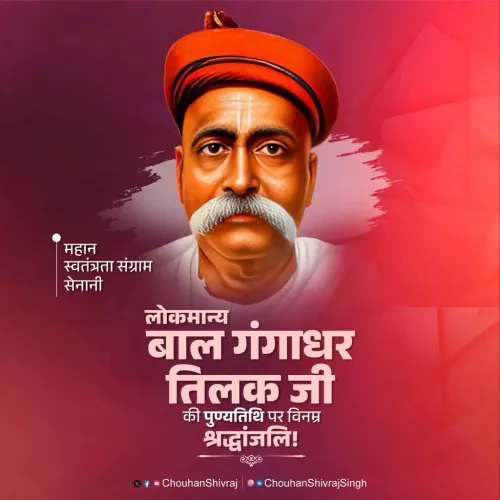
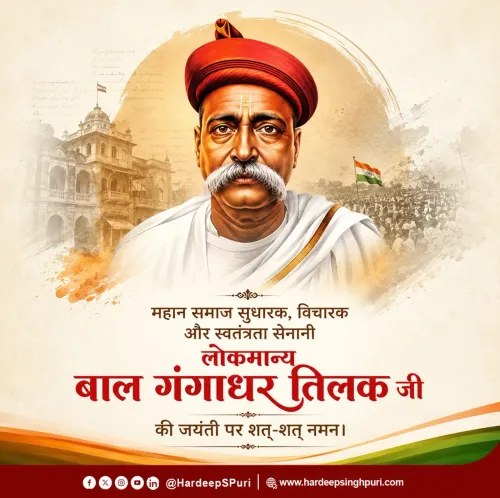
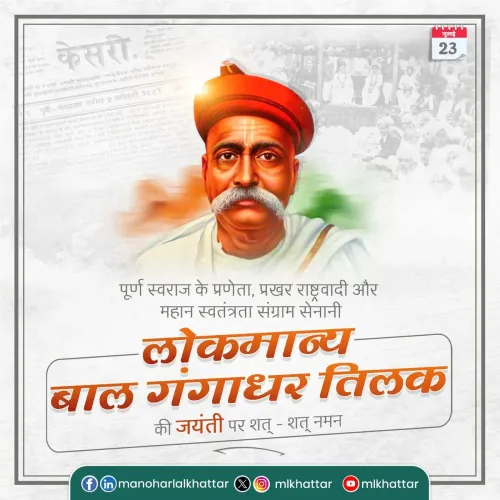
The post imagines the moment Tilak wore the Puneri Pagdi — Pune's traditional turban — while demanding self-rule.
Tilak's declaration that 'Swaraj is my birthright' is one of Indian nationalism's most iconic slogans.
Pune was Tilak's political base and the cultural home of the Puneri Pagdi.
Senior BJP leaders regularly invoke pre-Gandhian Maharashtra nationalists as part of a broader cultural-historical narrative.
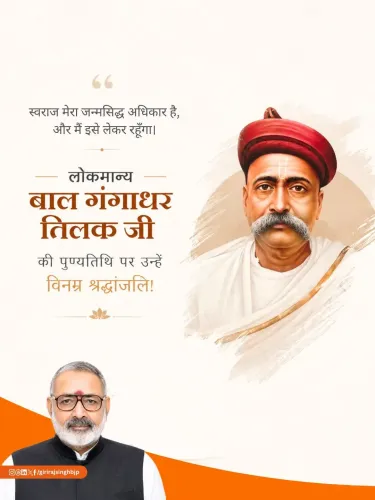
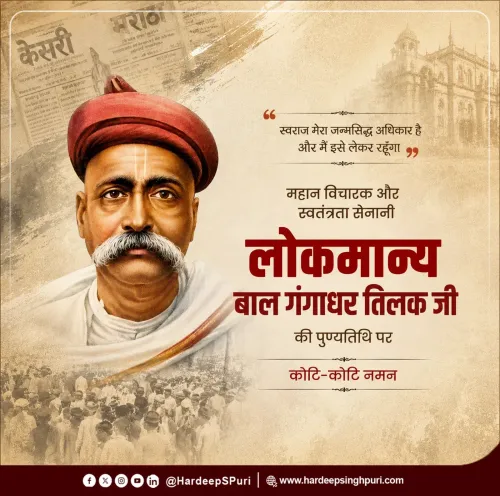
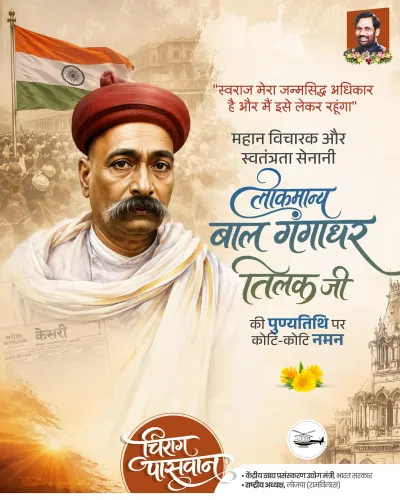
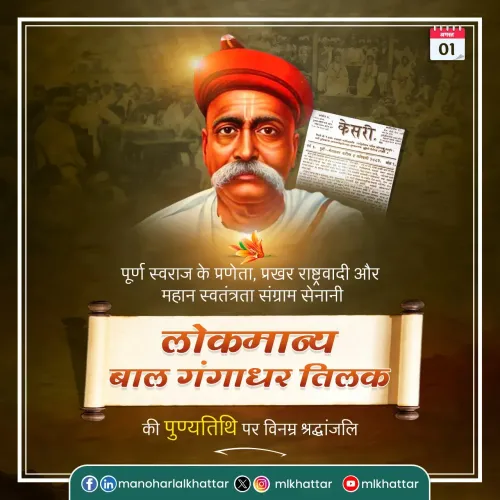
A single image — the Puneri Pagdi, the traditional turban of Pune, worn by a firebrand who declared Swaraj India's birthright — moved Union Home Minister Amit Shah to reflect on one of Indian nationalism's most electric moments. On Saturday, 1 August 2026, Shah posted a tribute on X evoking the image of Bal Gangadhar Tilak donning that iconic turban and sounding the call for self-rule.
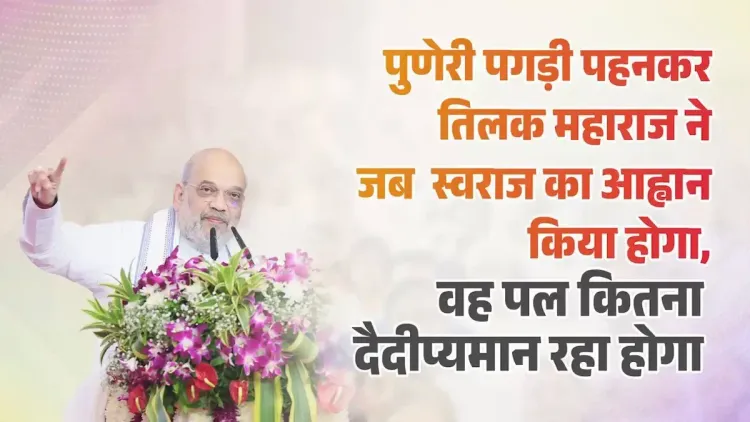
Shah's post, written in Hindi, reads: 'Puneri pagdi pahankar Tilak Maharaj ne jab Swaraj ka aahwan kiya hoga, woh pal kitna daideepyaman raha hoga' — 'When Tilak Maharaj, wearing the Puneri Pagdi, made his call for Swaraj, how resplendent that moment must have been.' The tribute is spare, almost meditative, letting the image of that moment carry its own weight.
The Puneri Pagdi and Tilak's Swaraj call
Bal Gangadhar Tilak — Lokmanya Tilak to millions — was among the earliest and most uncompromising voices for Indian independence, decades before the mass movements of the 1930s and 1940s. His declaration that 'Swaraj is my birthright and I shall have it' became one of the most galvanising slogans in the subcontinent's history. The Puneri Pagdi, a stiff, fan-shaped turban rooted in Pune's Maratha tradition, was more than dress — it was a statement of regional pride and cultural identity worn into the arena of national politics.
Tilak's politics were anchored in Maharashtra, and Pune was his base — the city where he ran newspapers, organised public festivals, and built the grassroots infrastructure of early Indian nationalism. By invoking both the turban and the Swaraj call in the same breath, Shah's tribute fuses the local and the national in precisely the way Tilak himself did.
BJP's engagement with Maharashtra's pre-Gandhian icons
Senior BJP leaders have consistently drawn on figures like Tilak, Gopal Krishna Gokhale, and Vinayak Damodar Savarkar to weave Maharashtra's cultural heritage into a broader national historical narrative. Tilak, in particular, occupies a distinctive place in this tradition — a pre-Gandhian nationalist whose assertive, uncompromising style and deep roots in Maharashtrian culture make him a resonant reference point. Such tributes often cluster around anniversaries and cultural milestones in the state.
For Shah — Union Home Minister, former BJP national president, and one of the party's most prominent strategists — the post signals continued attention to Maharashtra's historical icons at a time when the state remains politically significant.
That moment under the Puneri Pagdi, as Shah imagines it, was not just a scene from history. It was the instant a regional symbol became a national rallying cry — and more than a century later, it still commands the room.
Point of View
Shah connects regional Maratha identity to the national freedom struggle, a framing that carries political resonance in a state the party has long contested. The post's meditative, almost literary tone is notable: it asks the reader to feel the moment rather than debate it, a softer register than Shah typically deploys. That register itself is a signal — this is cultural stewardship, not political combat.
NationPress
1 Aug 2026
Frequently Asked Questions
Why did Amit Shah post about Bal Gangadhar Tilak?
Amit Shah posted a tribute on 1 August 2026 evoking Tilak's historic Swaraj call, reflecting the BJP's broader practice of honouring pre-Gandhian Maharashtra nationalists on social media, often around anniversaries or cultural milestones.
What is the Puneri Pagdi?
The Puneri Pagdi is a traditional stiff, fan-shaped turban associated with Pune and Maratha culture in Maharashtra. Bal Gangadhar Tilak wore it as a symbol of regional pride and cultural identity during India's independence movement.
What was Bal Gangadhar Tilak's Swaraj call?
Bal Gangadhar Tilak famously declared 'Swaraj is my birthright and I shall have it,' making him one of the earliest and most uncompromising voices for Indian self-rule, decades before the mass movements led by Mahatma Gandhi.
What did Amit Shah say about Tilak in his post?
Shah wrote in Hindi that when Tilak Maharaj wore the Puneri Pagdi and made his call for Swaraj, that moment must have been truly resplendent — a tribute imagining the historic significance of that scene.
Why do BJP leaders frequently reference Bal Gangadhar Tilak?
Tilak's assertive nationalism, deep roots in Maharashtra, and pre-Gandhian legacy make him a resonant figure for BJP leaders seeking to connect Maharashtra's cultural heritage to a broader national historical narrative.