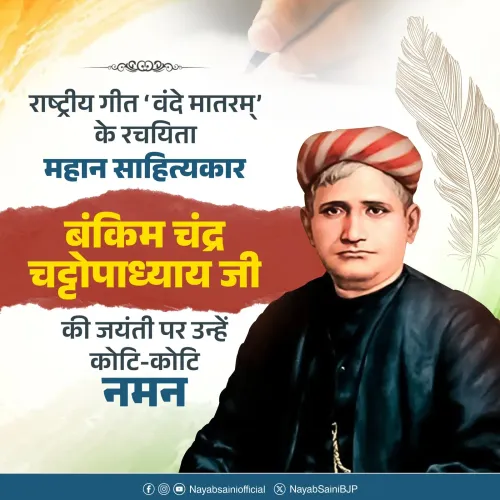
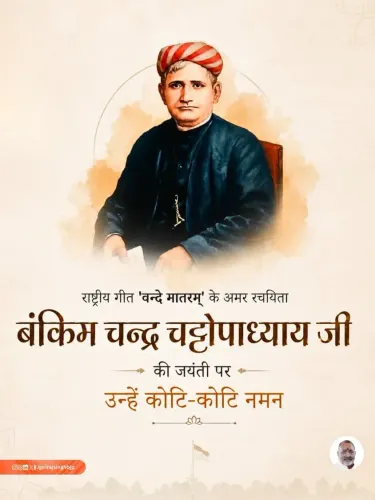
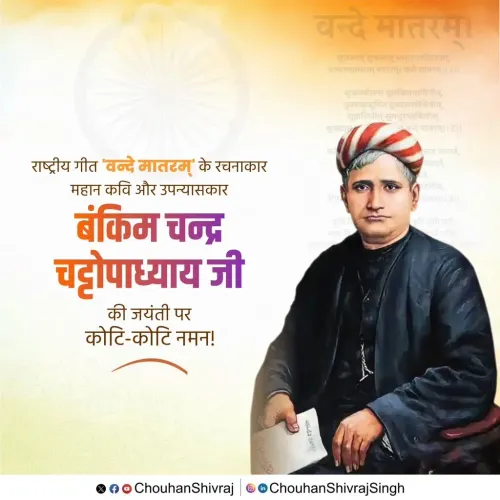
Amit Shah pays tribute to Bankim Chandra on birth anniversary
Synopsis
Union Home Minister Amit Shah on 27 June 2026 paid homage to Bankim Chandra Chattopadhyay on his birth anniversary, honouring the 19th-century author of Anandamath and composer of Vande Mataram, and marking 150 years of the national song's enduring message of unity and self-respect.
Key Takeaways
Union Home Minister Amit Shah paid tribute to Bankim Chandra Chattopadhyay on his birth anniversary on 27 June 2026 .
Shah credited Bankim Chandra's novel Anandamath (1882) with spreading the message of sacrifice and national awakening during the freedom movement.
Shah described 'Vande Mataram' as giving the Indian independence struggle 'new energy, inspiration, and an ideological foundation'.
The post marks 150 years of 'Vande Mataram' , which Shah said continues to spread national unity and self-respect across the country.
India's Constituent Assembly formally adopted 'Vande Mataram' as the national song in 1950 .
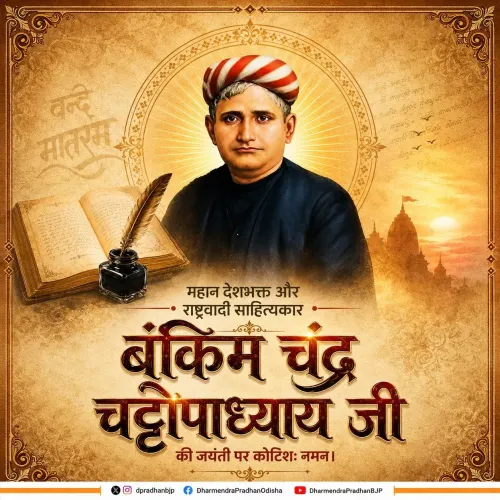
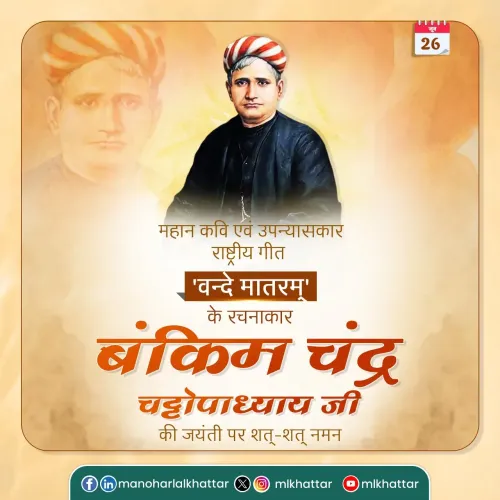
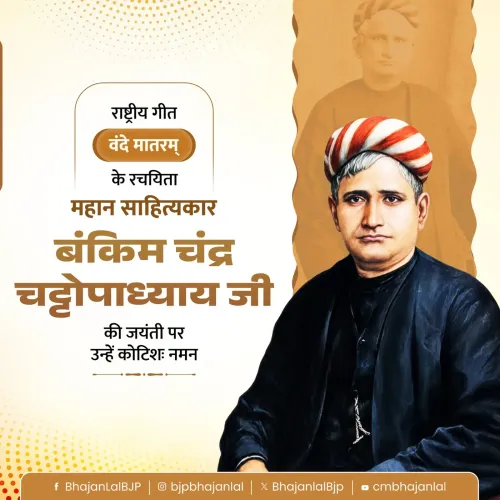
Union Home Minister Amit Shah on Friday, 27 June 2026, paid tribute to 19th-century Bengali writer and cultural nationalist Bankim Chandra Chattopadhyay on his birth anniversary, honouring the author's enduring legacy in shaping India's national consciousness. Shah also marked the occasion as the 150th anniversary of 'Vande Mataram', the national song whose composition he credited with giving the freedom movement fresh ideological energy and inspiration.
Context
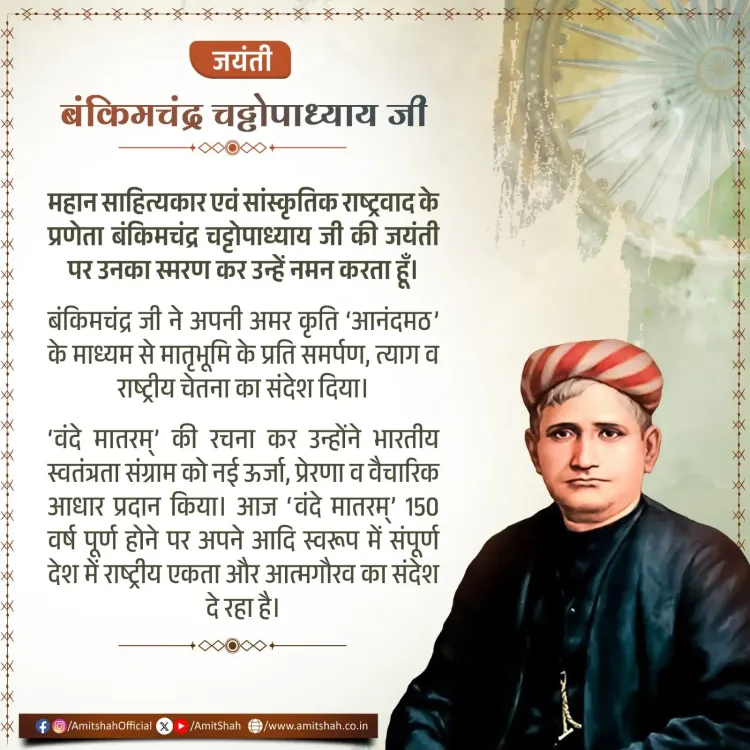
In his post on X, Shah wrote — 'महान साहित्यकार एवं सांस्कृतिक राष्ट्रवाद के प्रणेता बंकिमचंद्र चट्टोपाध्याय जी की जयंती पर उनका स्मरण कर उन्हें नमन करता हूँ' ('On the birth anniversary of the great literary figure and pioneer of cultural nationalism, Bankim Chandra Chattopadhyay, I bow to his memory'). He described Bankim Chandra's immortal work 'Anandamath' as a vehicle for spreading the message of dedication to the motherland, sacrifice, and national awakening. Shah added that by composing 'Vande Mataram', Bankim Chandra gave the Indian freedom struggle new energy, inspiration, and an ideological foundation.
Policy Backdrop
Bankim Chandra Chattopadhyay (born 26 June 1838) was one of the foremost Bengali novelists of the 19th century and a towering figure in the development of modern Indian literature. His 1882 novel Anandamath introduced the song 'Vande Mataram' to a wider audience, embedding it within a narrative of armed resistance to colonial rule and devotion to the motherland. The song is widely regarded as having been composed around 1874.
India's Constituent Assembly formally adopted 'Vande Mataram' as the national song in 1950, recognising its central role in galvanising the independence movement alongside the national anthem. The song's opening stanzas have since been sung at official state functions, school assemblies, and national commemorations across the country.
Stakeholders and Impact
Shah's tribute reflects a sustained pattern among senior BJP leaders of publicly commemorating 19th-century cultural figures associated with Hindu revivalism and anti-colonial nationalism, framing their legacies around themes of national unity and self-respect. Cultural organisations, educational institutions, and state governments aligned with this cultural agenda are likely to hold programmes marking both Bankim Chandra's birth anniversary and the 'Vande Mataram' milestone. For Indian citizens broadly, the occasion serves as a reminder of the literary and ideological roots of the country's independence movement.
What's Next
State-level cultural programmes, school events, and public readings of 'Vande Mataram' are expected across the country in connection with the anniversary. The occasion may also draw references in upcoming parliamentary sessions, where the national song's place in public life has periodically been a subject of discussion. Any government-sponsored commemorative initiatives at the national level would further signal the administration's intent to anchor cultural nationalism within mainstream public discourse.
Point of View
The Home Minister signals that the administration views cultural memory as inseparable from political legitimacy. Framing the 150-year milestone of 'Vande Mataram' as a living message of national unity also allows the government to connect anti-colonial history to its contemporary cultural agenda without entering overt political territory. The tribute is unlikely to generate controversy in itself, but it reinforces the ideological scaffolding the ruling party has consistently built around symbols of Hindu cultural revival and nationalist literature.
NationPress
26 Jun 2026
Frequently Asked Questions
Who was Bankim Chandra Chattopadhyay?
Bankim Chandra Chattopadhyay (born 26 June 1838) was a pioneering Bengali novelist and poet, best known for writing Anandamath (1882) and composing 'Vande Mataram', which later became India's national song. He is regarded as a foundational figure of cultural nationalism in India.
Why is Amit Shah paying tribute to Bankim Chandra Chattopadhyay?
Union Home Minister Amit Shah paid tribute to Bankim Chandra Chattopadhyay on his birth anniversary on 27 June 2026, honouring his literary legacy and his role in inspiring the Indian freedom movement through Anandamath and 'Vande Mataram'.
What is the significance of Vande Mataram in 2026?
In 2026, 'Vande Mataram' is being marked as completing 150 years since its composition, a milestone that Union Home Minister Amit Shah highlighted in his tribute to Bankim Chandra Chattopadhyay. The song was adopted as India's national song by the Constituent Assembly in 1950.
What is Anandamath and why is it important?
Anandamath is an 1882 Bengali novel by Bankim Chandra Chattopadhyay that introduced 'Vande Mataram' and promoted themes of devotion to the motherland and armed resistance to colonial rule. It is considered a landmark work in the ideological history of Indian nationalism.
When was Vande Mataram adopted as India's national song?
India's Constituent Assembly formally adopted 'Vande Mataram' as the national song in 1950, recognising its central role in inspiring the independence movement. The song's opening stanzas are sung at official state functions and national events across the country.