Amit Shah Pays Tribute to Ishwar Chandra Vidyasagar on Death Anniversary

Synopsis
Union Home Minister Amit Shah on 29 July 2026 paid tribute to 19th-century polymath Ishwar Chandra Vidyasagar on his death anniversary, honouring the reformer's work on widow remarriage, child marriage abolition, women's education, and the Bengali alphabet primer 'Barnaparichay'.
Key Takeaways
Amit Shah posted a bilingual Hindi-Bengali tribute to Ishwar Chandra Vidyasagar on his death anniversary, 29 July 2026 .
Vidyasagar's primer 'Barnaparichay' restructured the Bengali alphabet and became the foundational literacy text for generations of Bengali learners.
His advocacy directly led to the Hindu Widow Remarriage Act of 1856 , one of the earliest Indian-reformer-driven colonial legislations.
Vidyasagar campaigned against child marriage and championed girls' education throughout his life.
The bilingual post reflects BJP 's consistent strategy of invoking Bengal Renaissance figures as part of its cultural outreach in West Bengal .
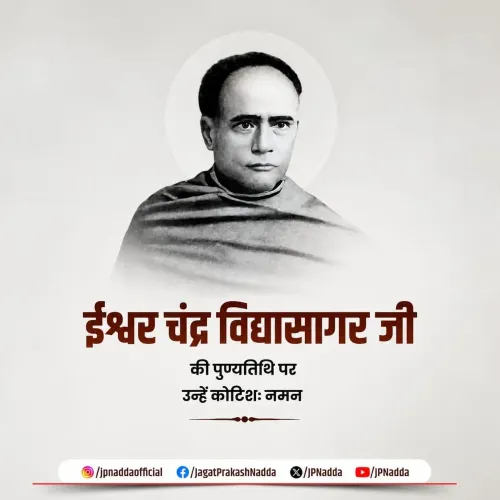
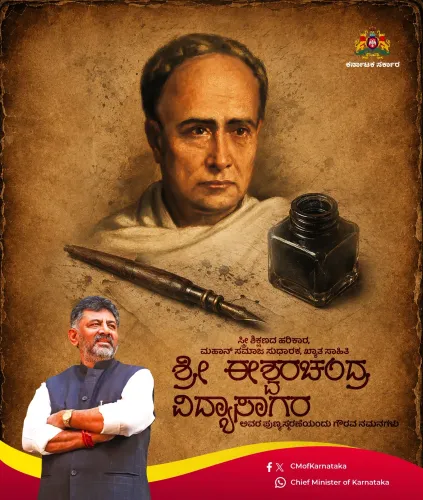
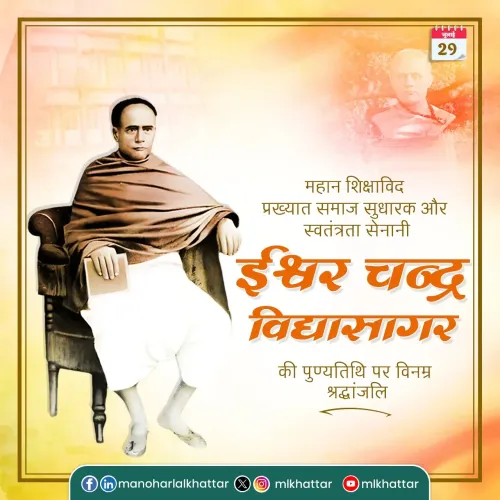
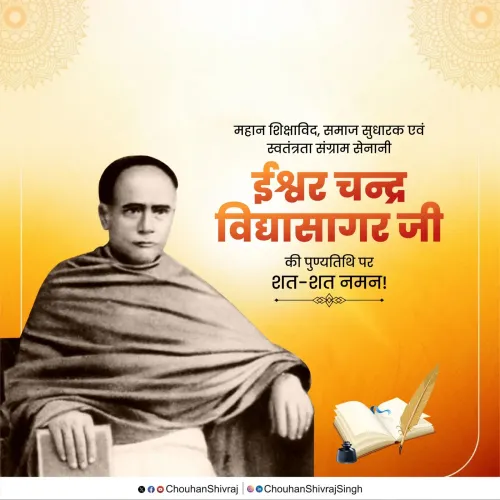
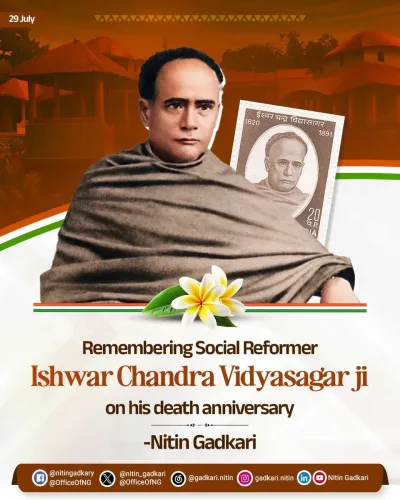
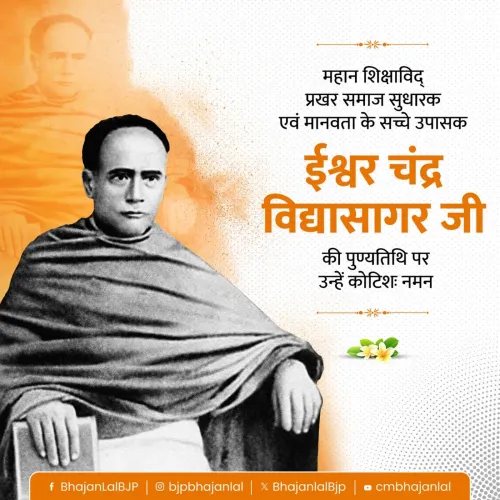
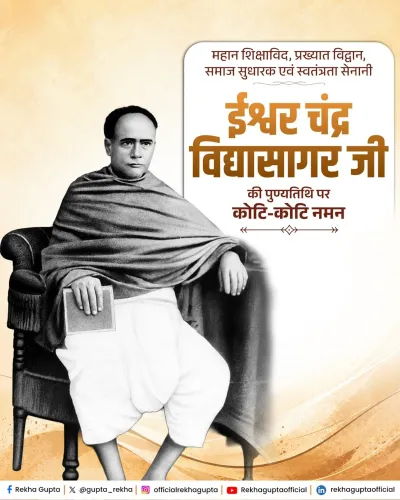
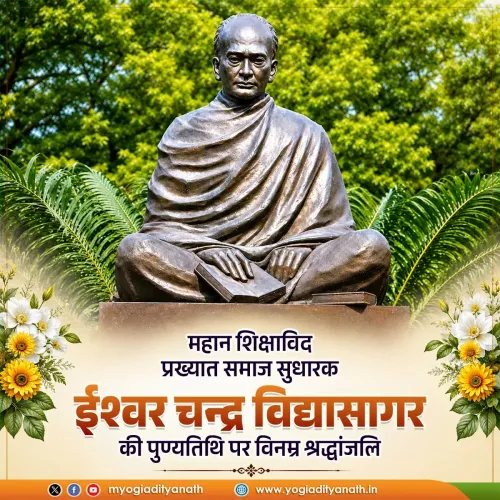
A reformer who rewrote the Bengali alphabet, fought child marriage for a lifetime, and pushed widow remarriage into law — Union Home Minister Amit Shah on Wednesday, 29 July 2026 paid solemn tribute to Ishwar Chandra Vidyasagar on his death anniversary, honouring the 19th-century polymath as the 'embodiment of social revolution.'
Posting in both Hindi and Bengali, Shah wrote: 'Saamaajik kraanti ke pratimoorti Ishwarchandra Vidyasagar ji ki punyatithi par unhe saadar naman' — 'Respectful salutations to Ishwar Chandra Vidyasagar, the embodiment of social revolution, on his death anniversary.' The bilingual gesture was deliberate: the Bengali passage mirrored the tribute word for word, addressing Vidyasagar as a 'pioneer of social renaissance' and acknowledging his 'unparalleled contribution to the spread of women's education.'
The man who shaped Bengali letters and social law
Ishwar Chandra Vidyasagar — born 26 September 1820 in Birsingha village, Bengal — compressed several lifetimes of work into one. As principal of Sanskrit College in Calcutta, he threw open its doors to students from all castes, a radical act in mid-19th-century India. His primer 'Barnaparichay' (Barnaparichay — 'Introduction to the Alphabet') restructured the Bengali script into a learnable, logical sequence and became the foundational text through which generations of Bengalis first encountered written language. Shah's post specifically credits the work with 'giving a new form to the Bengali alphabet and opening the door of knowledge for countless youth.' But Vidyasagar's most consequential battle was legal. His relentless campaign against the prohibition on widow remarriage culminated in the Hindu Widow Remarriage Act of 1856 — one of the first pieces of colonial-era legislation driven primarily by an Indian social reformer's advocacy. He simultaneously waged a lifelong campaign against child marriage and established schools for girls at a time when female literacy was near zero in Bengal.BJP's Bengal Renaissance outreach
The tribute fits a visible pattern in BJP political communication: senior leaders regularly invoke 19th-century Bengal Renaissance figures — including Swami Vivekananda, Ramakrishna Paramahamsa, and Vidyasagar — to signal cultural continuity with eastern India's reformist legacy. West Bengal, a state the party has aggressively contested in recent election cycles, is the natural audience for a bilingual Hindi-Bengali tribute of this kind. The post announces no new scheme or policy; it is a statement of reverence that also functions as a cultural marker. Vidyasagar's legacy — education as the engine of social change, women's rights as a legislative project, language as an instrument of mass empowerment — remains a living reference point in Indian public discourse, invoked across the political spectrum whenever the conversation turns to reform, identity, or Bengal's place in the national story. On the anniversary of his passing, the Home Minister's words land as a reminder that the battles Vidyasagar fought in the 1850s — for girls in classrooms, for widows with rights, for children free from forced marriage — are still the benchmarks by which social progress is measured in India.Point of View
The Home Minister signals fluency with Bengal's reformist heritage at a moment when the BJP is working to consolidate its footprint in the state. Vidyasagar is a figure claimed by multiple ideological traditions in Bengal, making him a relatively safe but symbolically rich choice. The tribute reinforces the party's broader effort to position itself as heir to India's progressive social reform movements, not merely its religious-nationalist strand. Whether such messaging translates into electoral or policy traction in West Bengal is the longer question this pattern of outreach is designed to answer.
NationPress
29 Jul 2026
Frequently Asked Questions
Who was Ishwar Chandra Vidyasagar?
Ishwar Chandra Vidyasagar (1820–1891) was a 19th-century Bengali polymath, educator, and social reformer known for campaigning for widow remarriage, opposing child marriage, promoting girls' education, and authoring the Bengali primer 'Barnaparichay'.
What is Barnaparichay and why is it important?
Barnaparichay ( Barnaparichay — 'Introduction to the Alphabet') is a primer written by Vidyasagar that restructured the Bengali alphabet into a logical, learnable sequence, becoming the foundational text through which generations of Bengalis first learned to read and write.
What law did Vidyasagar help pass?
Vidyasagar's sustained advocacy led to the enactment of the Hindu Widow Remarriage Act of 1856 , which legally permitted Hindu widows to remarry — a landmark reform in colonial India.
Why did Amit Shah post in both Hindi and Bengali?
Amit Shah posted in both Hindi and Bengali to directly address Bengali-speaking audiences, a practice consistent with BJP 's broader cultural outreach strategy in West Bengal , where invoking Bengal Renaissance figures carries significant symbolic weight.
When is Ishwar Chandra Vidyasagar's death anniversary?
Ishwar Chandra Vidyasagar passed away on 29 July 1891 , and his death anniversary is observed on 29 July each year.