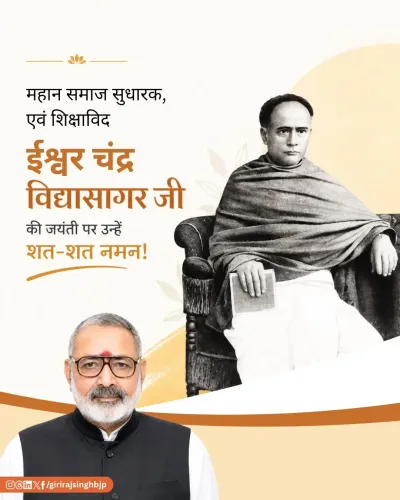
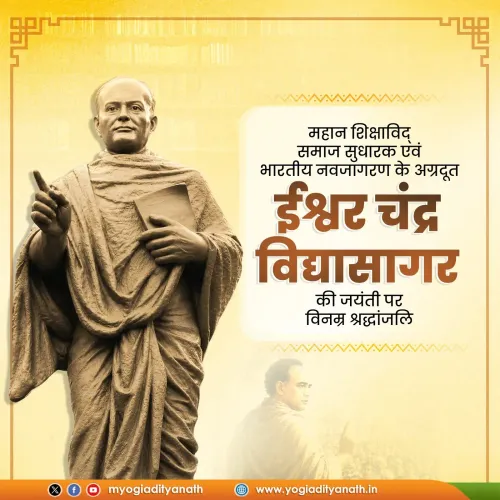
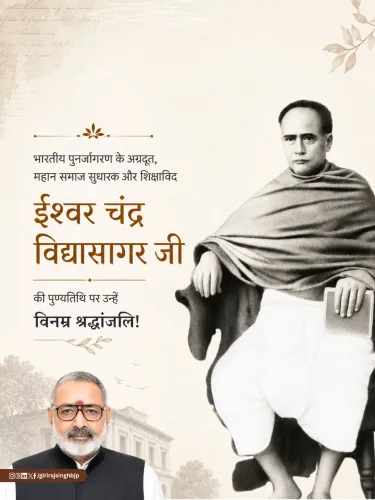
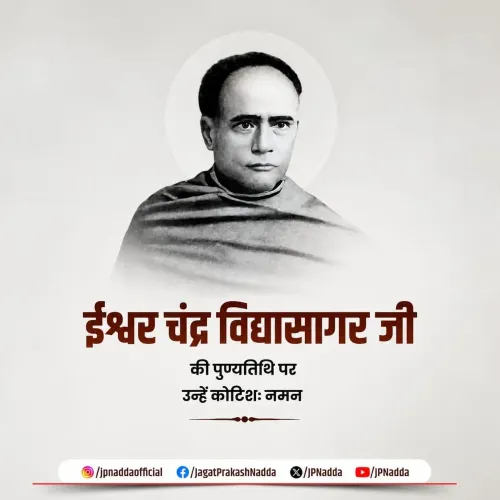
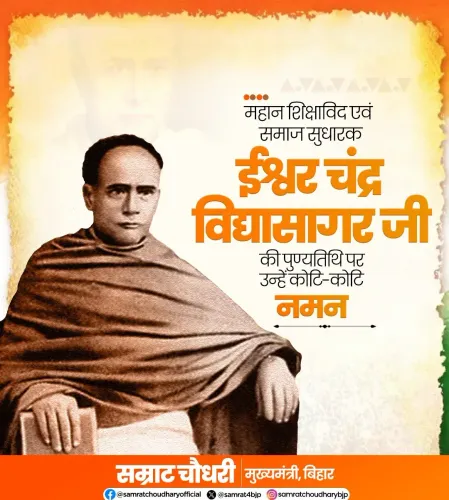
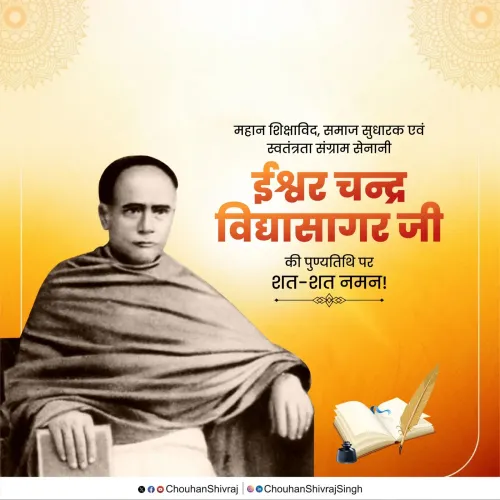
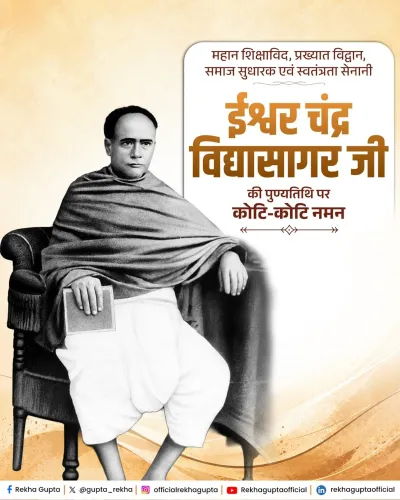
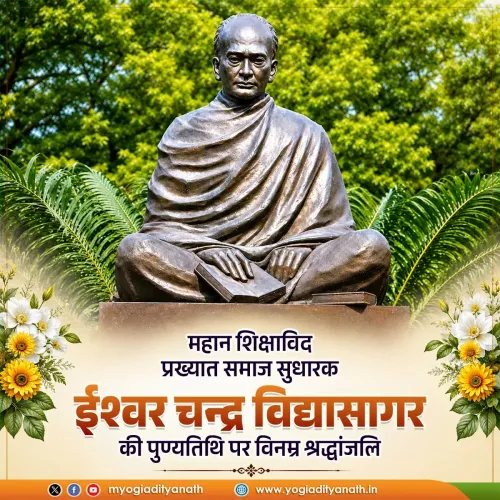
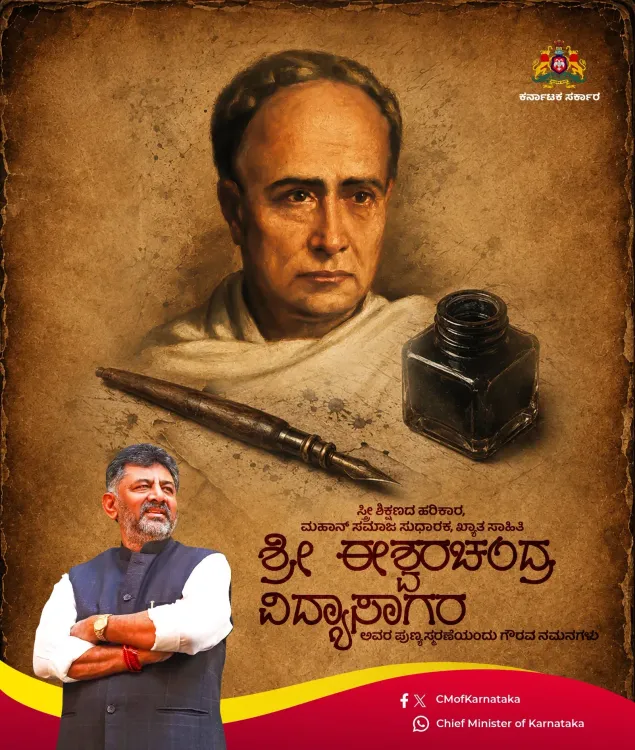
Karnataka CM Office pays tribute to Ishwar Chandra Vidyasagar
Synopsis
The Chief Minister's Office of Karnataka honoured Ishwar Chandra Vidyasagar on his death anniversary, 29 July, praising the 19th-century Bengali reformer's historic role in advancing women's education and securing legal recognition for Hindu widow remarriage through the 1856 Act.
Key Takeaways
The Chief Minister's Office of Karnataka posted a tribute to Ishwar Chandra Vidyasagar on 29 July , his death anniversary.
Vidyasagar was a 19th-century Bengali educator and social reformer celebrated for championing women's education across Bengal .
He was the driving force behind the Hindu Widows' Remarriage Act of 1856 , which gave Hindu widows the legal right to remarry.
He simplified the Bengali script and founded numerous girls' schools, widening access to literacy.
State governments across India regularly issue such tributes to 19th-century reformers, linking historical legacy to present-day education and gender-equality priorities.
A reformer who dismantled centuries of social rigidity through the sheer force of scholarship and conviction — Ishwar Chandra Vidyasagar is remembered on his death anniversary today, 29 July, with a heartfelt tribute from the Chief Minister's Office of Karnataka.
Posting in Kannada, the CMO called Vidyasagar 'an indelible name in the history of Indian education and social reform,' noting his historic role in championing women's education and securing legal recognition for Hindu widow remarriage. The post saluted him as a 'great soul who drove away the darkness in society through literature and education.'
The 1856 Act that changed everything
Vidyasagar's most consequential achievement was persuading the British colonial administration to pass the Hindu Widows' Remarriage Act of 1856 — a landmark that gave Hindu widows the legal right to remarry at a time when their lives were defined almost entirely by social exclusion. He gathered signatures, wrote petitions, and faced fierce orthodox opposition, yet pushed the legislation through. It remains one of the earliest examples of evidence-based social advocacy reshaping Indian law.Schools, scripts, and the fight for women's learning
Beyond legislation, Vidyasagar founded dozens of schools for girls across Bengal — an act of radical defiance in mid-19th-century India. He also simplified the Bengali script, making literacy more accessible to ordinary people, and his primer Barna Parichay (Introduction to Letters) shaped how generations of Bengali children first encountered the written word. His work sits at the intersection of pedagogy and liberation. State governments across India mark Vidyasagar's birth and death anniversaries as part of a broader tradition of invoking 19th-century reformers to anchor contemporary conversations about education access and gender equality. Karnataka's tribute today continues that pattern — a reminder that the legislative and pedagogical battles he fought in colonial Bengal carry resonance far beyond his home state. The ideals Vidyasagar fought for are still unfinished business — and that is precisely why he keeps being remembered.Point of View
Whose legacy is rooted in Bengal, underlines how reform icons have become pan-Indian political currency. For the ruling dispensation in Karnataka, the homage also fits a broader pattern of positioning the state as a standard-bearer of progressive social values. The real test, analysts would note, is whether anniversary tributes translate into measurable improvements in girl-child enrolment and gender parity in state schools.
NationPress
28 Oct 2026
Frequently Asked Questions
Who was Ishwar Chandra Vidyasagar?
Ishwar Chandra Vidyasagar was a 19th-century Bengali polymath, educator, and social reformer who championed women's education and was the principal force behind the Hindu Widows' Remarriage Act of 1856.
Why is 29 July significant for Vidyasagar?
29 July is observed as Ishwar Chandra Vidyasagar's death anniversary, and governments and cultural organisations across India mark the day with tributes to his legacy.
What was the Hindu Widows' Remarriage Act of 1856?
The Hindu Widows' Remarriage Act of 1856 was a colonial-era law secured largely through Vidyasagar's advocacy that granted Hindu widows the legal right to remarry, overturning centuries of social and religious prohibition.
Why did Karnataka's Chief Minister's Office pay tribute to Vidyasagar?
The Chief Minister's Office of Karnataka posted a Kannada-language tribute on 29 July honouring Vidyasagar's contributions to women's education and social reform, in keeping with a nationwide tradition of marking reformers' anniversaries.
What schools did Vidyasagar found?
Vidyasagar founded dozens of girls' schools across Bengal in the mid-19th century, making him one of the earliest and most prolific advocates of formal education for women in India.