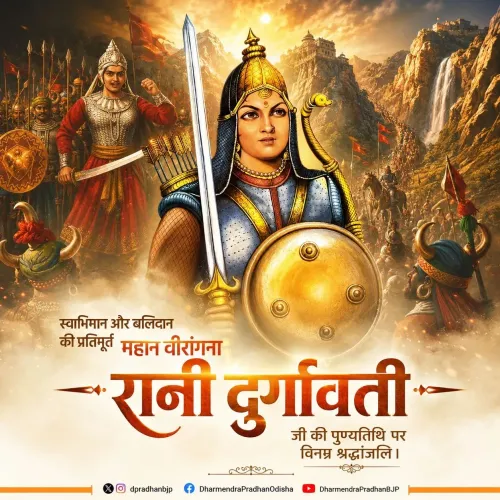
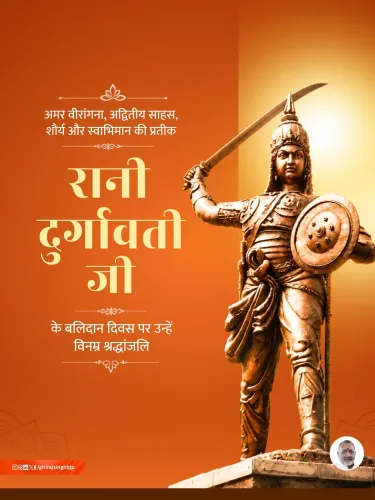
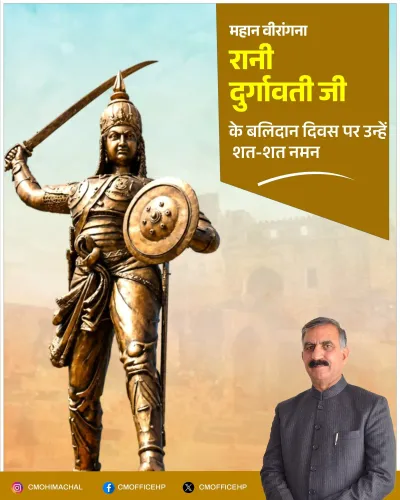
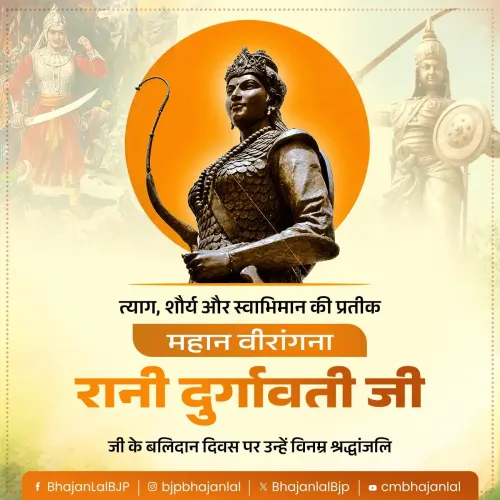
Amit Shah pays tribute to Rani Durgavati on her Balidan Diwas
Synopsis
Union Home Minister Amit Shah on 24 June 2026 paid tribute to Rani Durgavati, the 16th-century Gondwana queen who died resisting Mughal forces in 1564, calling her an immortal symbol of just governance, women's power, and indigenous cultural resistance.
Key Takeaways
Amit Shah posted a tribute to Rani Durgavati on 24 June 2026 , her annual martyrdom anniversary.
Rani Durgavati was the queen of the Gondwana kingdom in central India who died in battle against Mughal forces under Akbar in 1564 .
Shah described her as a 'just ruler and symbol of women's power' who built temples, dharamshalas, and tanks for public welfare.
The tribute is part of a broader BJP pattern of commemorating regional rulers who resisted Mughal expansion, emphasising indigenous sovereignty.
The Gondwana kingdom covered parts of present-day Madhya Pradesh , where Rani Durgavati's legacy is institutionally preserved, including a university in Jabalpur named after her.
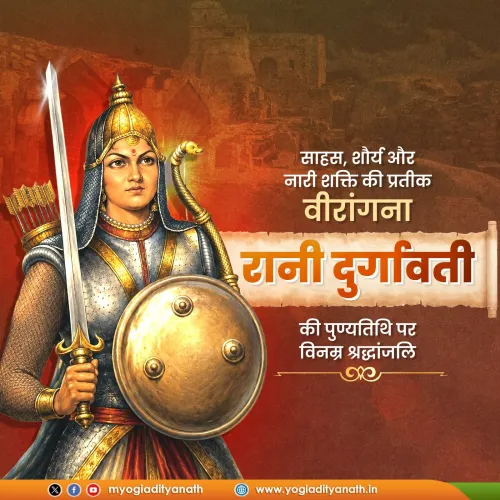
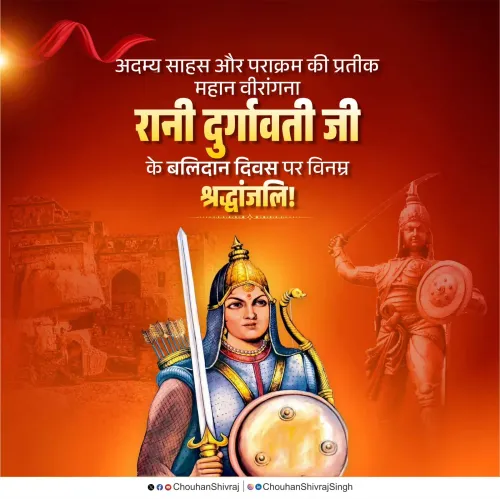
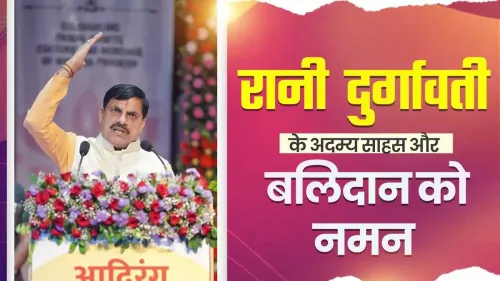
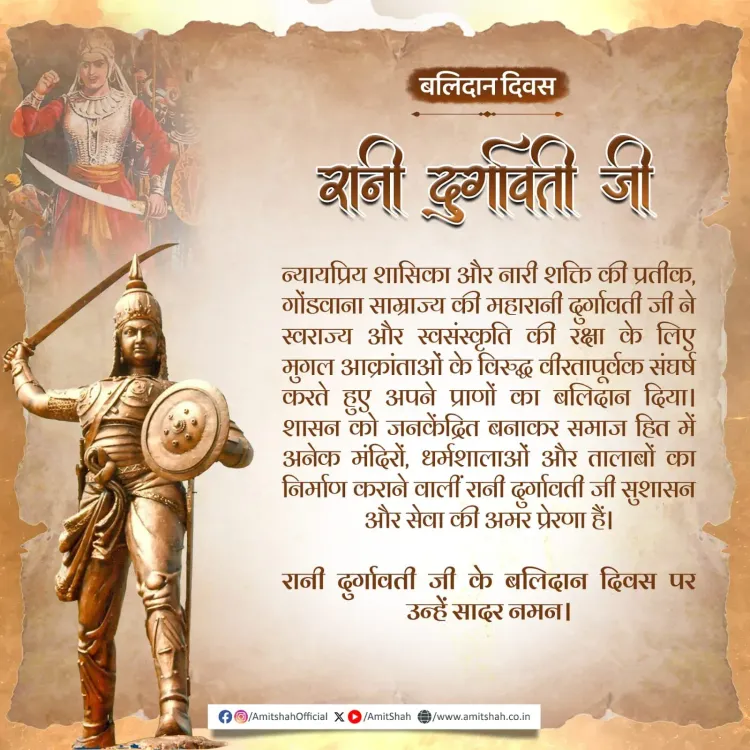
Union Home Minister Amit Shah on Wednesday, 24 June 2026 paid tribute to Rani Durgavati, the 16th-century queen of the Gondwana kingdom, on her martyrdom anniversary, honouring her as a symbol of women's power and just governance who sacrificed her life resisting Mughal forces.
Context
In his post, Shah described Rani Durgavati as 'न्यायप्रिय शासिका और नारी शक्ति की प्रतीक' — 'a just ruler and symbol of women's power' — who 'valiantly fought against Mughal aggressors in defence of self-rule and indigenous culture, sacrificing her life in the process.' He also recalled her public works, noting she built temples, dharamshalas, and tanks to serve society, calling her 'an immortal inspiration of good governance and service.'
The tribute was timed to 24 June, observed annually as Rani Durgavati Balidan Diwas — the anniversary of her death in battle in 1564.
Policy Backdrop
Rani Durgavati ruled the Gondwana kingdom, a Gond dynasty realm spanning parts of present-day Madhya Pradesh and neighbouring regions. She resisted the expansionist campaign of the Mughal Empire under Emperor Akbar, whose forces, led by commander Asaf Khan, attacked Gondwana in 1564. Rather than surrender, she died on the battlefield — an act of defiance that has made her a celebrated figure of regional and national history.
Commemorations of regional rulers who opposed Mughal expansion form a recurring pattern in official messaging by BJP leaders, emphasising themes of indigenous sovereignty, cultural continuity, and what the party frames as forgotten chapters of resistance history. Such statements are typically timed precisely to historical anniversaries.
Stakeholders and Impact
The tribute holds particular resonance for Gond tribal communities across central India, for whom Rani Durgavati remains a revered ancestral figure and symbol of dignified resistance. Madhya Pradesh, the heartland of the former Gondwana kingdom, has named educational institutions, a university in Jabalpur, and public infrastructure after her.
Shah's post amplifies the queen's legacy to a national audience, reinforcing the BJP's outreach to tribal communities ahead of state and national electoral cycles. Her story is also part of school curricula in several central Indian states, making such tributes broadly recognisable across age groups.
What's Next
State governments in central India, particularly Madhya Pradesh, are expected to organise commemorative events, cultural programmes, and educational initiatives around 24 June each year. As the BJP continues to foreground narratives of pre-colonial resistance, figures like Rani Durgavati are likely to feature more prominently in official historiography, public memorials, and policy-linked cultural outreach targeting tribal and regional constituencies.
Point of View
Particularly those framed around opposition to Mughal rule. By pairing the queen's military sacrifice with her record of public works — temples, dharamshalas, tanks — the messaging bridges cultural nationalism with a 'good governance' motif, a combination the party has deployed consistently across tribal-majority constituencies. The timing on the precise martyrdom anniversary signals institutional intent, not improvisation. As assembly elections cycle through central Indian states, such commemorations serve both as historical reframing and as targeted outreach to Gond and other tribal communities whose political mobilisation remains a key variable.
NationPress
24 Jun 2026
Frequently Asked Questions
Who was Rani Durgavati?
Rani Durgavati was the 16th-century queen of the Gondwana kingdom in central India. She is celebrated for her brave resistance against the Mughal Empire under Emperor Akbar and died in battle in 1564 rather than surrender to Mughal forces.
When is Rani Durgavati Balidan Diwas observed?
Rani Durgavati Balidan Diwas is observed on 24 June each year, marking the anniversary of her death in battle against Mughal forces in 1564 .
Why did Amit Shah pay tribute to Rani Durgavati?
Union Home Minister Amit Shah paid tribute to Rani Durgavati on her annual martyrdom anniversary, 24 June 2026 , honouring her as a symbol of women's power, just governance, and resistance against Mughal expansion.
Where was the Gondwana kingdom located?
The Gondwana kingdom was a medieval Gond dynasty realm covering parts of present-day Madhya Pradesh and surrounding regions of central India.
How is Rani Durgavati remembered today?
Rani Durgavati is remembered through named institutions including a university in Jabalpur, Madhya Pradesh , public infrastructure, school curricula in central Indian states, and annual government commemorations on her martyrdom anniversary.