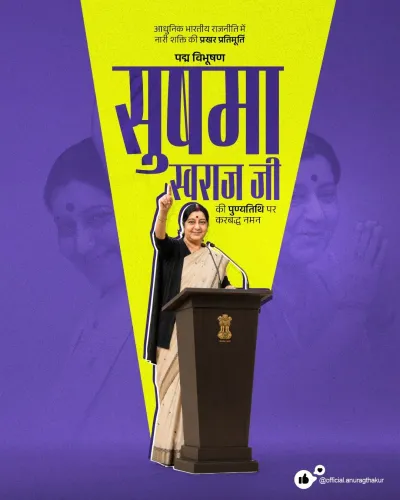
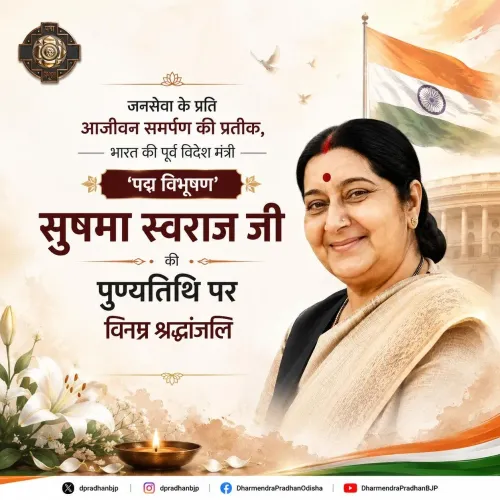
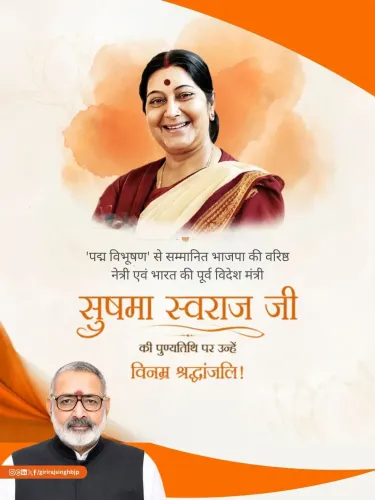
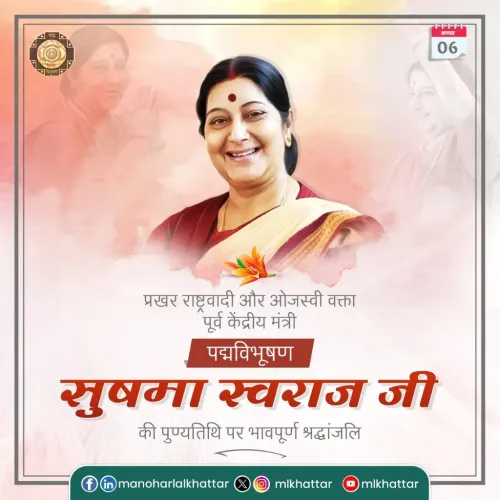
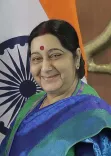
Amit Shah pays tribute to Sushma Swaraj on her death anniversary
Synopsis
Union Home Minister Amit Shah marked Sushma Swaraj's death anniversary by honouring her as an eloquent speaker and a symbol of simplicity, crediting her with bringing the Ministry of External Affairs closer to ordinary citizens through discipline and public service.
Key Takeaways
Amit Shah posted a tribute to Sushma Swaraj on her death anniversary, 6 August .
He described her as an 'eloquent speaker and embodiment of simplicity,' praising her discipline and fighting spirit.
Swaraj served as External Affairs Minister from 2014 to 2019 and was widely credited with making the ministry accessible to common citizens.
She became known for personally responding to distressed Indians abroad via social media, turning MEA into a public helpline.
Swaraj held senior roles in both the BJP organisation and multiple governments, including as Leader of the Opposition in the Lok Sabha.
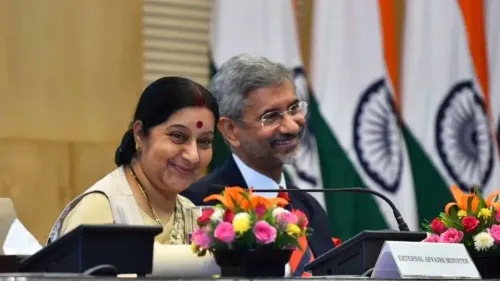
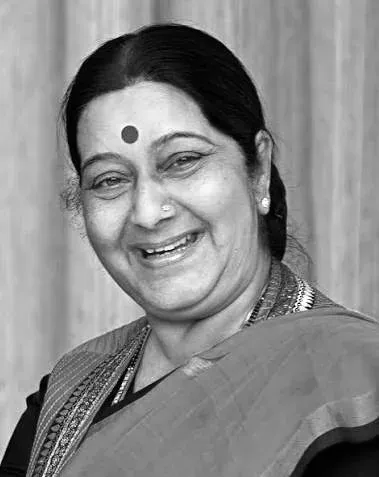
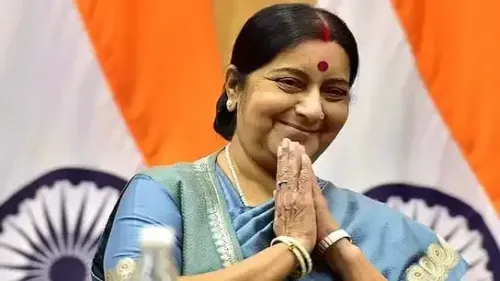
She transformed a ministry into a helpline for millions — and on her death anniversary, Union Home Minister Amit Shah remembered Sushma Swaraj as a voice that carried both power and grace.
In a post on 6 August, Shah paid homage to the former External Affairs Minister, writing: 'Ojasvi vakta, saumyata va sadagi ki pratimoorti' — 'an eloquent speaker, an embodiment of gentleness and simplicity.' He recalled how Swaraj discharged every responsibility — from party organisation to government — with discipline, diligence, and a fighting spirit, and said her simple life would always be remembered.
The minister who made MEA a people's ministry
Sushma Swaraj served as India's External Affairs Minister from 2014 to 2019, becoming one of the most publicly visible holders of that office in the country's history. She turned the ministry's social media presence into a round-the-clock consular helpline — responding personally to distressed Indians stranded abroad, cutting through bureaucratic delay with a tweet. It was an approach that made the foreign ministry feel, for the first time to many citizens, like it belonged to them.
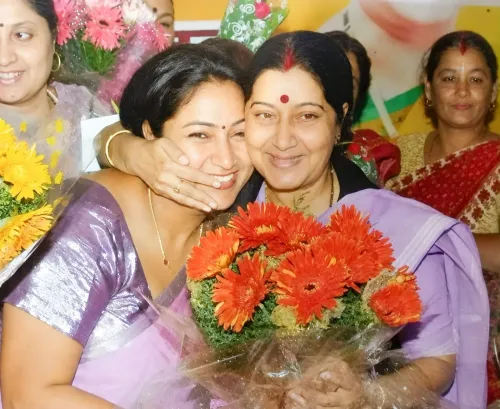
Beyond the ministry, Swaraj held senior organisational roles in the Bharatiya Janata Party over decades — serving as Leader of the Opposition in the Lok Sabha and as a cabinet minister in the Atal Bihari Vajpayee government. Her oratory was a defining feature: crisp, classical, and capable of filling a Parliament chamber or a party rally with equal authority.
A tribute rooted in party continuity
Annual death-anniversary tributes are a standard feature of Indian political culture, but Shah's phrasing goes beyond the ceremonial. By specifically citing Swaraj's ability to 'connect the Ministry of External Affairs with common people,' he underlines a legacy the BJP frequently invokes — that governance under the party has been citizen-first and accessible, not distant or elite.
Sushma Swaraj passed away on 6 August 2019. She remains one of the few Indian politicians whose public memory cuts across party lines, remembered as much for individual acts of human kindness — a passport expedited, a stranded worker brought home — as for the offices she held.
Some legacies are measured in policies. Hers is also measured in the people who got home safe.
Point of View
Shah implicitly frames the party's governance philosophy as people-first — a message that carries electoral as well as sentimental weight. Swaraj's cross-party appeal makes her an especially useful figure to invoke: remembering her costs nothing politically and gains goodwill broadly. The tribute also quietly signals that the BJP's second-generation leadership views her model of accessible, social-media-enabled governance as a template, not a relic.
NationPress
6 Aug 2026
Frequently Asked Questions
When did Sushma Swaraj pass away?
Sushma Swaraj passed away on 6 August 2019 due to cardiac arrest in New Delhi.
What is Sushma Swaraj known for as External Affairs Minister?
She is best remembered for using social media to personally assist Indians in distress abroad — from stranded workers to medical emergencies — making the Ministry of External Affairs unusually accessible to common citizens during her tenure from 2014 to 2019 .
What did Amit Shah say about Sushma Swaraj on her death anniversary?
Amit Shah called her an 'eloquent speaker and embodiment of gentleness and simplicity,' and said her disciplined, hardworking, and determined approach to every role — from party organisation to government — would always be remembered.
What senior positions did Sushma Swaraj hold in the BJP?
Swaraj served as Leader of the Opposition in the Lok Sabha, as a cabinet minister in the Vajpayee government , and as External Affairs Minister under Prime Minister Narendra Modi from 2014 to 2019.
Why do BJP leaders post tributes on Sushma Swaraj's death anniversary?
Annual tributes to former leaders are a standard part of Indian political culture. For the BJP , honouring Swaraj reinforces party continuity and recalls a governance legacy — particularly her citizen-friendly approach to foreign affairs — that the party considers a defining achievement.