Kejriwal Accuses Meta of Restricting His Account Under Modi Pressure
Synopsis
AAP convenor Arvind Kejriwal publicly confronted Meta on 6 August 2026, saying his account has been restricted in India with no explanation given, and accused the company of bowing to Prime Minister Narendra Modi's pressure.
Key Takeaways
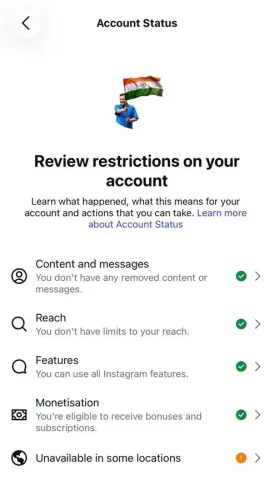
Arvind Kejriwal publicly alleged on 6 August 2026 that Meta has restricted his account in India.
He said verbal enquiries at Meta's India office confirmed the restriction but no written reason or remedy was offered.
All emails sent to Meta received only automated acknowledgements, he said.
Kejriwal directly accused Meta of bowing to Prime Minister Narendra Modi , warning the company it could end up running 'only his own account in India.' Under India's IT Rules 2021 , platforms are legally required to respond to user grievances within set timelines through an appointed grievance officer.
Neither Meta India nor the Ministry of Electronics and IT had responded publicly at the time of publication.
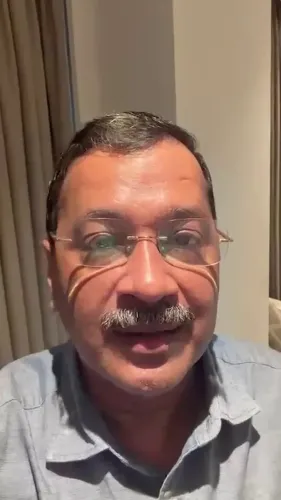
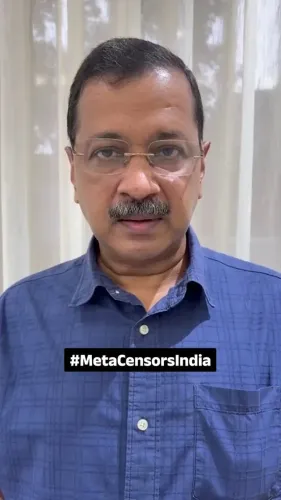
AAP convenor Arvind Kejriwal went public on Thursday, 6 August 2026, with a pointed accusation: Meta has blocked his social media account from Indian users — and he believes the hand behind it belongs to Prime Minister Narendra Modi.
In a post addressed directly to @Meta and @metaindia, Kejriwal said verbal enquiries at Meta's India office confirmed his account 'has been restricted in India and is unavailable in India.' He said no one at the office provided a reason, no one explained how the restriction could be lifted, and written emails drew only automated acknowledgements. 'That's pretty bad service,' he wrote — then landed the sharpest line: 'Don't bow down to our Prime Minister so much. Else he will allow you to run only his own account in India.'
What the IT Rules say Meta must do
The allegation lands in a well-established legal framework. Under India's Information Technology (Intermediary Guidelines and Digital Media Ethics Code) Rules, 2021, significant social media intermediaries like Meta are required to appoint a grievance officer in India and respond to user complaints within defined timelines. Kejriwal's account of unanswered emails and an office that offered no written explanation cuts directly against those obligations — at least as he has described the exchange.
The rules were introduced during the Modi government's first term as part of a broader effort to bring global platforms under domestic regulatory discipline. Critics have long argued the same framework can be used to pressure platforms into compliance on content-removal orders, effectively giving the government leverage over what Indian users can see.
A pattern opposition leaders know well
Kejriwal is not the first opposition figure to allege that a platform's content decisions in India carry a political fingerprint. The friction between global technology companies and the Indian government over content moderation has been a running story for years — spanning account suspensions, reduced visibility, and government-issued takedown orders that platforms have sometimes complied with and sometimes contested.
As national convenor of the Aam Aadmi Party, which governs Delhi and Punjab and sits in opposition to the BJP-led central government, Kejriwal has built his public profile substantially on direct digital communication. A restriction that makes his account invisible to Indian users — if confirmed — is not a minor inconvenience. It is a direct cut to his primary channel for reaching voters.
What happens next
Neither Meta India nor the Ministry of Electronics and Information Technology had publicly responded at the time of publication. The next moves to watch: a formal regulatory complaint under the IT Rules, a parliamentary question from AAP members, or a legal petition on intermediary liability and free speech — any of which would force a paper trail that a public post cannot.
Kejriwal has put Meta on notice in the most public arena available. Now the silence from Menlo Park — and from New Delhi — becomes the story.
Point of View
Not just the restriction, becomes the message. The timing matters: with AAP governing Delhi and Punjab while fighting the central government on multiple fronts, any perceived silencing of its convenor's digital voice carries outsized symbolic weight. The IT Rules 2021, designed to make platforms more accountable to Indian users, are here being invoked by an opposition leader against a platform he claims is too accountable to the ruling government — a sharp irony that points to the rules' dual-use potential. If Meta does not respond publicly and promptly, the silence will be read, fairly or not, as confirmation.
NationPress
20 Sept 2026
Frequently Asked Questions
Why has Arvind Kejriwal's Meta account been restricted in India?
Kejriwal has not been given an official reason. He says verbal enquiries at Meta's India office confirmed the restriction exists but no explanation or remedy was provided, and written emails received only automated replies.
What did Kejriwal say about Prime Minister Modi and Meta?
Kejriwal directly accused Meta of bowing to Prime Minister Narendra Modi, warning that if the company complied too readily, Modi would 'allow you to run only his own account in India.'
What do India's IT Rules 2021 require from Meta regarding user complaints?
Under the Information Technology (Intermediary Guidelines and Digital Media Ethics Code) Rules 2021, significant social media intermediaries like Meta must appoint a grievance officer in India and address user complaints within defined timelines.
Has Meta India responded to Kejriwal's allegations?
As of the time of publication on 6 August 2026, neither Meta India nor the Ministry of Electronics and Information Technology had issued a public response.
What action can Kejriwal take if Meta does not resolve the restriction?
Possible escalation paths include a formal regulatory complaint under the IT Rules 2021, a parliamentary question raised by AAP members, or a legal petition challenging the restriction on free speech and intermediary liability grounds.