Amit Shah Targets Punjab Over Zero PIT-NDPS Actions
Synopsis
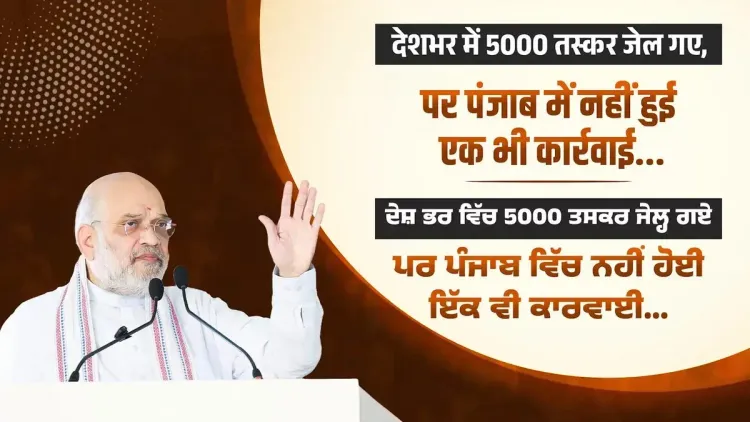
Union Home Minister Amit Shah has publicly challenged Punjab's Chief Minister to explain why the state — which he describes as India's biggest drug market — has recorded zero detentions under the PIT-NDPS Act, even as over 5,000 traffickers have been jailed nationwide under the same law.
Key Takeaways
5,000-plus traffickers have been detained nationwide under the PIT-NDPS Act , according to Home Minister Amit Shah's post dated September 30, 2026 .
Shah claims Punjab — which he identifies as the state with the highest drug trade — has recorded zero actions under PIT-NDPS.
The PIT-NDPS Act (1988) is a preventive detention law that allows holding drug traffickers for up to one year without trial, requiring a deliberate state government decision to invoke.
Punjab borders Pakistan and lies on the Golden Crescent trafficking corridor, making it a long-standing national security concern.
The post was published in both Hindi and Punjabi , signalling a direct appeal to Punjab's electorate and administration.
The Punjab government had not issued an official response at the time of publication.
More than 5,000 drug traffickers have been sent to jail across India under the Prevention of Illicit Traffic in Narcotic Drugs and Psychotropic Substances (PIT-NDPS) Act — yet the state that reportedly sees the highest volume of drug trade has not recorded a single detention under the same law. That is the pointed challenge Union Home Minister Amit Shah fired at the Punjab government on Wednesday, September 30, 2026.
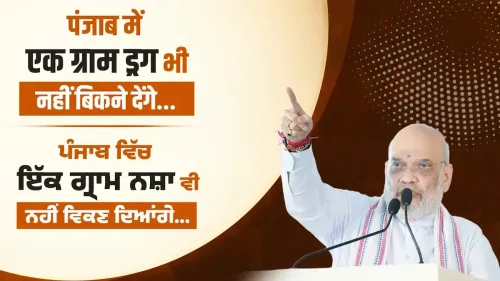
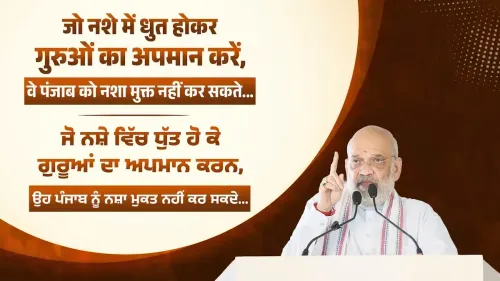
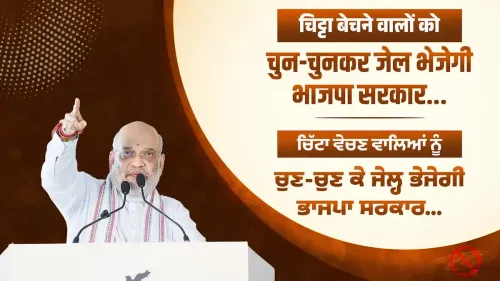
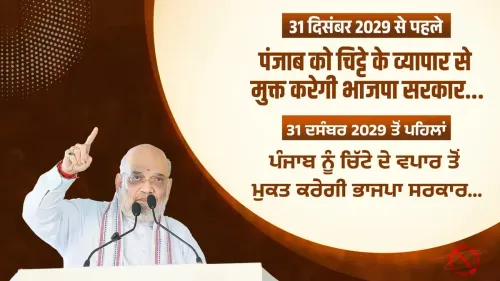
Shah posted in both Hindi and Punjabi — a deliberate linguistic choice that signals the message was aimed squarely at Punjab's voters and administration, not just the political class. 'Jahan sabse adhik nasha bikta hai, us Punjab mein ek bhi karvaai kyun nahin hui' ('Where drugs are sold the most, why has not a single action been taken in that Punjab') — the rhetorical question was direct, and the demand was explicit: 'The Chief Minister must answer.'
What PIT-NDPS Actually Does — and Why Zero Actions Matters
Enacted in 1988, the PIT-NDPS Act is a preventive detention law — it allows the state to hold a drug trafficker without trial for up to one year when a criminal case alone is deemed insufficient to keep them off the streets. It is a high-threshold tool: invoking it requires a deliberate administrative decision by the state government, not just a police arrest. That is precisely why Shah's figure carries political weight. Across the rest of the country, states have used the law over 5,000 times. Punjab's count, he says, is zero.
The Narcotic Drugs and Psychotropic Substances (NDPS) Act, 1985 — the parent legislation — consolidated India's anti-drug laws, but it was the 1988 PIT-NDPS addition that gave governments a sharper tool against organised trafficking networks. The Narcotics Control Bureau (NCB), which coordinates with state agencies on enforcement, has periodically reported nationwide drives under the Act. The absence of Punjab in those tallies, if confirmed, would represent a significant enforcement gap in a state that sits on one of the most documented drug-trafficking corridors in South Asia.
Punjab's Border Reality and the Drug Crisis That Predates Any Government
Punjab shares a long border with Pakistan and lies directly in the shadow of the Golden Crescent — the Afghanistan-Iran-Pakistan drug-production belt. Heroin, synthetic opioids, and pharmaceutical drugs have flowed through the state for decades, making it a recurring subject in national security discussions and parliamentary debates. The drug crisis in Punjab is not a new political discovery; it has been documented across government reports, court proceedings, and social-welfare data for at least two decades.
What makes Shah's intervention sharp is the framing: he is not questioning Punjab's arrests under the regular NDPS Act, but specifically the use of the preventive detention provision — the tool reserved for the most entrenched traffickers. Choosing not to invoke PIT-NDPS, the argument goes, leaves the top layer of trafficking networks untouched even when lower-level arrests are made.
A Pattern of Centre-State Sparring on Drug Enforcement
Political exchanges between the Union Home Ministry and opposition-governed states on enforcement shortfalls are a recurring feature of Indian federal politics. Home Ministry data on state-wise NCB coordination, parliamentary questions on drug seizures, and social-media volleys from senior BJP leaders toward AAP-ruled Punjab have all formed part of this pattern in recent years. Shah's post fits squarely into that arc — but the specificity of the PIT-NDPS figure and the bilingual targeting give it a sharper edge than a routine political statement.
The Punjab government has not issued an immediate response. Whether it releases state-level detention data or contests the zero-action claim will determine how this exchange develops — and whether the Narcotics Control Bureau follows with official state-wise figures that either corroborate or complicate the Home Minister's charge.
Five thousand detentions across India, and allegedly none in the state that needs it most. That is the number Punjab's administration now has to answer for.
Point of View
He sidesteps any claim that Punjab is 'doing something' on narcotics and zeroes in on the highest-impact, hardest-to-defend gap. It fits a broader BJP pattern of using Union Home Ministry data as a federal accountability tool against opposition-governed states, particularly ahead of electoral cycles. The demand for a Chief Ministerial reply also elevates the charge from a bureaucratic critique to a leadership accountability test. If the Punjab government cannot produce PIT-NDPS detention figures, the political cost of silence compounds with every news cycle.
NationPress
30 Sept 2026
Frequently Asked Questions
What is the PIT-NDPS Act and how is it different from the NDPS Act?
The PIT-NDPS Act (1988) is a preventive detention law that allows the government to detain drug traffickers for up to one year without a criminal trial, when regular prosecution is considered insufficient. The NDPS Act (1985) is the main law that defines drug offences and prescribes criminal penalties; PIT-NDPS is an additional tool targeting the most entrenched traffickers.
How many people have been detained under PIT-NDPS across India?
Union Home Minister Amit Shah stated in his September 30, 2026 post that over 5,000 traffickers have been jailed across India under the PIT-NDPS Act. This figure has not been independently verified from official government data at the time of publication.
Why is Punjab considered a major drug-trafficking state in India?
Punjab shares a border with Pakistan and lies on the Golden Crescent trafficking corridor — the Afghanistan-Iran-Pakistan drug-production belt. Heroin, synthetic opioids, and pharmaceutical drugs have flowed through the state for decades, making it a recurring subject in national security and law-enforcement discussions.
What did Amit Shah say about Punjab and drug enforcement?
Shah posted in Hindi and Punjabi that while over 5,000 traffickers have been detained under PIT-NDPS nationwide, not a single action has been taken in Punjab — which he described as the state where drugs are sold the most. He demanded that the Chief Minister explain this gap.
Has the Punjab government responded to Amit Shah's drug enforcement challenge?
As of the time of publication, the Punjab government had not issued an official response to Shah's post or provided state-level PIT-NDPS detention figures to counter or corroborate the claim.