Amit Shah visits Bharat Forge plant, backs India's defence push
Synopsis
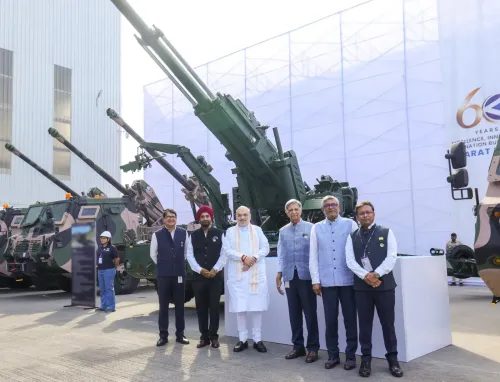
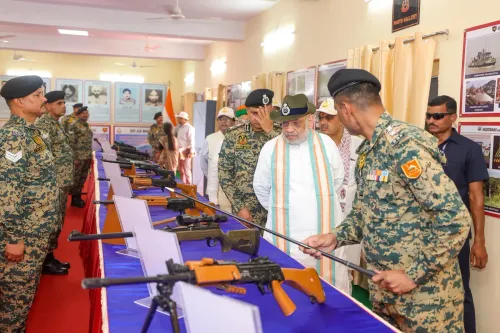
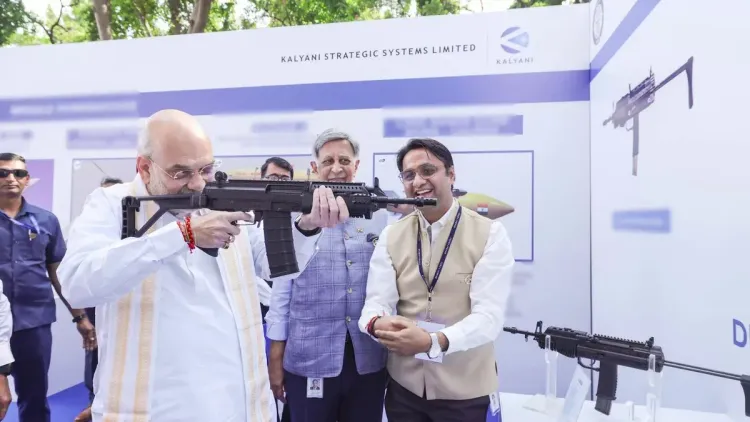
Union Home Minister Amit Shah toured Bharat Forge's Pune manufacturing plant on November 17, 2026, backing the Kalyani Group firm's role in India's drive for indigenous defence production under Make in India and Atmanirbhar Bharat.
Key Takeaways
Union Home Minister Amit Shah visited the Kalyani–Bharat Forge manufacturing plant in Pune on November 17, 2026 .
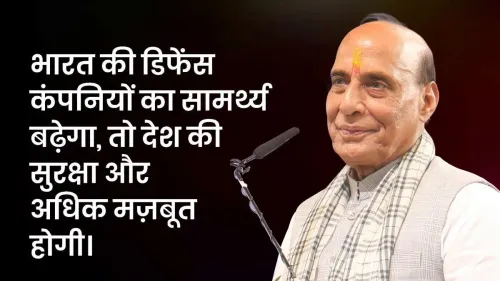
Shah called the company a force that 'strengthens India's defence citadel through its military engineering excellence.' Bharat Forge , part of the Kalyani Group , produces artillery systems, armoured vehicle components, and other military hardware for the Indian armed forces.
The visit underscores political support for the Make in India (2014) and Atmanirbhar Bharat (2020) frameworks that opened defence manufacturing to private Indian companies.
Bharat Forge was among the earliest large private firms to scale up indigenous military hardware production in India.
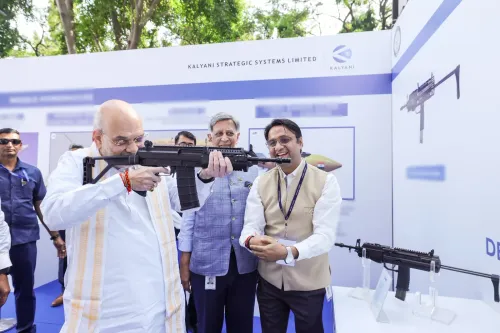
India's private defence sector got a high-profile endorsement on Tuesday, November 17, 2026, when Union Home Minister Amit Shah toured the manufacturing plant of Kalyani–Bharat Forge in Pune, calling the company a pillar of India's defence capabilities. The visit puts a senior cabinet face directly on the factory floor of one of India's most ambitious private-sector entrants into military hardware production.
What Bharat Forge builds — and why it matters
Bharat Forge Ltd, the flagship manufacturing arm of the Kalyani Group, has evolved from a commercial forging giant into a supplier of artillery systems, armoured vehicle components, and other critical military hardware for the Indian armed forces. Its Pune facility represents the kind of private-sector capability that policymakers have long argued India must develop to reduce dependence on imported defence equipment.
Shah described the company as one that 'strengthens India's defence citadel through its military engineering excellence' — framing Bharat Forge not just as a corporate success story but as a national security asset.
From Make in India to Atmanirbhar Bharat — the policy road to Pune
The visit sits at the intersection of two landmark policy drives. The Make in India initiative, launched in 2014, explicitly opened defence manufacturing to private Indian companies for the first time at scale. Atmanirbhar Bharat, announced in 2020, sharpened that agenda with specific import-substitution targets and streamlined licensing for domestic producers.
Bharat Forge was among the earliest private companies to capitalise on these openings, investing in artillery platforms and vehicle systems at a time when state-owned defence firms still dominated order books. The Kalyani Group's expanding defence verticals now span a range of land-systems products aimed squarely at Indian Army requirements.
Why a Home Minister is walking a defence factory floor
Senior ministerial visits to private defence plants serve a dual purpose: they signal continued political backing for indigenisation goals, and they reinforce to global and domestic investors that defence manufacturing carries cabinet-level priority. For a company like Bharat Forge, which competes for large government orders, that visibility is not incidental.
The visit also comes ahead of key calendrical moments in India's defence procurement cycle, including the next edition of major industry expos where new private-sector contracts are typically signalled. How quickly India's indigenisation targets translate into firm order pipelines for companies like Bharat Forge will be the real measure of this political momentum.
Point of View
Not just bureaucratic momentum. For the Kalyani Group, cabinet visibility ahead of upcoming procurement cycles translates directly into commercial credibility with the armed forces and potential export partners. The visit also highlights a broader pattern: as India's private defence ecosystem matures, ministerial endorsements are becoming a standard instrument for sustaining investor confidence and competitive pressure on legacy state-owned manufacturers. The real test will come when policy visibility converts into firm, long-term order commitments that give private players the production scale their investments require.
NationPress
17 Nov 2026
Frequently Asked Questions
Why did Amit Shah visit the Bharat Forge plant in Pune?
Union Home Minister Amit Shah visited Bharat Forge's Pune facility on November 17, 2026, to review the company's defence manufacturing capabilities and signal government support for India's indigenous military production drive under Make in India and Atmanirbhar Bharat.
What does Bharat Forge manufacture for India's defence sector?
Bharat Forge, part of the Kalyani Group, manufactures artillery systems, armoured vehicle components, and critical military hardware for the Indian armed forces at its Pune plant.
What is the Kalyani Group's role in India's defence industry?
The Kalyani Group is an Indian conglomerate whose defence verticals, including Bharat Forge, have emerged as major private-sector suppliers of indigenous military hardware, filling a gap previously dominated by state-owned enterprises.
How do Make in India and Atmanirbhar Bharat relate to private defence manufacturing?
Make in India (2014) opened defence manufacturing to private Indian companies at scale, while Atmanirbhar Bharat (2020) set specific import-substitution targets and simplified licensing, together creating the policy framework that companies like Bharat Forge have used to scale up military production.
What is the significance of a Home Minister visiting a defence manufacturing plant?
Senior ministerial visits to private defence plants signal continued political backing for indigenisation goals and boost investor confidence, reinforcing that defence manufacturing holds cabinet-level priority in India's industrial policy.