Amit Shah visits Vikramjit Singh's family in Gurdaspur
Synopsis
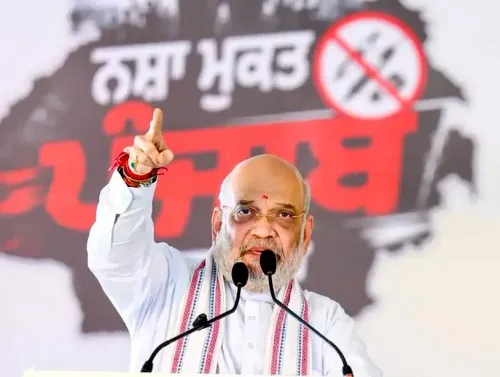
Union Home Minister Amit Shah visited Gurdaspur on 20 October 2026 to meet the family of Vikramjit Singh, reported killed for opposing Punjab's drug trade, and launched a sharp attack on the AAP government's handling of the state's narcotics crisis.
Key Takeaways
Amit Shah visited the Gurdaspur home of Vikramjit Singh's family on 20 October 2026 to offer condolences.
Shah alleged Vikramjit Singh was killed because he publicly opposed the drug trade operating under the AAP government in Punjab.
The Home Minister stated that under the Bhagwant Mann government , Punjab's youth are being lost to drugs while anti-drug voices remain unsafe.
Shah described the emboldened drug trafficking network as raising 'serious questions' over AAP's governance.
He pledged BJP's commitment to making Punjab and all of India drug-free and securing the future of its youth.
Punjab has a long-standing drug and cross-border narcotics smuggling problem; the NDPS Act provides the central framework but enforcement is a state function.
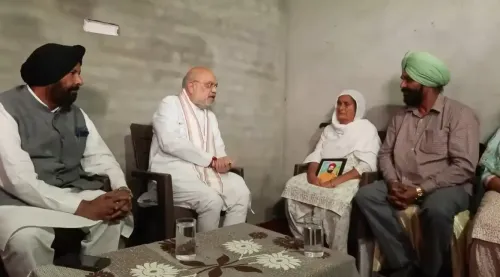
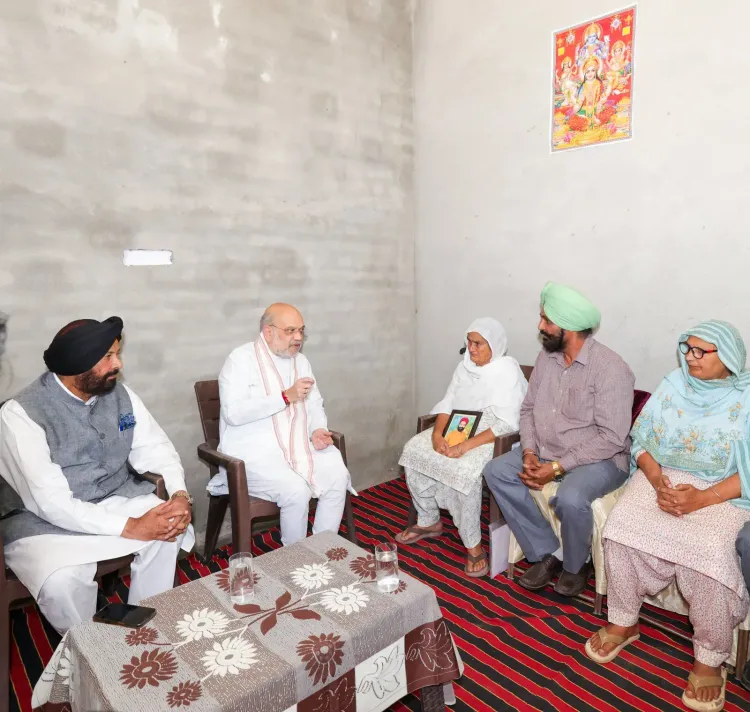
A man who raised his voice against drug traffickers in Punjab paid for that courage with his life — and on Tuesday, 20 October 2026, Union Home Minister Amit Shah travelled to Gurdaspur to sit with the family Vikramjit Singh left behind, and to make a political point as sharp as it was solemn.
Shah conveyed his condolences at the family's residence in Gurdaspur, writing on X: 'ईश्वर उन्हें यह दुःख सहने की शक्ति प्रदान करें' — 'May God give them the strength to bear this grief.' The visit, framed as a personal act of solidarity, doubled as one of the BJP's most direct attacks yet on the Aam Aadmi Party government's handling of the narcotics crisis gripping the state.
What Vikramjit Singh's death represents
According to Shah's post, Vikramjit Singh was killed after publicly opposing the rampant drug trade operating under the AAP government in Punjab. The research block notes that the specific circumstances and date of his death are not independently verifiable from the established public record. What is on record is the political charge: a citizen, brave enough to speak out, is dead — and the Home Minister of India is at his family's door.
Punjab's drug crisis has deep roots. The state shares a long border with Pakistan, and cross-border heroin smuggling has been documented for decades. Successive state governments — of multiple parties — have struggled to contain it. The Narcotic Drugs and Psychotropic Substances Act provides the central framework, but ground-level enforcement remains a state police function, making accountability a perpetually contested question.
Shah's indictment of the Bhagwant Mann government
The Home Minister did not pull punches. His post states that under the Bhagwant Mann government, Punjab's youth are being 'sacrificed to drugs' on one side, while those who dare speak against the trade are themselves unsafe on the other. He described the growing network of drug traffickers and their emboldened conduct as raising 'serious questions' — 'गंभीर प्रश्नचिह्न' — over the AAP administration's functioning.
This is consistent with a pattern: BJP leaders have repeatedly targeted opposition-ruled state governments on the narcotics issue, arguing that law-and-order failures at the state level feed the national drug menace. The AAP came to power in Punjab in 2022 on a platform that prominently included the promise to rid the state of drugs — making the gap between that promise and the present reality a recurring line of attack.
The pledge — and the stakes for Punjab's youth
Shah closed his post with a commitment that carries both electoral and policy weight: 'We are resolved to make Punjab and all of India drug-free and to secure the future of its youth.' The Ministry of Home Affairs has historically coordinated anti-narcotics drives with state police forces through the Narcotics Control Bureau. Whether this visit catalyses any formal escalation in central involvement in Punjab's enforcement machinery is the question that follows Shah back to Delhi.
For the family in Gurdaspur, no policy announcement changes what they have lost. But the arrival of India's Home Minister at their door signals that Vikramjit Singh's name will not quietly disappear from the political conversation — it may now become its focal point.
Point of View
Reinforcing BJP's positioning as the party of law-and-order against AAP's perceived failure on its signature 2022 campaign promise. By personally appearing at the family's home, Shah elevates Vikramjit Singh's case from a regional news item to a symbol of what the BJP frames as the cost of weak state governance. The visit also primes the terrain for potential central intervention — whether through the Narcotics Control Bureau or parliamentary pressure — keeping the drug-politics nexus in Punjab as a live electoral and policy fault line ahead of future cycles.
NationPress
20 Oct 2026
Frequently Asked Questions
Who was Vikramjit Singh and why did Amit Shah visit his family?
Vikramjit Singh was a Punjab resident who, according to Union Home Minister Amit Shah's post, lost his life after publicly opposing the drug trade in the state. Shah visited his family's Gurdaspur residence on 20 October 2026 to offer condolences and highlight what he called the failure of the AAP government to protect anti-drug voices.
What did Amit Shah say about the AAP government and Punjab drugs?
Shah said that under the Bhagwant Mann-led AAP government, Punjab's youth are being 'sacrificed to drugs' while those who speak against drug trafficking are not safe. He said the growing boldness of drug traffickers raises serious questions about AAP's functioning.
Is Punjab's drug problem a central or state government responsibility?
Drug enforcement in Punjab is primarily the responsibility of the state police and government, operating under the central Narcotic Drugs and Psychotropic Substances Act. The central government's Narcotics Control Bureau can coordinate with state agencies, but ground-level action depends on state-level political will and policing.
What has BJP's stance been on Punjab's drug issue under AAP?
BJP leaders have consistently criticised the AAP government in Punjab — which came to power in 2022 partly on an anti-drug promise — for failing to curb the narcotics network. They argue state-level failures endanger both users and those who speak out against traffickers.
What pledge did Amit Shah make regarding the drug crisis?
Shah pledged that BJP is committed to making Punjab and all of India drug-free and to securing the future of the country's youth, signalling the issue will remain a central plank of the party's political and policy agenda.