Amit Shah Vows to Jail Punjab Drug Traffickers if BJP Wins
Synopsis
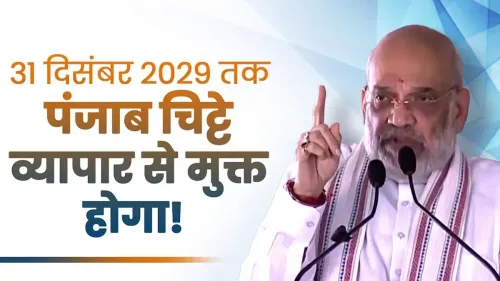
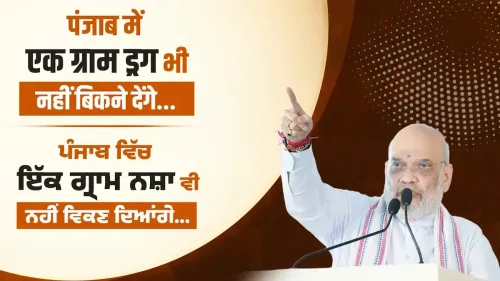
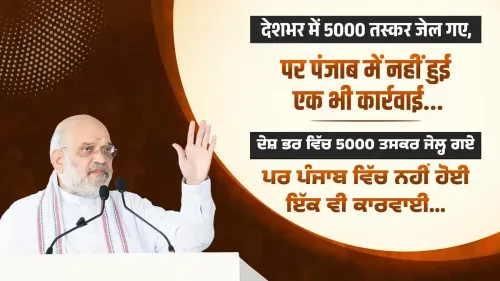
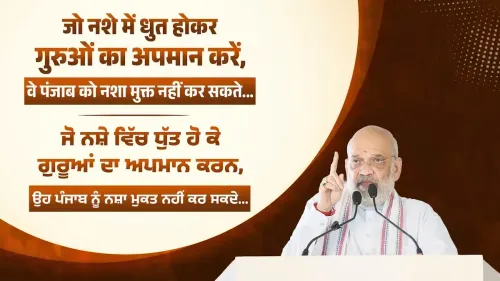
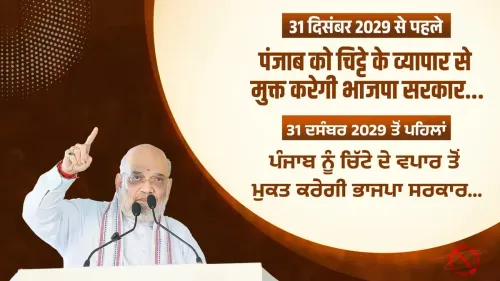
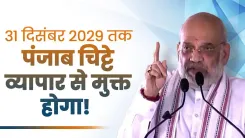
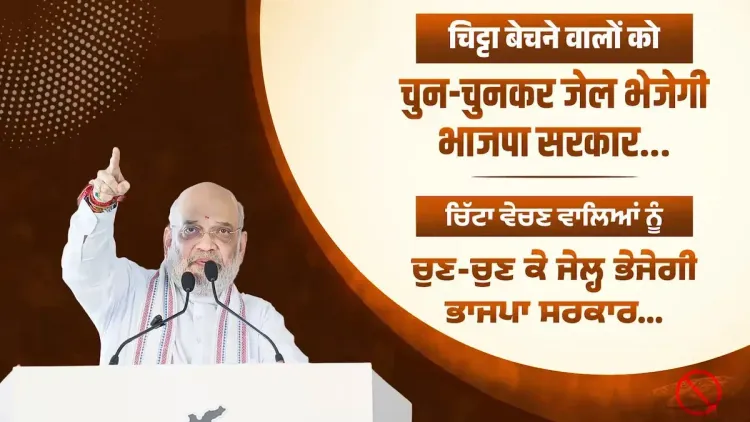
Union Home Minister Amit Shah declared in a bilingual Hindi-Punjabi post that a BJP government in Punjab would systematically arrest 'chitta' drug traffickers, reviving the narcotics issue as a central BJP campaign plank in the border state.
Key Takeaways
Amit Shah posted a bilingual Hindi-Punjabi pledge on 30 September 2026 promising a BJP Punjab government would jail chitta traffickers 'one by one.' 'Chitta' is the Punjabi street term for a white synthetic drug that has been a major public health and law-enforcement crisis in Punjab for over a decade.
Punjab's border with Pakistan has made it a primary narcotics smuggling corridor, linking the drug issue to national security.
Drug trafficking has been a decisive electoral issue in Punjab since at least the 2017 assembly elections , featuring heavily again in 2022 .
The BJP 's central leadership has consistently used state-level narcotics crises to draw law-and-order contrasts with rival state governments.
Shah's role as Union Home Minister gives his pledge institutional weight, signalling potential central backing for enforcement if BJP comes to power in Punjab.
Punjab's 'chitta' crisis — the white heroin-like synthetic drug that has hollowed out a generation of the state's youth — has a new electoral lightning rod. Union Home Minister Amit Shah issued a blunt, bilingual warning on Wednesday, 30 September 2026, declaring that a BJP government in Punjab would hunt down narcotics traffickers one by one and put them behind bars.
Posting in both Hindi and Punjabi for maximum reach, Shah's message was unambiguous: 'Chitte da kaarobaar karne waliyan nu chun-chun ke jail di salaakhaan picche suttegi' — 'A BJP government in Punjab will pick out, one by one, those running the chitta trade and throw them behind bars.' The parallel-language framing was deliberate, aimed squarely at voters in the Punjabi heartland.
The 'Chitta' Problem That Has Defined Punjab Politics for a Decade
The word 'chitta' — literally 'white' in Punjabi — has become shorthand for a synthetic drug scourge that has ravaged families across Punjab for years. The state's long, porous border with Pakistan has made it a primary entry corridor for narcotics flowing into India, and tackling the crisis has been a defining electoral promise — and recurring failure — of successive governments since at least the 2017 assembly elections.
By the 2022 Punjab assembly election, narcotics control had become one of the most emotionally charged campaign issues in the state. No major party fielded candidates without a firm anti-drug plank. The fact that the problem persists into 2026 as a live political flashpoint speaks to the depth of the challenge — and the electoral potency of promising to solve it.
BJP's Zero-Tolerance Playbook on Border-State Drugs
Shah's post fits a well-established pattern: senior BJP central leaders framing state-level drug crises as governance failures by rival administrations, and positioning a BJP government as the only credible enforcement alternative. This 'law-and-order contrast' messaging has been a staple of BJP campaigns in states where security issues resonate deeply with voters.
For a border state like Punjab — where narcotics enforcement intersects with national security, cross-border smuggling networks, and the capacity of local police — the Home Minister's personal intervention carries institutional weight beyond campaign rhetoric. Shah, who oversees both the Central Bureau of Narcotics and coordinates with state police forces, is signalling that a BJP Punjab government would have strong central backing on enforcement.
What the Promise Means on the Ground
The specificity of the language — 'one by one', 'behind bars' — is a prosecutorial framing, not just a policy slogan. It implies targeted intelligence-led operations rather than broad sweeps, a messaging choice that projects both surgical precision and political will. Whether such a commitment translates into institutional reform — faster courts, protected witnesses, inter-agency coordination — is the harder question voters in Punjab have learned to ask.
The drug trade in Punjab is not an isolated law-enforcement problem; it is woven into economic precarity, unemployment among youth, and transnational criminal networks that no single state government can dismantle alone. Shah's pledge, then, is as much about federal political will as it is about state policing capacity.
The next move belongs to Punjab's voters — and to the traffickers who have, so far, survived every promise made about them.
Point of View
Attach it to a governance-failure narrative, and offer a zero-tolerance counter-image. By invoking the 'chitta' trade specifically — not narcotics in the abstract — he is signalling fluency with Punjab's ground reality and calibrating the message for Punjabi-speaking voters. The Home Minister's personal involvement also implicitly promises central enforcement muscle, raising the political stakes of the pledge. If BJP does come to power in Punjab, this post becomes a baseline against which its drug-enforcement record will be measured.
NationPress
30 Sept 2026
Frequently Asked Questions
What is 'chitta' and why is it a problem in Punjab?
'Chitta' is a Punjabi word meaning 'white,' used as street slang for a synthetic heroin-like drug that has become widespread in Punjab, devastating youth and families. Punjab's long border with Pakistan has made it vulnerable to cross-border drug smuggling, fuelling the crisis.
What did Amit Shah say about Punjab's drug problem?
On 30 September 2026, Union Home Minister Amit Shah declared in a bilingual post that a BJP government in Punjab would pick out narcotics traffickers one by one and put them behind bars.
Has drug trafficking been an issue in Punjab elections before?
Yes. Narcotics control and the 'chitta' crisis featured as major electoral issues in both the 2017 and 2022 Punjab assembly elections, with every major party making anti-drug promises.
Why did Amit Shah post in both Hindi and Punjabi?
Posting in both languages was a strategic choice to maximise reach — Hindi for a national audience and Punjabi to speak directly to voters in Punjab in their own language.
What authority does the Union Home Minister have over Punjab's drug problem?
As Union Home Minister, Amit Shah oversees central agencies involved in narcotics control and coordinates with state police forces, meaning a central government-backed push could significantly amplify any state government's enforcement capacity.