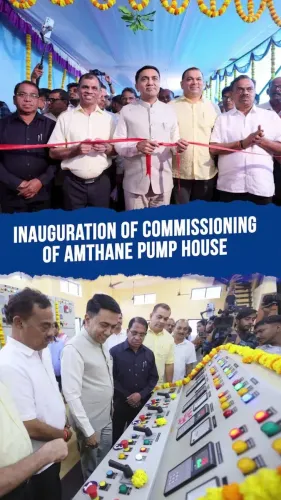
CM Sawant: Amthane Dam boosts Goa's water security

Synopsis
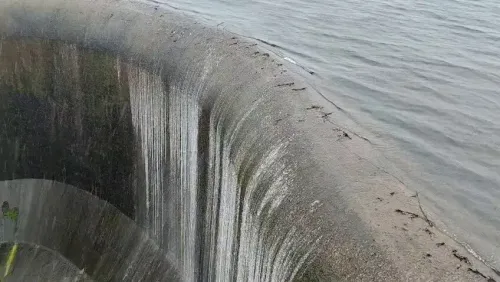
Goa CM Pramod Sawant spotlighted the Amthane Dam in Bicholim — with a stated capacity of 5,850 MLD — as a major upgrade to North Goa's water network, reducing dependence on the Tillari Dam and pushing toward 24x7 potable supply for Assonora, Porvorim, Pilerne, and Assagao.
Key Takeaways
The Amthane Dam in Bicholim, North Goa has a stated storage capacity of 5,850 MLD .
The dam supplies water to Assonora, Porvorim, Pilerne, and Assagao in North Goa.
It reduces the state's historical dependence on the inter-state Tillari Dam (Goa-Maharashtra).
The project is framed as part of the Swayampurna Goa self-reliance initiative and the national Viksit Bharat goal.
The stated objective is 24x7 potable water delivery to residents of the covered areas.
North Goa's water future just got a new anchor. Goa Chief Minister Pramod Sawant on Thursday, August 6, 2026, highlighted the Amthane Dam in Bicholim as a landmark step in the state's push for reliable, round-the-clock potable water — a system that for decades leaned heavily on a single cross-border source.
Breaking free from Tillari dependence
For years, North Goa's taps ran largely on the goodwill of the Tillari Dam, a joint Goa-Maharashtra project that came online in phases from the early 2000s. A single-source system for a growing coastal state was always a vulnerability — one drought season, one inter-state dispute, one infrastructure failure away from a crisis. The Amthane Dam, built within Goa's own territory in the Bicholim taluka, changes that calculus. CM Sawant stated the dam holds a storage capacity of 5,850 MLD (million litres per day), feeding water to the communities of Assonora, Porvorim, Pilerne, and Assagao — a corridor of North Goa that has seen rapid urban and residential growth in recent years. The goal, as Sawant framed it, is a 'fail-safe system' delivering 24x7 potable water to residents.Swayampurna Goa's infrastructure bet
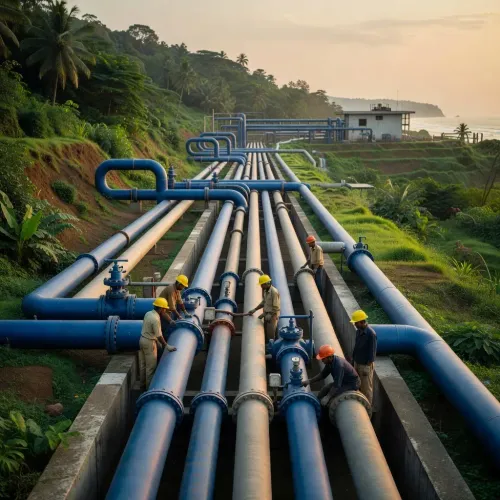
The dam fits squarely into the Swayampurna Goa framework — the state's self-reliance initiative launched around 2020 — which set sector-wise targets across agriculture, water, and governance. Goa's push to diversify local reservoir capacity has been a steady drumbeat since 2017, aligned with components of the national AMRUT mission focused on urban water and sanitation. Sawant described the milestone as part of the broader journey toward a 'Swayampurna and Viksit Goa', linking state ambition directly to the national Viksit Bharat vision. The shift matters beyond politics. North Goa's coastal belt — home to Porvorim, the state's administrative hub, and the densely populated Pilerne-Assagao stretch — has long outpaced water infrastructure. A dedicated inland reservoir with substantial local storage reduces negotiation risk with Maharashtra and gives state water authorities a buffer they have never had before. The next test will be in the pipelines, treatment plants, and last-mile connections that determine whether 5,850 MLD of stored water actually reaches kitchen taps around the clock — and whether state budget allocations keep pace with the ambition.Point of View
However, lies downstream: whether treatment capacity, pipeline networks, and operational budgets can actually convert reservoir storage into the 24x7 supply promise — a gap that has tripped up similar schemes across Indian states.
NationPress
21 Sept 2026
Frequently Asked Questions
What is the Amthane Dam and where is it located?
The Amthane Dam is a water storage reservoir located in the Bicholim taluka of North Goa . It is part of the state's expanded water infrastructure network aimed at reducing dependence on the inter-state Tillari Dam.
What is the storage capacity of the Amthane Dam?
Goa Chief Minister Pramod Sawant stated the Amthane Dam has a storage capacity of 5,850 MLD (million litres per day).
Which areas does the Amthane Dam supply water to?
According to CM Sawant, the dam supplies water to Assonora, Porvorim, Pilerne, and Assagao in North Goa.
What is Swayampurna Goa?
Swayampurna Goa is a state self-reliance initiative launched around 2020 under CM Pramod Sawant, targeting sector-wise development including water security, agriculture, and governance to make Goa less dependent on external support.
Why was North Goa dependent on the Tillari Dam?
The Tillari Dam is a joint Goa-Maharashtra project that has been the primary water source for North Goa since the early 2000s. The Amthane Dam is intended to diversify this supply and reduce reliance on the cross-border arrangement.