Anantnag locals pool funds to send grieving Jharkhand worker home after mother's death
Synopsis
Days after terrorists shot dead two migrant workers in Anantnag, residents of Kadipora village pooled money to send a grieving Jharkhand labourer home after his mother's death — a quiet but powerful counterpoint to targeted violence against non-local workers in the Valley.
Key Takeaways
Residents of Kadipora village , Anantnag , collected funds and arranged transport for migrant worker Badal Kumar of Jharkhand on Monday, 10 August .
Kumar was found weeping outside a Sufi shrine, unable to afford the journey home after his mother's death.
The villagers, all Muslim residents, covered his travel and immediate personal expenses.
The act came just 10 days after terrorists killed two non-local brick kiln workers — Deepak and Bopinder from Chhattisgarh — in Kellam village of the same district on 31 July .
Kumar has moved to Kapra village and will depart for Jharkhand with his family in the arranged transport.
Residents of Kadipora village in Anantnag district, Jammu and Kashmir, on Monday came together to collect money and arrange transport for Badal Kumar, a migrant labourer from Jharkhand, after he was found weeping outside a local shrine having lost his mother and lacking the funds to return home. The spontaneous act of solidarity drew wide attention in a district still reeling from a terrorist attack on non-local workers just days earlier.
How It Unfolded
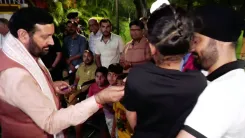
Locals spotted Badal Kumar in inconsolable grief outside the shrine of Sufi saint Syed Sahib in Kadipora village. When they enquired, Kumar told them his mother had died at their home in a distant Jharkhand village and that he had no money to cover the journey back.
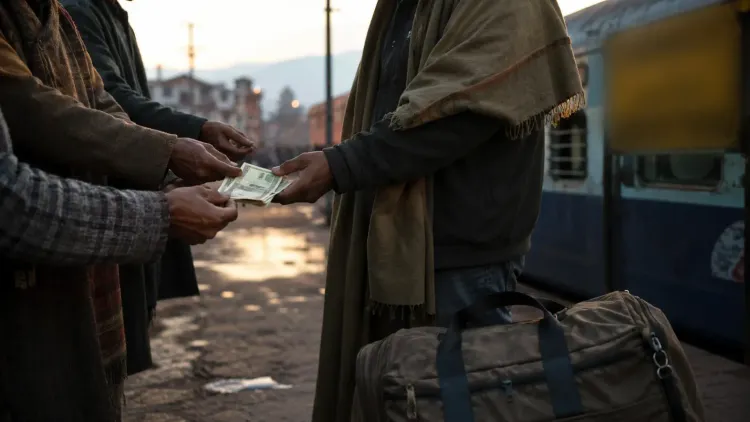
The villagers, all Muslim residents of Kadipora, immediately decided to act. They pooled funds to cover his travel expenses and other immediate personal needs, and arranged transport for him. Kumar has since moved to Kapra village in Anantnag, from where he and his family are set to depart for Jharkhand in the transport organised by the locals.
What the Locals Said
'All of us are human beings and our religion teaches us to have compassion for fellow human beings. Nobody could sit without his/her heart getting moved by the tragedy of the non-local labourer,' said Ghulam Mohammad, a resident of Kadipora village. Others echoed that leaving a person in such distress unhelped would be against humanity and the teachings of all religions.
The Stark Contrast With July 31 Attack
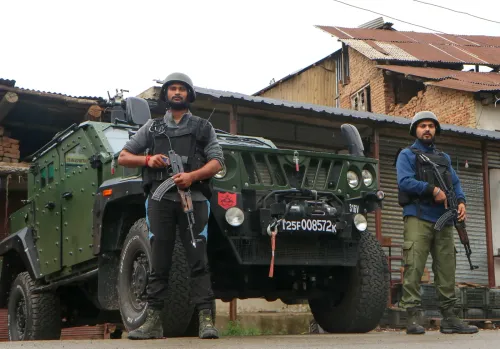
The gesture stands in sharp relief against the backdrop of a terrorist attack in Kellam village of the same Anantnag district on 31 July, in which two non-local brick kiln workers — Deepak and Bopinder, both in their twenties and both from Chhattisgarh — were shot dead at close range. Locals had condemned those killings at the time.
Notably, both incidents involve non-local labourers in the same district within a fortnight — one ending in tragedy, the other in community solidarity. The contrast has amplified the resonance of Monday's act across the region.
What It Signals
The response from Kadipora residents is being read as a grassroots assertion that violence against migrant workers — a pattern that has caused alarm among labour communities across India — does not reflect the values of ordinary Kashmiris. Migrant labourers from states such as Jharkhand, Bihar, Chhattisgarh, and Uttar Pradesh form a significant part of Kashmir's informal workforce, particularly in construction and brick kilns, and their safety has been a recurring concern since a series of targeted killings in recent years.
As Kumar prepares to return home to mourn his mother, the people of Kadipora have offered a quiet but pointed counternarrative to the violence that preceded it.
Point of View
The same category of victim, a fortnight apart. One event was an act of terror; the other, an act of solidarity. Mainstream coverage will likely frame this as a 'feel-good' story, but the more important read is structural: migrant workers from eastern and central India remain economically and physically vulnerable in Kashmir, dependent on the goodwill of local communities in ways that formal state protection has not reliably substituted. The community response is admirable, but it also underscores the absence of any institutional safety net for the hundreds of thousands of non-local labourers working in the Valley. Their security cannot rest on the kindness of strangers alone.
NationPress
25 Sept 2026
Frequently Asked Questions
Who is Badal Kumar and why did Anantnag locals help him?
Badal Kumar is a migrant labourer from Jharkhand working in Anantnag, Jammu and Kashmir. Locals helped him after finding him in tears outside a local shrine — he had lost his mother but had no money to travel home.
What did the Kadipora villagers do to help Badal Kumar?
Residents of Kadipora village pooled their own money to cover Kumar's travel expenses and other immediate personal costs, and arranged transport for him. He has since moved to Kapra village and will depart for Jharkhand with his family.
How does this incident relate to the Kellam village attack?
On 31 July, terrorists shot dead two non-local brick kiln workers, Deepak and Bopinder — both from Chhattisgarh — in Kellam village of the same Anantnag district. The community act of solidarity on 10 August is being widely contrasted with that killing.
Why is the safety of migrant workers in Kashmir a concern?
Migrant labourers from states like Jharkhand, Bihar, and Chhattisgarh form a large part of Kashmir's informal workforce in construction and brick kilns. A pattern of targeted attacks on non-local workers in recent years has raised alarm about their security in the region.
What did locals say about their decision to help Kumar?
Ghulam Mohammad, a Kadipora resident, said: 'All of us are human beings and our religion teaches us to have compassion for fellow human beings.' Others said leaving a person in such distress unhelped would be against humanity and the teachings of all religions.