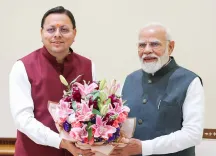
CM Sai announces Rs 20 lakh each for Chhattisgarh workers killed in Kulgam

Synopsis
Chhattisgarh CM Vishnu Deo Sai condemned the terrorist killing of two state workers, Deepak Ratre and Bhupendra Bhayna, in Kulgam, South Kashmir, and announced Rs 20 lakh compensation each for their families along with a nodal officer for cross-state coordination.
Key Takeaways
Deepak Ratre and Bhupendra Bhayna , migrant workers from Chhattisgarh , were killed by terrorists in Kulgam, South Kashmir .
Chhattisgarh CM Vishnu Deo Sai announced Rs 20 lakh each in ex-gratia compensation for the families of both victims.
A nodal officer is being appointed to coordinate with the Jammu and Kashmir government for timely assistance to the bereaved families.
CM Sai described the attack as 'cowardly' and said the perpetrators will face 'severe punishment', asserting national unity against terrorism.
The incident fits a recurring pattern of targeted killings of non-local migrant labourers in the Kashmir Valley.
Two migrant workers from Chhattisgarh — Deepak Ratre and Bhupendra Bhayna — were shot dead by terrorists in Kulgam, South Kashmir, in an attack that drew an immediate and sharp response from Chhattisgarh Chief Minister Vishnu Deo Sai on Saturday, 1 August 2026. The killings have reignited alarm over the targeting of non-local labourers in the Kashmir Valley.
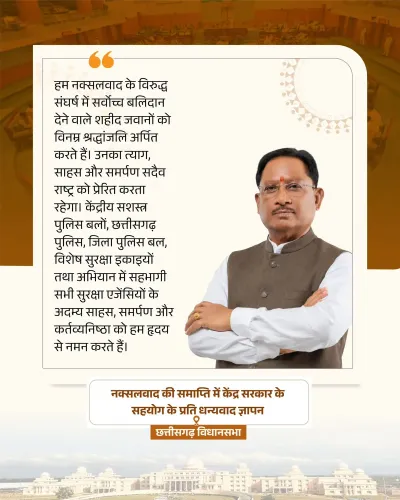
In a post on X, CM Sai condemned the attack in unambiguous terms: 'kayarana aatanki hamle ki main kathor shabdon mein ninda karta hoon' — 'I condemn this cowardly terrorist attack in the strongest words.' He announced that the Chhattisgarh government would stand firmly with the bereaved families and provide Rs 20 lakh each in financial assistance to the kin of both deceased workers.
Nodal officer, cross-state coordination, and what the families face now
Beyond the monetary relief, CM Sai said a nodal officer is being appointed specifically to coordinate with the Jammu and Kashmir government, ensuring that every form of assistance reaches the families on time. It is a practical acknowledgement of the bureaucratic distance between a family in rural Chhattisgarh and a crime scene hundreds of kilometres away in the Valley.
The move reflects a well-worn but necessary playbook: when migrant workers from central or eastern Indian states are killed in Kashmir, their home-state governments must bridge the gap between grief and government — arranging body repatriation, documentation, and compensation without leaving families to navigate it alone. The appointment of a dedicated nodal officer signals that Raipur is treating this as an active administrative emergency, not a press-release moment.
Deepak Ratre and Bhupendra Bhayna: lives cut short far from home
Migrant workers from states like Chhattisgarh, Bihar, and Uttar Pradesh have long formed the backbone of Kashmir's construction and agricultural labour force, drawn by work that is scarce at home. That same economic vulnerability has, in recurring episodes since 2021, made them targets of terror groups seeking to destabilise the Valley's post-Article 370 normalisation narrative. Deepak Ratre and Bhupendra Bhayna are the latest names on that grim list.
CM Sai closed his statement with both a prayer and a warning: he invoked God's peace for the departed souls and strength for their families, then added that the entire nation stands united against terrorism — and that those responsible for this 'heinous crime' will face severe punishment. It was a line directed as much at New Delhi and security agencies as at the perpetrators.
India has seen this grief before. The question security forces in the Valley must now answer is whether the investigation and response will match the swiftness of the condemnation.
Point of View
But the speed and specificity signal that home-state governments are increasingly expected to fill the welfare gap when central security fails migrant workers far from home. The broader question this incident forces is whether India's internal migration — a driver of both economic growth and political integration in the Valley — can be protected without a dedicated security framework for non-local labour. If the investigation yields arrests and prosecution, it reinforces deterrence; if it stalls, the political cost accrues nationally.
NationPress
16 Sept 2026
Frequently Asked Questions
Who were Deepak Ratre and Bhupendra Bhayna?
Deepak Ratre and Bhupendra Bhayna were migrant workers from Chhattisgarh who were killed by terrorists in Kulgam, South Kashmir . They were among the non-local labourers working in the Kashmir Valley.
What compensation did the Chhattisgarh government announce for the Kulgam attack victims?
Chhattisgarh CM Vishnu Deo Sai announced Rs 20 lakh each in financial assistance for the families of both Deepak Ratre and Bhupendra Bhayna , the workers killed in the Kulgam terrorist attack.
What is a nodal officer and why is Chhattisgarh appointing one?
A nodal officer is a designated government official responsible for coordinating between two administrations. Chhattisgarh is appointing one to liaise with the Jammu and Kashmir government so that the families of the slain workers receive all available assistance promptly and without bureaucratic delay.
Why are migrant workers being targeted in Kashmir?
Terror groups in the Kashmir Valley have repeatedly targeted non-local migrant labourers from states like Chhattisgarh, Bihar, and Uttar Pradesh in a pattern analysts link to efforts to disrupt post- Article 370 economic normalisation and drive out the non-local workforce.
What did CM Vishnu Deo Sai say about the Kulgam attack?
CM Vishnu Deo Sai called the attack 'extremely painful and heartbreaking,' condemned it in 'the strongest words,' announced Rs 20 lakh compensation per family, ordered a nodal officer appointment, and stated that the perpetrators 'will certainly face severe punishment.'