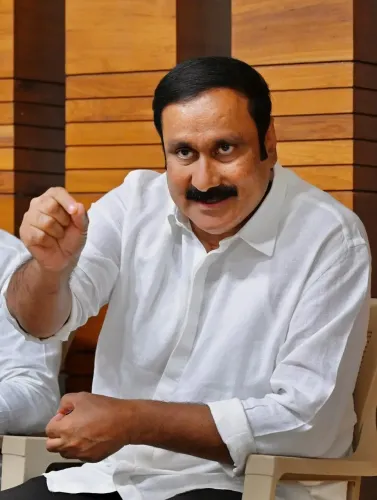
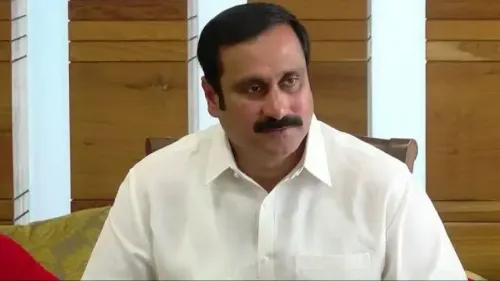
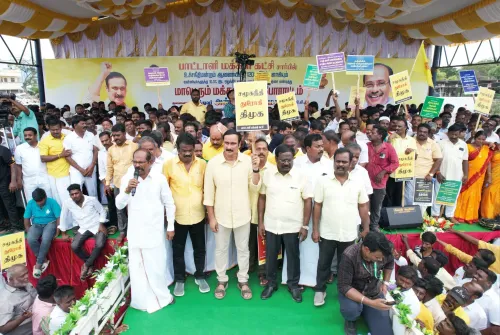
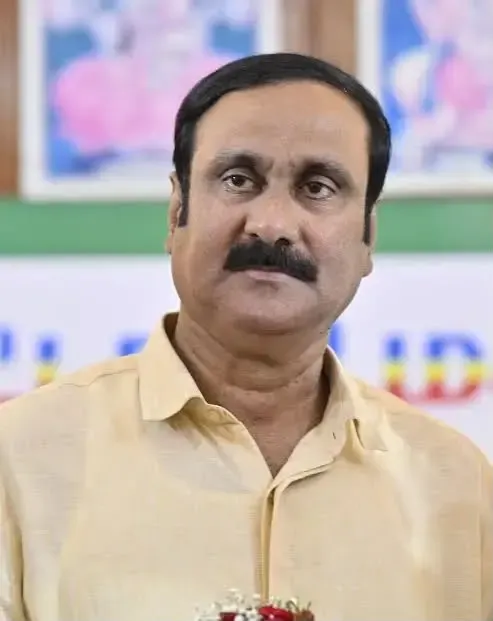
Anbumani Ramadoss demands Tamil Nadu end outsourced govt recruitment, restore permanent posts
Synopsis
PMK's Anbumani Ramadoss has taken direct aim at Tamil Nadu's expanding outsourced recruitment model, citing salary gaps of up to ₹44,000 between contract and permanent staff and alleging that bypassing TNPSC hiring denies reservation benefits to backward communities. With the TVK government's own manifesto pledging regularisation of contract workers, his demand puts the ruling party on the defensive on a core social justice issue.
Key Takeaways
PMK leader Anbumani Ramadoss on 29 October 2026 demanded a formal policy ending outsourced recruitment in Tamil Nadu government departments and PSUs.
He criticised the appointment of Overseas Manpower Corporation Limited as a statewide outsourcing agency, extended from an earlier 20-district arrangement under a 2025 gazette notification .
Salary gap highlighted: outsourced office managers receive ₹40,000 against ₹84,000 for permanent counterparts; junior assistants receive ₹20,000 against ₹36,000 with allowances.
Anbumani alleged outsourced hiring bypasses reservation norms, denying opportunities to Backward Classes , Most Backward Classes , and historically oppressed communities.
He cited the TVK's 2026 election manifesto promise to regularise contract employees with over five years of service, claiming it would benefit more than one lakh workers .
More than 30,000 people were allegedly appointed through outsourcing and contractual routes across the previous two governments, he claimed.
Pattali Makkal Katchi (PMK) leader Anbumani Ramadoss on 29 October 2026 urged the Tamil Nadu government to announce a formal policy ending outsourced recruitment across state departments and public sector undertakings, alleging that its continued expansion would erode reservation rights, weaken job security, and enable exploitation of workers.
What Anbumani Alleged
In a public statement, Anbumani criticised the appointment of Overseas Manpower Corporation Limited as an outsourcing agency for government establishments across the state. He alleged the arrangement effectively replaces regular recruitment with poorly paid contractual employment across a range of administrative and support roles — including shop assistants, photocopier operators, typists, junior assistants, drivers, office supervisors, and office managers.
A 2025 gazette notification, he said, had authorised the corporation to supply workers to government departments and public sector establishments in 20 districts, including Chennai and Coimbatore. He had opposed the move at the time and demanded its reversal. Instead, he alleged, the Tamilaga Vettri Kazhagam (TVK) government extended the arrangement statewide.
The Salary Gap at the Centre of the Dispute
Anbumani cited stark salary disparities to illustrate his concern. According to him, a junior assistant recruited through the Tamil Nadu Public Service Commission (TNPSC) draws a basic salary of ₹19,500 and approximately ₹36,000 per month with allowances, while an outsourced counterpart receives only ₹20,000 — with no comparable benefits.
The disparity widens at higher grades: outsourced office superintendents, he claimed, receive ₹30,000 against ₹70,000 for regular employees, and outsourced office managers are paid ₹40,000 compared to ₹84,000 for their permanent counterparts.
Reservation and Social Justice Concerns
Anbumani argued that outsourced appointments bypass the reservation framework mandated for government recruitment, thereby shutting out candidates from Backward Classes, Most Backward Classes, and historically oppressed communities. Government recruitment, he contended, is not merely an employment mechanism but an instrument of social justice and constitutional empowerment.
He questioned how expanding outsourced recruitment could be reconciled with the government's stated commitment to the ideals of Periyar and B.R. Ambedkar — a pointed political challenge to the ruling party's ideological positioning.
Historical Pattern and Previous Governments
Tracing the practice to the All India Anna Dravida Munnetra Kazhagam (AIADMK) administration in the late 2010s, Anbumani alleged that more than 30,000 people were subsequently appointed through outsourcing and contractual arrangements during the earlier Dravida Munnetra Kazhagam (DMK) government as well. This comes amid a broader national debate over the proliferation of contractual hiring in state-run institutions.
Key Demands
Anbumani demanded regular appointments against all vacant government posts and the regularisation of temporary and contractual employees who have completed more than five years of service. He also cited the TVK's 2026 Assembly election manifesto, which reportedly promised to regularise such employees — a commitment he said would benefit over one lakh workers if implemented. He urged the administration to honour that pledge without further delay.
Point of View
He frames outsourced recruitment not as a staffing decision but as a betrayal of Dravidian social-justice politics. The salary data he cites — a ₹44,000 gap at the office-manager level — is the kind of concrete, verifiable disparity that resonates beyond the political class. The uncomfortable truth is that contractual hiring has grown under every recent Tamil Nadu government, AIADMK and DMK alike; TVK now owns that legacy unless it acts. With over one lakh workers potentially eligible for regularisation under the party's own manifesto promise, the cost of inaction is both political and constitutional.
NationPress
29 Oct 2026
Frequently Asked Questions
What is Anbumani Ramadoss demanding from the Tamil Nadu government?
Anbumani Ramadoss is demanding that the Tamil Nadu government announce a formal policy to end outsourced recruitment in state departments and public sector undertakings, fill vacant posts through regular TNPSC recruitment, and regularise temporary or contractual employees who have completed more than five years of service.
Why does Anbumani say outsourced recruitment harms reservation rights?
He alleges that outsourced hiring through agencies such as Overseas Manpower Corporation Limited does not follow the reservation framework mandated for government recruitment, effectively excluding candidates from Backward Classes, Most Backward Classes, and historically oppressed communities from government jobs.
How wide is the salary gap between outsourced and permanent government employees?
According to Anbumani, outsourced junior assistants receive ₹20,000 against ₹36,000 with allowances for TNPSC-recruited counterparts. The gap is wider at senior grades: outsourced office managers receive ₹40,000 compared to ₹84,000 for permanent employees.
Which government introduced outsourced recruitment in Tamil Nadu?
Anbumani traced the practice to the AIADMK administration in the late 2010s. He alleged that more than 30,000 people were subsequently appointed through outsourcing and contractual arrangements during the previous DMK government as well, and that the current TVK government has further expanded it statewide.
What does the TVK's election manifesto say about contract workers?
The TVK's 2026 Assembly election manifesto reportedly included a promise to regularise temporary and contractual employees who had completed more than five years of service. Anbumani said implementing this commitment would benefit over one lakh workers and questioned why the government was expanding outsourced hiring instead.