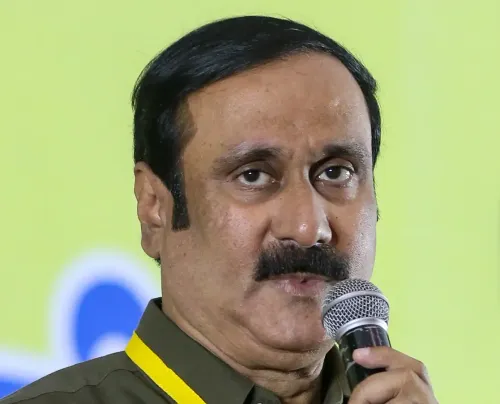
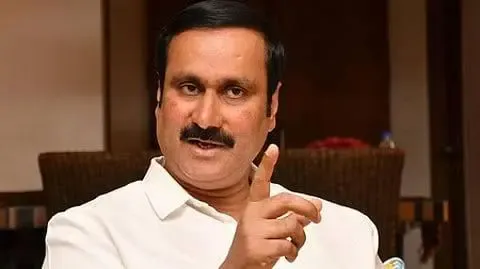
PMK's Anbumani accuses officials of bid to dilute TN local jobs pledge
Synopsis
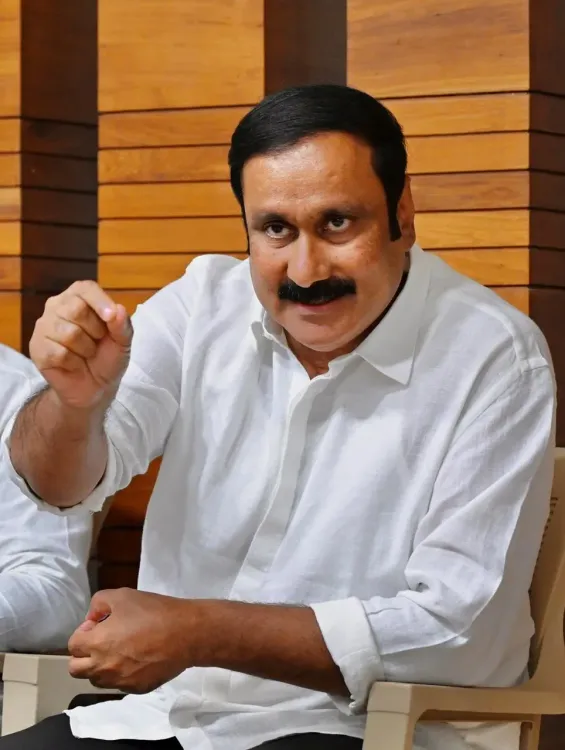
PMK president Anbumani Ramadoss has alleged an organised effort by officials and industry representatives to kill Tamil Nadu's election promise of incentivising private firms to hire at least 75% local youth — before the policy is even notified. With a GST subsidy and electricity rebate on the line, the battle over who gets Tamil Nadu's industrial jobs is just beginning.
Key Takeaways
PMK president Dr Anbumani Ramadoss on 19 July accused officials and private-industry representatives of attempting to dilute the Tamil Nadu government's local employment pledge.
The election promise offers a 2.5% GST subsidy and 5% electricity charge subsidy to companies where at least 75% of the workforce comprises Tamil Nadu youth.
Anbumani alleged an 'organised attempt' by certain officials and investors to block the policy before it could be notified.
He warned that diluting the commitment would amount to a betrayal of the state's principles of social justice .
The PMK leader urged the government to frame the new industrial policy without yielding to pressure from vested interests.
Pattali Makkal Katchi (PMK) president Dr Anbumani Ramadoss on Sunday, 19 July accused certain government officials and sections of private industry of working to undermine the Tamil Nadu government's election promise of securing greater employment for local youth in the private sector. He warned that any dilution of the commitment would constitute a betrayal of the state's foundational principles of social justice.
What Triggered the Allegation
Anbumani cited media reports indicating that officials had initiated consultations on drafting a new industrial policy for Tamil Nadu. According to those reports, some officials and private-industry representatives have reportedly opposed proposals aimed at expanding employment opportunities for Tamil Nadu residents in private companies and commercial establishments.
'If those reports are accurate,' Anbumani said, such opposition would be 'deeply disappointing and contrary to the state's long-standing commitment to social justice and inclusive development.' He stressed that industrial growth must be accompanied by meaningful employment for local, educated youth — not treated as a separate or secondary concern.
The Election Promise at Stake
The PMK leader recalled the specific pledge made by the ruling government ahead of assuming office in Tamil Nadu. Under the manifesto commitment, private companies maintaining a workforce of at least 75 per cent Tamil Nadu youth would qualify for a 2.5 per cent GST subsidy and a 5 per cent subsidy on electricity charges. Anbumani argued that this promise was a clear, public assurance to the state's workforce and must be implemented without delay.
Notably, the incentive structure was designed to make local hiring financially attractive to investors — balancing the dual goals of drawing capital into the state while protecting job access for residents. Critics of the proposal, according to reports, contend that mandatory hiring ratios could deter investment, though no official government position on the matter has been confirmed.
Alleged Organised Resistance
Anbumani went further, alleging that certain officials and investors were coordinating efforts to prevent the policy from taking shape before it could even be notified. He described this as an 'organised attempt' to block the initiative, which, he said, would effectively deny employment to thousands of qualified young people across the state.
This comes amid a broader national debate over state-level domicile reservation policies in private employment, with several states — including Haryana and Andhra Pradesh — having faced legal challenges to similar laws. Tamil Nadu's proposed incentive-based approach, rather than a quota mandate, was seen by some as a legally safer route, making the reported resistance all the more notable.
PMK's Demand
Anbumani urged the Tamil Nadu government not to yield to pressure from what he termed 'vested interests.' He called on the administration to frame the new industrial policy in a way that protects the workforce interests of Tamil Nadu residents while continuing to attract investment and industrial activity.
He reiterated that economic development and social justice must complement rather than compete with each other, and insisted the government honour its electoral promise by actively encouraging private-sector recruitment of local youth. How the state government responds to this pressure — and whether the new industrial policy retains the incentive provisions — will be closely watched in the weeks ahead.
Point of View
If confirmed, would suggest the Tamil Nadu government is already walking a tightrope between investor optics and its own electoral commitments. The incentive-based model — subsidies rather than quotas — was crafted precisely to avoid the legal fate of Haryana's domicile law, struck down by the Punjab and Haryana High Court. If even this softer approach is being diluted behind closed doors, it raises a harder question: whether any state government can credibly protect local employment without a confrontation with capital. Anbumani's intervention is as much a political pressure valve as a policy demand — and the government's silence so far speaks volumes.
NationPress
18 Oct 2026
Frequently Asked Questions
What is the Tamil Nadu local employment pledge that PMK is defending?
The ruling government's election manifesto promised to incentivise private companies that employ at least 75% Tamil Nadu youth, offering them a 2.5% GST subsidy and a 5% subsidy on electricity charges. PMK's Anbumani Ramadoss has demanded the government implement this pledge without delay.
What has Anbumani Ramadoss alleged against Tamil Nadu officials?
Anbumani has alleged that certain government officials and private-industry representatives are coordinating efforts to block or dilute the local employment policy before it is formally notified. He described it as an organised attempt to deny jobs to qualified Tamil Nadu youth.
Why does PMK consider this a social justice issue?
PMK argues that industrial growth in Tamil Nadu must translate into employment for local, educated youth — particularly from communities historically dependent on state-supported job access. Diluting the incentive policy, the party contends, would contradict the state's long-standing commitment to inclusive development and social justice.
Has the Tamil Nadu government responded to PMK's allegations?
No official response from the Tamil Nadu government has been confirmed in available reports. The government's position on whether the local employment incentives will be retained in the new industrial policy remains unclear.
How does this compare to similar policies in other Indian states?
Several states including Haryana and Andhra Pradesh have attempted domicile-based reservation in private employment, but faced legal challenges. Tamil Nadu's proposed incentive-based model — subsidies rather than mandatory quotas — was seen as a legally safer alternative, making the reported resistance to even this approach particularly significant.