ANC marks Independence Day with Parade of Sails off Sri Vijaya Puram
Synopsis
India's only Tri-Services Command marked Independence Day not on a parade ground but at sea — with sailboats in formation off Sri Vijaya Puram, a place where Netaji Subhas Chandra Bose first hoisted the Tricolour in 1943. The ANC's Parade of Sails is equal parts military ceremony and historical tribute, in a location whose freedom-movement significance rivals any mainland landmark.
Key Takeaways
The Andaman and Nicobar Command (ANC) held a 'Parade of Sails' off Flag Point, Sri Vijaya Puram on 15 August 2025 .
The event was led by Vice Admiral Vineet McCarty , Commander-in-Chief, ANC — India's only Tri-Services Command.
Netaji Subhas Chandra Bose first hoisted the National Flag in Sri Vijaya Puram on 30 December 1943 , at what is now Netaji Stadium .
Bose renamed the islands Shaheed and Swaraj in 1943; the government echoed those names in a 2024 renaming exercise.
The Cellular Jail at Sri Vijaya Puram, where colonial-era political prisoners were held, remains a major national memorial and tourist site.
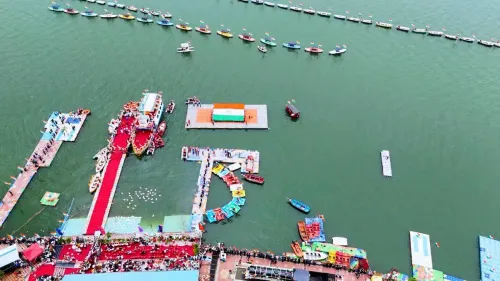
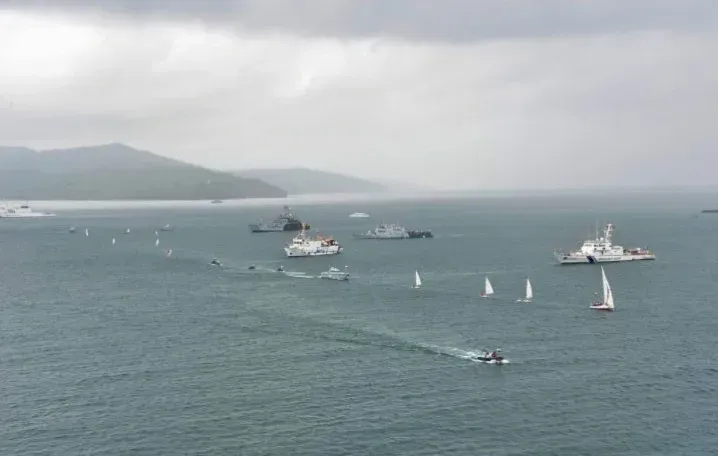
The Andaman and Nicobar Command (ANC), India's only Tri-Services Command, celebrated Independence Day 2025 on the high seas with a 'Parade of Sails' off Flag Point, Sri Vijaya Puram (formerly Port Blair) on 15 August. The event was led by Vice Admiral Vineet McCarty, Commander-in-Chief, ANC, and showcased sailboats and watercraft manoeuvring in formation against a backdrop of naval ships dressed in colourful signal flags.
The Parade at Sea
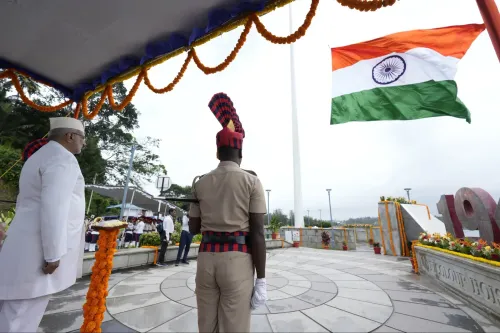
The National Tricolour was flown proudly as the ANC's watercraft executed precision formations off the iconic Flag Point. According to the ANC's post on X, the display was 'a stirring display of seamanship, maritime pride and patriotic fervour,' with naval ships adorned in signal flags forming a vivid maritime tableau. The choice of the high seas as the venue underscores the ANC's unique identity as India's only joint Tri-Services Command, integrating the Army, Navy, and Air Force under a single operational structure.
Why Sri Vijaya Puram Holds Special Significance
Sri Vijaya Puram carries deep resonance in India's freedom movement. The Cellular Jail, where hundreds of independence fighters were imprisoned under British colonial rule, stands in the city and remains one of the most visited historical sites in the country. More significantly, it was here that Netaji Subhas Chandra Bose first hoisted the National Flag on 30 December 1943 — at the Gymkhana Ground, now known as Netaji Stadium — declaring that the islands had been liberated from British rule.
At the time, the Andaman and Nicobar Islands were under Japanese control, having been captured during World War II. Remnants of that era — underground bunkers and Japanese-built infrastructure — can still be found across the islands.
Netaji's Historic Visit and the INA's First Indian Territory
Bose landed at what was then Port Blair airport on 29 December 1943, accompanied by Anand Mohan Sahay, Captain Rawat (his ADC), and Col D.S. Raju, his personal physician. He was received by the Japanese admiral commanding the island chain, and was welcomed warmly by Indian residents and those from Burma (present-day Myanmar).
Bose renamed the Andaman Island as Shaheed and the Nicobar Island as Swaraj, and appointed Indian National Army (INA) general A.D. Loganathan as governor. The move transformed the Azad Hind Government from a Government in Exile into one with its own territory, currency, civil code, and postage stamps — fulfilling Bose's pledge that the INA would stand on Indian soil before the end of 1943.
The 2024 Renaming and Continued Legacy
More than eight decades later, the government in 2024 renamed Port Blair as Sri Vijaya Puram and the nearby Rosa Island as Netaji Subhas Chandra Bose Dweep. The popular tourist destinations of Neil Island and Havelock Island were also rechristened Shaheed Dweep and Swaraj Dweep, respectively — names that echo Bose's own designations from 1943. This year's Parade of Sails, held against that layered historical backdrop, adds a maritime dimension to the islands' enduring place in India's national memory.
Point of View
However briefly, before 1947. The ANC's choice of a maritime Parade of Sails rather than a conventional ground parade is a pointed assertion of the islands' strategic identity as a naval frontier, not just a heritage site. What mainstream coverage tends to miss is that the 2024 renaming drive — rechristening Port Blair, Neil Island, and Havelock Island — is itself a live political act, projecting Netaji's legacy as a counterweight to the dominant Nehruvian Independence Day narrative. The Parade of Sails, set against that backdrop, is as much ideological as it is military.
NationPress
30 Sept 2026
Frequently Asked Questions
What is the Parade of Sails held by the Andaman and Nicobar Command?
The Parade of Sails is an Independence Day naval ceremony in which sailboats and watercraft manoeuvre in formation on the open sea off Flag Point, Sri Vijaya Puram. It is organised by the Andaman and Nicobar Command (ANC), India's only Tri-Services Command, to mark 15 August with a display of seamanship and maritime patriotism.
Who led the ANC's Independence Day celebrations at Sri Vijaya Puram?
Vice Admiral Vineet McCarty, Commander-in-Chief of the Andaman and Nicobar Command, led the Independence Day Parade of Sails off Flag Point, Sri Vijaya Puram on 15 August 2025.
Why is Sri Vijaya Puram significant in India's freedom movement?
Sri Vijaya Puram (formerly Port Blair) is where Netaji Subhas Chandra Bose hoisted the National Flag on 30 December 1943, making it the first Indian territory on which the Tricolour flew. The city is also home to the Cellular Jail, where hundreds of independence fighters were imprisoned by British colonial authorities.
When were the Andaman and Nicobar Islands renamed, and what are the new names?
In 2024, the Indian government renamed Port Blair as Sri Vijaya Puram and Rosa Island as Netaji Subhas Chandra Bose Dweep. Neil Island and Havelock Island were rechristened Shaheed Dweep and Swaraj Dweep — names that echo Netaji Bose's own designations for the islands in 1943.
What was the significance of Netaji Bose's visit to the Andaman Islands in December 1943?
Bose's visit on 29 December 1943 transformed the Azad Hind Government from a government in exile into one with actual territory. He hoisted the Tricolour, renamed the islands Shaheed and Swaraj, appointed INA general A.D. Loganathan as governor, and established a civil code, currency, and stamps — fulfilling his pledge that the INA would stand on Indian soil by the end of 1943.