Education protests a wake-up call, says Gitanjali Angmo in exclusive interview

Synopsis
Gitanjali Angmo, educator and wife of Sonam Wangchuk, is not just commenting on paper leaks — she is calling for a philosophical overhaul of what Indian examinations actually test. Her demand for an apolitical education commission, insulated from five-year electoral cycles, is the sharpest institutional proposal to emerge from the ongoing protests.
Key Takeaways
Gitanjali Angmo called on the government to treat ongoing education protests as a 'wake-up call' and act before a larger social movement emerges.
She argued the NEP is a strong document but stressed that implementation — not the policy itself — is the defining challenge.
Angmo called for teaching to become one of India's most respected and well-paid professions, warning that talented people currently avoid it as a career.
She distinguished between examination security (technology's domain) and the deeper philosophical question of what examinations should actually measure.
She proposed a separate educational commission insulated from political cycles, citing Finland's decades-long reform as a model.
On Vande Mataram , she noted it took 80 years to be sung from the Red Fort and called for the song's meaning — not just its performance — to be understood by younger generations.
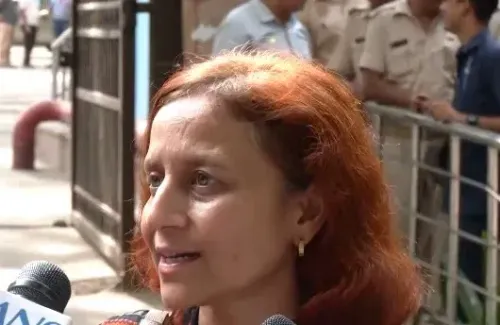
Gitanjali Angmo, educator and wife of climate activist Sonam Wangchuk, on Thursday, 3 September called on the government to treat ongoing protests over the examination system as a 'wake-up call' and move proactively on comprehensive reforms in both education and examinations. Speaking from Bhubaneswar, Angmo warned that inaction risks triggering a far larger social movement in the future.
On the National Education Policy and the Role of Teachers
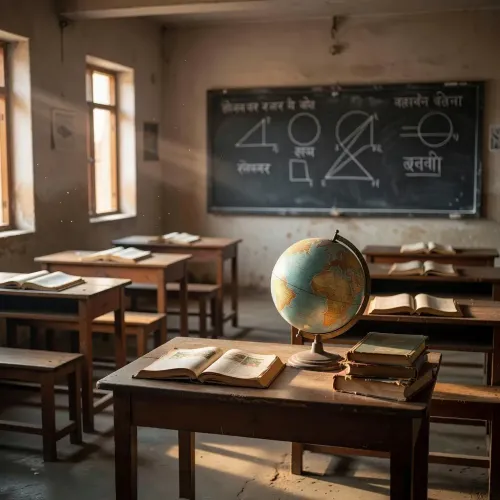
Angmo described the National Education Policy (NEP) as a strong document in principle, but stressed that implementation remains the defining challenge. Drawing on the ancient Gurukul tradition, she argued that the teacher — not the curriculum — is the true centre of any education system. 'Today, teaching has often become a profession of last resort,' she said, pointing out that many enter the field only after failing to secure careers in engineering, medicine, or the civil services.
She called for teaching to be made one of the most respected and well-remunerated professions in India, arguing that without attracting talented individuals into classrooms, no policy document can deliver meaningful change. She also emphasised that every child, regardless of whether they attend a government or private school, deserves a strong and equal basic education through at least the tenth grade.
Examination Reform: Beyond Paper Leaks
On the Nandan Nilekani-led committee working on examination security, Angmo acknowledged the importance of making the process technologically airtight. However, she drew a clear distinction between process integrity and deeper philosophical reform. 'Technology can ensure there are no paper leaks and that the process remains secure,' she said. 'But technology cannot answer the larger philosophical question of what education and examinations are supposed to achieve.'
She argued that current examinations primarily test memory and information recall under pressure — a narrow measure of a child's capabilities. Instead, she called for assessments that evaluate understanding, creativity, problem-solving, and independent thinking. She also advocated for a separate, apolitical educational commission, insulated from electoral cycles, to guide long-term reform. 'Education isn't a five-year project. It's a decades-long endeavour,' she said, citing Finland's multi-decade education transformation as a reference point.
On Vande Mataram, Cultural Memory, and Political Polarisation
Angmo spoke at length on the controversy surrounding 'Vande Mataram', expressing concern that the national song is fading from collective memory. She rejected objections to the song on religious grounds as 'not a mature way of thinking,' arguing that engaging with symbols from another tradition does not corrupt one's own faith. She noted that it took 80 years for the song to be sung from the Red Fort on Independence Day, calling the eventual inclusion a welcome step.
Citing philosopher Sri Aurobindo's interpretation of Bankim Chandra Chatterjee's 'Anandamath', she described Vande Mataram as more than a patriotic song — a living relationship between citizens and the land. She cautioned, however, that the song must not become mere ritual; its historical significance and deeper meaning must be actively understood by younger generations.
On political polarisation more broadly, Angmo argued that politicians frequently exploit cultural and ideological divisions for vote-bank purposes. She drew on the metaphor of a botanical garden — diverse flowers creating collective beauty — to make the case that harmony does not require uniformity. 'Nation comes first, then parties, then ideologies, and then narratives,' she said.
Indian Philosophy, 'Dimagi Naxals', and Rediscovering Knowledge Systems
Angmo pushed back against the use of the term 'Dimagi Naxal' to describe those who ask critical questions, calling it 'a very insensitive way' to characterise intellectual enquiry. She pointed to the Upanishads, the Gita, and the tradition of Nachiketa questioning Yama as evidence that enquiry has always been central to Indian thought. She argued that Indian philosophical systems — Nyaya, Vaisheshika, Advaita Vedanta — offer frameworks as rigorous as any Western counterpart, yet remain absent from mainstream education.
She also challenged the Left-Right binary as largely inapplicable to the Indian context, describing Sanatan Dharma as fundamentally liberal in its orientation toward liberation and its tolerance of diverse philosophical paths. She similarly questioned the direct application of Western categories of Socialism and Capitalism to India, arguing that Indian thought — anchored in the four goals of Artha, Kama, Dharma and Moksha — has historically sought integration rather than opposition.
Odisha, Patriotism, and Sri Aurobindo's Legacy
Reflecting on her return to Odisha, her birthplace, Angmo described the state's deep reverence for Sri Aurobindo's philosophy as one of the formative influences of her life. She said Aurobindo's framework helped her move beyond binary thinking — Left versus Right, secular versus sacred, individual versus collective — toward a more integrated worldview.
On patriotism, she offered a definition rooted in action rather than sentiment: honest work in one's field, prioritising national interest, and passing on something better to the next generation. 'True patriotism lies in how well and honestly we work in our respective fields,' she said. As protests over examination integrity continue, Angmo's call for institutionalised, apolitical education reform is likely to resonate well beyond the immediate controversy.
Point of View
Not just rhetorically: an education commission beyond the reach of electoral cycles. That proposal cuts against the grain of how Indian policy has always worked, where incoming governments routinely shelve predecessors' flagship schemes. Her critique of examinations — that they test memory, not understanding — is not new, but her insistence that technology alone cannot solve a philosophical problem is a useful corrective to the dominant framing of the NEET controversy. The harder question she does not fully answer is who builds and sustains such an apolitical institution in a deeply politicised system.
NationPress
18 Oct 2026
Frequently Asked Questions
What did Gitanjali Angmo say about the ongoing education protests in India?
Angmo said the government should treat the protests as a 'wake-up call' and proactively implement comprehensive reforms in both the education and examination systems. She warned that failure to act could lead to a significantly larger social movement in the future.
What reforms did Gitanjali Angmo propose for India's examination system?
Angmo called for examinations to move beyond testing memory and information recall, arguing they should assess understanding, creativity, problem-solving, and independent thinking. She also proposed a separate, apolitical educational commission insulated from political cycles to guide long-term reform.
What is Angmo's view on the National Education Policy (NEP)?
Angmo described the NEP as a strong document but said implementation is the critical challenge. She argued that without elevating the status and remuneration of teachers, and without institutional protection from political change, even the best policy will not translate into classroom-level change.
What did Gitanjali Angmo say about the Vande Mataram controversy?
Angmo rejected objections to Vande Mataram on religious grounds as immature, and noted it took 80 years for the song to be sung from the Red Fort on Independence Day. She argued the song's deeper meaning — a living relationship between citizens and the land — must be understood, not just performed as ritual.
Who is Gitanjali Angmo?
Gitanjali Angmo is an educator and the wife of Ladakhi climate activist Sonam Wangchuk. She teaches the Vedas, Upanishads, and Gita from Sri Aurobindo's philosophical perspective and has been a vocal advocate for education reform and the integration of Indian knowledge systems into mainstream curricula.