Mekedatu row: Annamalai demands Centre clarify Cauvery stand amid policy U-turn fears
Synopsis
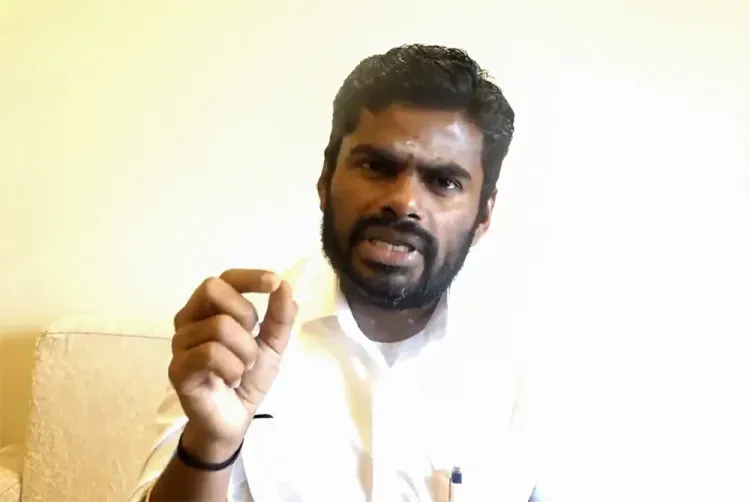
Annamalai has called out what he describes as a policy U-turn by the Centre on the Mekedatu dam project — pointing to a Rajya Sabha reply that appears to contradict a 2021 parliamentary assurance that Karnataka needed downstream states' consent before any construction on the Cauvery. The allegation puts the Union government under pressure ahead of politically sensitive state dynamics in both Tamil Nadu and Karnataka.
Key Takeaways
Annamalai of We The Leaders criticised the Union government's Rajya Sabha reply on the Mekedatu dam project on 28 July .
The Ministry of Jal Shakti reportedly stated the Supreme Court's 16 February 2018 order did not explicitly require Karnataka to seek consent from downstream states before new construction on the Cauvery.
This contrasts with a 5 August 2021 parliamentary statement by then Minister Gajendra Singh Shekhawat , who said Karnataka's DPR permission was conditional on downstream state consent.
Annamalai alleged the shift was driven by Karnataka's electoral politics and warned of consequences for Tamil Nadu's farmers.
He urged the Centre to resolve the Cauvery issue strictly within the Inter-State River Water Disputes Act framework.
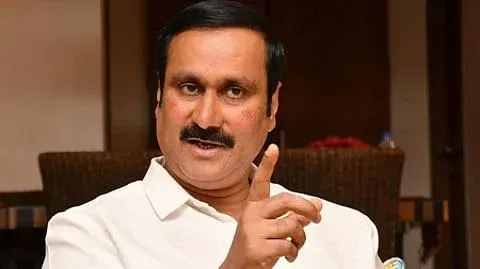
K. Annamalai, President of We The Leaders, on 28 July sharply criticised the Union government's latest position on the Mekedatu dam project, alleging it represents a significant departure from assurances previously given on the Cauvery river water dispute. He urged the Centre to uphold the rights of downstream states and ensure any decision on the project adheres strictly to law and justice.
What Triggered the Controversy
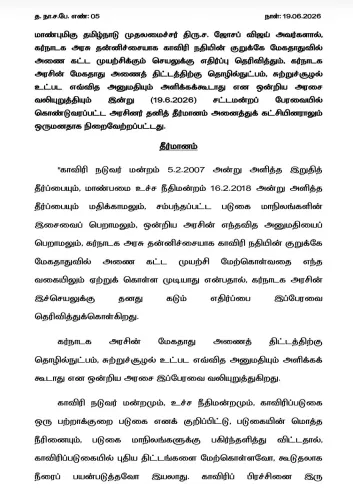
Annamalai, in a post on X, flagged the Union Ministry of Jal Shakti's reply in the Rajya Sabha on Monday as a 'shock' to the people of Tamil Nadu. According to him, the Ministry stated that the Supreme Court's judgment of 16 February 2018 on the Cauvery water-sharing dispute did not explicitly require Karnataka to obtain the consent of Tamil Nadu, Kerala, and Puducherry before constructing any new structure across the river.
The 2021 Assurance That Now Stands Questioned
Annamalai contrasted the current position with a statement made in Parliament on 5 August 2021, when then Union Jal Shakti Minister Gajendra Singh Shekhawat had categorically stated that Karnataka's permission to prepare the Detailed Project Report (DPR) for the proposed Mekedatu dam was conditional. Shekhawat had also clarified that, under the Inter-State River Water Disputes Act, no dam or structure could be built across the Cauvery without the consent of downstream states, particularly Tamil Nadu.
Annamalai's Political Allegation
Questioning the apparent shift, Annamalai alleged the change in position appeared to be influenced by Karnataka's electoral politics. He warned that any move overlooking the interests of Tamil Nadu's farmers would carry serious consequences. 'The rights and livelihood of farmers should never become victims of political expediency,' he said. He added that the Union government was expected to act 'honestly, transparently and consistently' on issues affecting millions of people dependent on the Cauvery.
Call for Caution and Legal Framework
Appealing to the Centre to exercise caution, Annamalai urged it not to take any step that could strain the 'long-standing fraternal relationship' between Tamil Nadu and Karnataka. He emphasised that the Cauvery issue must be resolved strictly within the framework of law, safeguarding the legitimate rights of all riparian states. This comes amid longstanding tensions over the Mekedatu project, which Tamil Nadu has opposed on grounds that it could reduce downstream water flows critical to the state's agriculture.
Point of View
And Annamalai's intervention sharpens that fault line. If the Ministry of Jal Shakti has indeed softened the consent requirement for downstream states, it would mark a substantive legal reinterpretation — not merely a political signal. What mainstream coverage underplays is that the Inter-State River Water Disputes Act's consent provisions have never been tested definitively at the construction stage; the 2018 Supreme Court order left room for exactly this ambiguity. The real question is whether the Centre is exploiting that ambiguity for Karnataka's benefit, or genuinely correcting a legal overreach from 2021. Either way, Tamil Nadu's farmers — and its political class — will be watching the next parliamentary session closely.
NationPress
26 Oct 2026
Frequently Asked Questions
What is the Mekedatu dam project and why is it controversial?
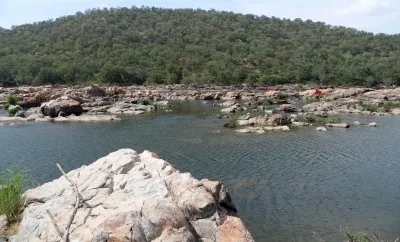
The Mekedatu dam is a proposed reservoir project on the Cauvery river in Karnataka, near the confluence with the Arkavathi river. Tamil Nadu opposes it, arguing the structure could reduce downstream water flows critical to the state's agriculture and violates inter-state water-sharing agreements.
What did the Ministry of Jal Shakti say in the Rajya Sabha that sparked the row?
According to Annamalai, the Ministry stated in the Rajya Sabha that the Supreme Court's 16 February 2018 judgment on the Cauvery dispute did not explicitly require Karnataka to obtain consent from Tamil Nadu, Kerala, and Puducherry before constructing any new structure on the river. Tamil Nadu leaders say this contradicts earlier assurances.
What was the Centre's earlier position on Mekedatu consent?
On 5 August 2021, then Union Jal Shakti Minister Gajendra Singh Shekhawat stated in Parliament that Karnataka's permission to prepare a Detailed Project Report for Mekedatu was conditional, and that no dam could be built across the Cauvery without downstream states' consent under the Inter-State River Water Disputes Act.
Why does Annamalai allege a political motive behind the change?
Annamalai alleged that the apparent shift in the Centre's position appeared to be influenced by Karnataka's electoral politics, warning that overlooking Tamil Nadu's farmers' interests for political reasons would have serious consequences.
What has Annamalai demanded from the Centre?
He has urged the Centre to clarify its stand, uphold downstream states' rights, and resolve the Cauvery issue strictly within the legal framework — while cautioning against any step that could damage Tamil Nadu-Karnataka relations.