NEET retest security 'military-style', says Annamalai; warns of student stress
Synopsis
Annamalai is calling out a paradox at the heart of the NEET retest: a security apparatus so intense — CRPF, CISF, IAF logistics, PMO monitoring, AI-CCTV — that it may traumatise the very students it is meant to reassure. His critique cuts to a deeper question: can the government restore examination integrity without turning a medical entrance test into a military operation?
Key Takeaways
Annamalai of 'We The Leaders' criticised the security framework for the NEET retest scheduled on 21 June .
The protocol reportedly involves CRPF , CISF , Indian Air Force logistics, four-layer AI-enabled CCTV , biometric verification, and PMO monitoring.
Annamalai warned that multi-stage frisking and scrutiny could heighten anxiety among already-pressured candidates.
He objected to the extension of exam duration from 180 minutes to 195 minutes , calling it an added burden.
He argued the approach contradicts NEP 2020 's goal of reducing examination-related stress.
Candidates have also reportedly faced difficulties downloading admit cards , adding to existing grievances.
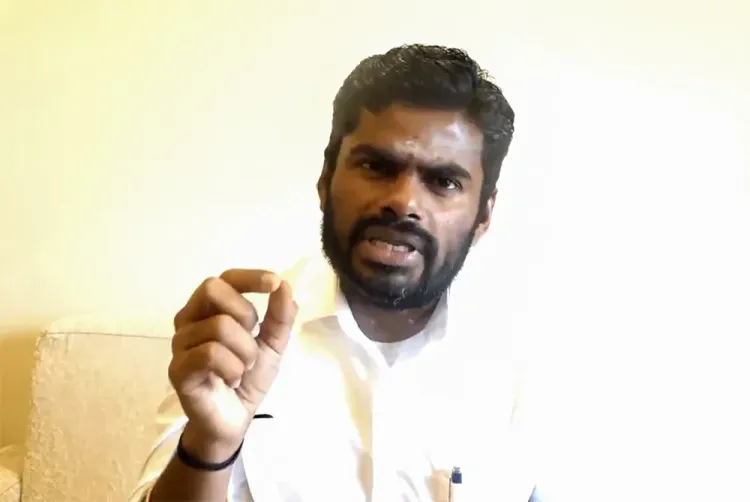
K. Annamalai, founder of 'We The Leaders', on Tuesday criticised the sweeping security arrangements announced for the NEET retest scheduled on 21 June, arguing that the measures risk amplifying student anxiety rather than rebuilding confidence in the examination process. Annamalai, the former Bharatiya Janata Party (BJP) Tamil Nadu president, made his remarks in a social media post, calling the framework disproportionate for an academic entrance test.
What the Security Framework Involves
According to Annamalai, the Union government has assembled an unprecedented security architecture for the retest, put in place following widespread concerns over examination integrity and alleged paper leaks. The protocol reportedly includes a two-tier escort system involving the Central Reserve Police Force (CRPF) and the Central Industrial Security Force (CISF), transportation of examination materials with Indian Air Force support, four-layer AI-enabled CCTV surveillance, biometric and facial recognition verification, multi-stage frisking procedures, and direct monitoring from the Prime Minister's Office.
'Yes, you read it right,' Annamalai reportedly remarked, expressing visible surprise at the scale of the arrangements. He noted that such measures are typically associated with highly sensitive security operations — not the conduct of a national academic examination.
The Concern for Student Well-Being
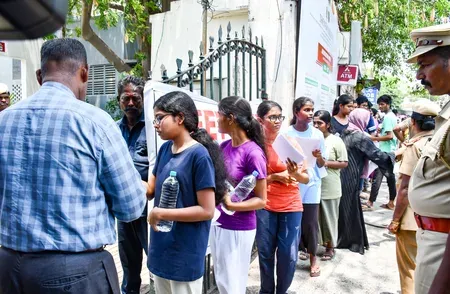
Annamalai acknowledged that the government's objective of preventing malpractice and ensuring transparency was understandable. However, he argued that authorities appeared to have overlooked the psychological impact on candidates. Students will reportedly be subjected to multiple layers of scrutiny before being permitted to enter examination centres — a process he warned could heighten nervousness among aspirants already under considerable pressure.
He also objected to the extension of the examination duration from 180 minutes to 195 minutes, contending that the additional time, combined with more stringent entry procedures, would place a further burden on students who have spent months preparing for the test.
NEP 2020 and the Contradiction
Referring to the National Education Policy (NEP) 2020, Annamalai argued that the current approach runs contrary to the policy's stated objective of reducing examination-related stress and fostering a more student-friendly academic environment. This comes amid a broader national conversation about the mental health of students appearing for high-stakes competitive tests, particularly after the NEET controversy that triggered protests across multiple states.
Admit Card Issues and Existing Grievances
Annamalai also pointed to complaints from candidates regarding difficulties in downloading admit cards and accessing examination-related information. He argued that instead of resolving these existing concerns, the current security-heavy framework risks creating an entirely new set of challenges for students.
What Needs to Change, According to Annamalai
Stressing the need for a balanced approach, Annamalai said authorities must ensure both the integrity of the examination and the mental well-being of candidates appearing for one of India's most competitive entrance tests. As the 21 June retest date approaches, the debate over how to restore trust in NEET — without adding to the burden on students — is set to intensify.
Point of View
It has responded with a security overhaul so theatrical that it may do more to unsettle students than reassure them. Annamalai's critique, while politically convenient for a leader distancing himself from the BJP, raises a legitimate structural question — whether the Union government has conflated visible security with actual examination integrity. The PMO's direct monitoring role is particularly striking; it signals how politically toxic the NEET crisis has become, but also how far administrative accountability has drifted upward rather than being fixed at the institutional level. If admit card access remains broken on retest day, no amount of CRPF presence will restore public confidence in the National Testing Agency.
NationPress
20 Sept 2026
Frequently Asked Questions
What did Annamalai say about the NEET retest security arrangements?
K. Annamalai criticised the security framework as disproportionate for an academic examination, warning it could increase anxiety among students rather than restore confidence. He described the arrangements — involving CRPF, CISF, IAF support, AI-CCTV, and PMO monitoring — as measures typically reserved for highly sensitive security operations.
What does the NEET retest security protocol include?
According to Annamalai, the protocol includes a two-tier CRPF and CISF escort system, Indian Air Force support for transporting examination materials, four-layer AI-enabled CCTV surveillance, biometric and facial recognition checks, multi-stage frisking, and direct monitoring from the Prime Minister's Office.
Why has the NEET retest been scheduled for 21 June?
The NEET retest was ordered following widespread concerns over examination integrity and alleged paper leaks in the original test, which triggered protests across India. The Union government announced the retest along with an overhauled security framework to prevent recurrence.
What is Annamalai's objection to the extended exam duration?
Annamalai objected to the increase in examination time from 180 minutes to 195 minutes, arguing that the additional duration, combined with stricter entry procedures, places an unnecessary extra burden on students who have already spent months preparing.
How does this conflict with NEP 2020?
Annamalai argued that the heavy security approach contradicts the National Education Policy 2020, which explicitly aims to reduce examination-related stress and create a more student-friendly academic environment. He said the current framework moves in the opposite direction.