Anurag Thakur: Cabinet clears ₹11,000 cr equipment scheme
Synopsis
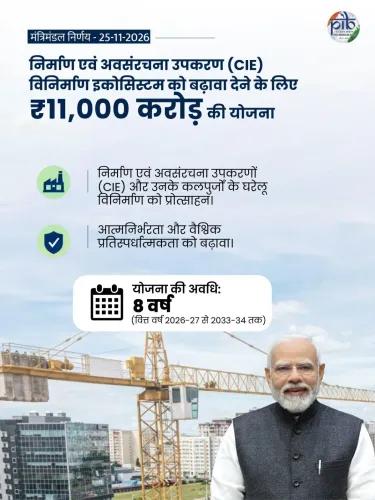
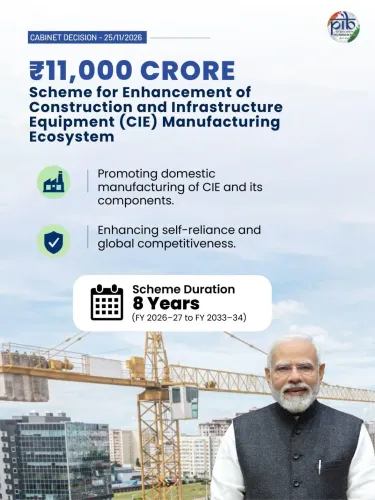
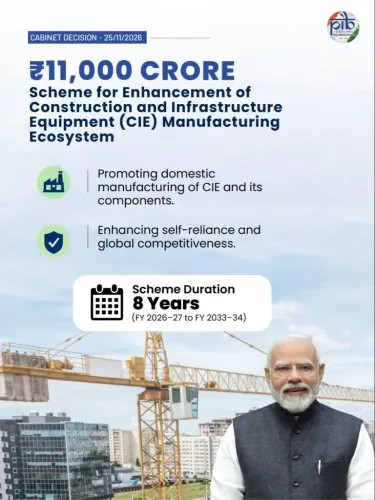
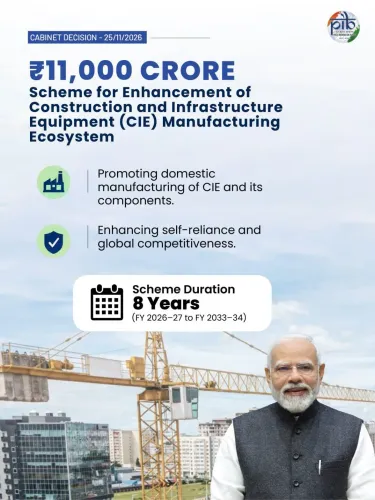
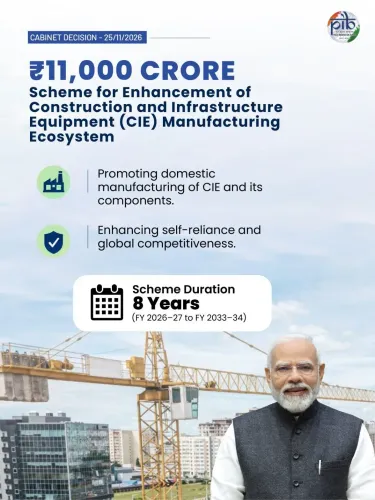
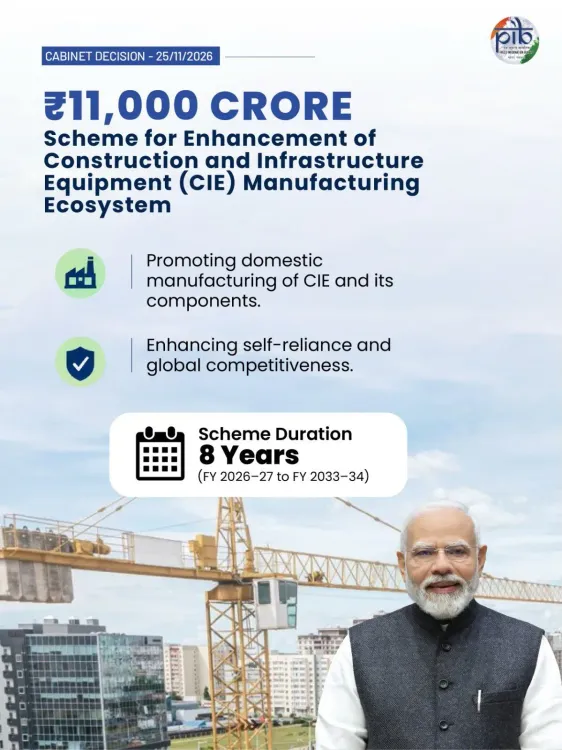
BJP MP Anurag Thakur said the Union Cabinet approved an ₹11,000 crore, eight-year scheme to strengthen Construction and Infrastructure Equipment manufacturing, with 13% to 8% sales-linked incentives for OEMs and component makers plus a dedicated testing facility.
Key Takeaways
BJP MP Anurag Thakur said on 25 November 2026 that the Cabinet approved an ₹11,000 crore scheme for Construction and Infrastructure Equipment manufacturing.
He said the package spans eight years under Prime Minister Narendra Modi 's Atmanirbhar Bharat vision.
Sales-linked incentives of 13% to 8% were described for OEMs and component makers.
The post also cited support for a dedicated testing facility.
Stated aims: higher domestic production, lower import dependence, jobs and global competitiveness.
The structure tracks PLI-style schemes rolled out from 2020 across other manufacturing sectors.
BJP MP Anurag Thakur put a number on India's next manufacturing bet on 25 November 2026: an ₹11,000 crore Cabinet-approved scheme to strengthen Construction and Infrastructure Equipment manufacturing under Prime Minister Narendra Modi's Atmanirbharta (self-reliance) vision. The Hamirpur Lok Sabha MP said the eight-year package would mix sales-linked incentives for OEMs and component makers with support for a dedicated testing facility.
In his post, Thakur said the incentives would taper from 13% to 8% and that the aim is to 'boost domestic production, reduce import dependence, create jobs and enhance global competitiveness.' The hashtag #CabinetDecisions framed the announcement as a Union Cabinet call, not a party talking point.
Sales-linked incentives from 13% to 8%
The design Thakur described follows the Production Linked Incentive model rolled out from 2020 across automobiles, electronics and white goods. Sales-linked payouts reward firms that manufacture and sell in India rather than collecting an upfront capital grant. A taper from 13% to 8% would front-load support, then force plants toward cost discipline as the eight-year clock runs down.
Construction and infrastructure equipment — excavators, cranes, compactors, concrete plants — remains an import-heavy slice of India's capital-goods bill. Naming both OEMs and component makers is the tell: the scheme, as described, is meant to deepen the supply chain, not merely assemble finished machines for highways and metros.
A dedicated testing facility in the package
Thakur also flagged support for a dedicated testing facility. That sits in a longer Make in India pattern: standards and certification so Indian-made machines can clear domestic project specs and export markets. Incentive cheques without a credible test bed rarely convince buyers or regulators. Quality infrastructure is the unglamorous half of import substitution.
The Cabinet, the Union executive's highest decision-making body, has signed off successive sector packages since the Atmanirbhar Bharat economic programme of May 2020. Earlier PLI programmes across 14 sectors carried a cumulative outlay exceeding ₹2 lakh crore. This announcement continues that sector-by-sector march through capital goods and engineering.
Guidelines, disbursement and the test-bed site
What comes next is operational. Detailed scheme guidelines, the incentive disbursement mechanism and the location of the testing facility will decide whether the outlay Thakur cited actually moves steel and hiring. Infrastructure developers sit one step downstream: certified domestic machines would matter for roads, railways, urban metro and housing if production scales.
Eight years is long enough to build plants — and long enough for the taper to expose who cannot compete without the subsidy. That is the test this Cabinet decision now sets for India's construction-equipment floor.
Point of View
Time-bound incentives plus a testing facility suggest an attempt to close both cost and quality gaps that have kept this sector import-dependent. The political signal is continuity: Cabinet-led, sector-specific industrial policy rather than a blanket tariff wall. Execution risk now sits in guidelines, plant decisions and whether component makers, not just assemblers, actually scale.
NationPress
25 Nov 2026
Frequently Asked Questions
What construction equipment scheme did Anurag Thakur announce?
BJP MP Anurag Thakur said the Union Cabinet has approved a scheme to strengthen India's Construction and Infrastructure Equipment manufacturing ecosystem. He linked it to Prime Minister Narendra Modi's Atmanirbhar Bharat vision and said it includes sales-linked incentives and support for a dedicated testing facility.
What is the outlay and duration of the construction equipment scheme?
Thakur said the Cabinet-approved scheme has an outlay of ₹11,000 crore and spans eight years. Those figures are as stated in his 25 November 2026 post on the Cabinet decision.
What incentive rates did Anurag Thakur mention for OEMs?
He said sales-linked incentives would range from 13% to 8% for original equipment manufacturers and component makers. The tapering structure resembles earlier Production Linked Incentive schemes used in other manufacturing sectors since 2020.
How is this scheme linked to Atmanirbhar Bharat?
Thakur framed the Cabinet decision as part of PM Narendra Modi's Atmanirbhar Bharat, or self-reliance, agenda to raise domestic production and cut import dependence. Similar sector-specific incentive packages have been used since the 2020 Atmanirbhar Bharat manufacturing push.
Who stands to benefit from the construction equipment scheme?
As described in the post, OEMs and component makers in construction and infrastructure equipment are the direct incentive recipients, with a testing facility meant to support quality and certification. Infrastructure developers who buy the machines would be the downstream users if domestic production scales.