Anurag Thakur Celebrates Jaipur's Culture, Jewellery and Ghevar
Synopsis
BJP MP Anurag Thakur celebrated Jaipur's global identity on 4 July 2026, highlighting the city's triad of heritage — its historic jauhar legacy, world-renowned jewellery industry, and the iconic Rajasthani sweet ghevar — in a post that underscores India's cultural soft-power narrative.
Key Takeaways
BJP MP Anurag Thakur posted on X on 4 July 2026 celebrating Jaipur as a city of global cultural and culinary renown.
The post highlights three pillars of Jaipur's identity: the historic jauhar tradition, its world-class jewellery industry, and the traditional sweet ghevar .
Jaipur , founded in 1727 , is the capital of Rajasthan and a major global hub for gemstone and gold jewellery craftsmanship.
Ghevar is a disc-shaped Rajasthani sweet closely associated with Jaipur and the Teej festival, with growing interest in GI-tag protections for such traditional products.
The post aligns with a broader BJP pattern of amplifying state-specific cultural symbols to reinforce regional pride within a national framework.
The jewellery and artisan sectors in Jaipur support hundreds of thousands of craftspeople and are significant contributors to Rajasthan's export economy.
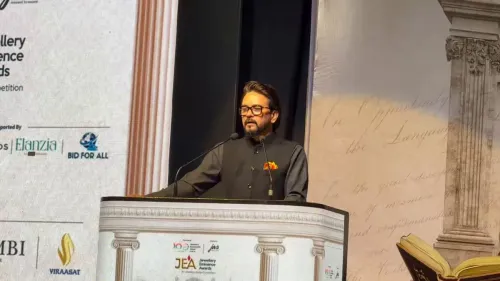
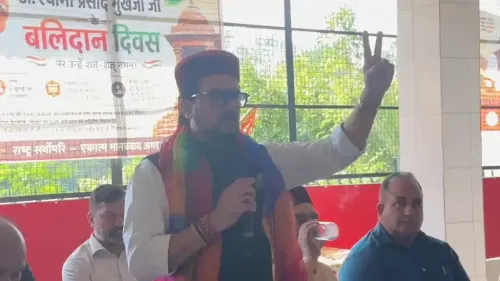
BJP MP Anurag Thakur on Saturday, 4 July 2026, took to X to celebrate Jaipur as a city of global renown — recognised not only for its historic legacy of jauhar (the Rajput tradition of martial honour) but equally for its prized jewellery and the beloved sweet ghevar.
Posting with a location pin for Jaipur, Thakur wrote in Hindi: 'Jaipur na sirf apne jauhar balki jewellery aur ghevar ke liye bhi duniya bhar mein jaana jaata hai' — 'Jaipur is known across the world not only for its jauhar but also for its jewellery and ghevar.'
Context
Jaipur, the Pink City and capital of Rajasthan, has long occupied a distinctive place in India's cultural imagination. Founded in 1727 by Maharaja Sawai Jai Singh II, the city became the historic seat of the Kachwaha Rajputs and grew into one of the subcontinent's foremost centres for craftsmanship, trade, and royal pageantry.
The reference to jauhar — the medieval Rajput practice of collective sacrifice symbolising martial honour — anchors the city in a deep historical narrative that resonates strongly across Rajasthan's cultural identity. Thakur's post weaves together this solemn heritage with Jaipur's vibrant living traditions of craftsmanship and cuisine.
Policy Backdrop
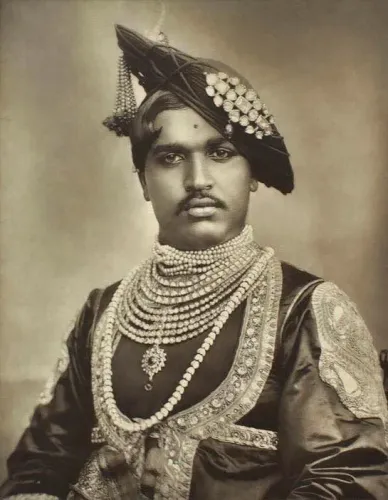
Jaipur's jewellery industry is among the most significant in the world, with the city being a global hub for gemstone cutting, polishing, and gold jewellery manufacture. The sector supports hundreds of thousands of artisans and is a key driver of Rajasthan's export economy.
Ghevar, the disc-shaped, latticed sweet made from flour, ghee, and sugar syrup, is a Rajasthani delicacy particularly associated with Jaipur and the Teej festival. Efforts to secure and promote Geographical Indication (GI) tags for traditional Indian foods and crafts have gained momentum in recent years, with such tags serving as both cultural protection and a commercial soft-power tool.
BJP MPs have periodically highlighted state-specific cultural symbols and GI-tagged products as part of a broader emphasis on intangible heritage, regional pride, and the promotion of artisan communities under national frameworks for tourism and craft development.
Stakeholders and Impact
The post speaks directly to Jaipur's artisan communities, whose livelihoods depend on the continued visibility and demand for the city's jewellery — from kundan and meenakari work to precious and semi-precious gemstone settings. Any boost in national or international attention to these crafts can translate into tangible economic benefit for tens of thousands of craftspeople.
The tourism sector also stands to gain from such cultural amplification. Jaipur received millions of domestic and international visitors in recent years, drawn by its forts, palaces, bazaars, and culinary heritage. Messaging that reinforces the city's multi-layered identity — historical, artisanal, and gastronomic — supports ongoing state and central government tourism promotion efforts.
What's Next
Observers will watch whether posts like this precede any formal policy announcements — such as GI-tag renewals for Rajasthani jewellery or ghevar, new tourism campaigns by the Rajasthan government, or references to Jaipur's craft economy in upcoming parliamentary sessions or national tourism policy updates.
As India continues to position its intangible cultural heritage as a soft-power asset on the global stage, Jaipur's unique combination of history, handicraft, and culinary tradition makes it a recurring and potent symbol in that narrative.
Point of View
Such messaging reflects a practiced instinct for soft-power communication. The choice to foreground jauhar alongside commercial products like jewellery and ghevar is notable: it signals that heritage and economic identity are being consciously fused in political outreach. This fits a wider arc in which the ruling party increasingly frames India's craft and food traditions as national assets deserving both pride and policy attention.
NationPress
4 Jul 2026
Frequently Asked Questions
Why is Jaipur famous for jewellery?
Jaipur is one of the world's foremost centres for gemstone cutting, polishing, and gold jewellery, with a tradition of craftsmanship — including kundan and meenakari work — dating back centuries to the Kachwaha Rajput era.
What is ghevar and why is it associated with Jaipur?
Ghevar is a traditional disc-shaped Rajasthani sweet made from flour, ghee, and sugar syrup, especially popular during the Teej festival; Jaipur is considered its culinary heartland and is closely identified with its preparation.
What did Anurag Thakur say about Jaipur?
On 4 July 2026, Anurag Thakur posted on X that 'Jaipur is known across the world not only for its jauhar but also for its jewellery and ghevar,' celebrating the city's cultural and culinary heritage.
What is jauhar in Rajput history?
Jauhar was a medieval Rajput practice of collective self-sacrifice by women to preserve honour in the face of defeat; it is a deeply symbolic part of Rajasthan's historical narrative and is strongly associated with the region's martial identity.
Does Jaipur's jewellery have a GI tag?
Jaipur's jewellery traditions, including its gemstone and gold craftsmanship, have been subjects of GI-tag discussions as part of broader national efforts to protect and promote India's traditional craft heritage.