Rajasthan CMO: Farmers Get Urea at Rs 300 Under Modi Subsidy Push
Synopsis
The Rajasthan CMO on 4 July 2026 credited PM Narendra Modi's government with ensuring farmers receive urea at just Rs 300 per bag, backed by subsidies worth lakhs of crores, under India's long-running urea price-control regime.
Key Takeaways
The Chief Minister's Office of Rajasthan posted on 4 July 2026 that farmers are receiving urea at Rs 300 per bag due to central government subsidies.
The post attributes the initiative to Prime Minister Narendra Modi and the Union government's subsidy framework.
India's Nutrient Based Subsidy Scheme (2010) keeps urea under full price control, with the MRP fixed at Rs 242 per 45 kg bag since 2012-13 .
The central government absorbs the gap between production costs and the retail price, resulting in subsidies running into lakhs of crores of rupees annually.
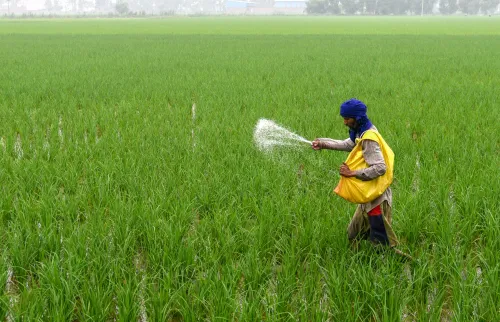
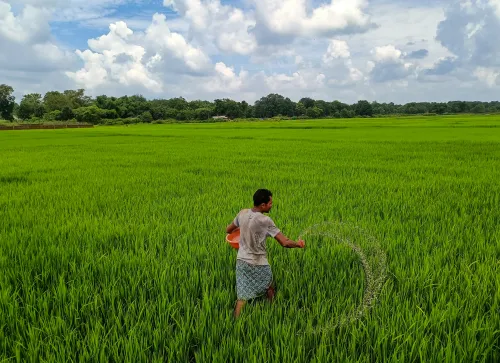
Rajasthan is a major urea-consuming state, with wheat, mustard, and bajra farmers among the primary beneficiaries.
Future policy focus will be on the next Union Budget fertilizer allocation and possible direct benefit transfer pilots for urea in Rajasthan.
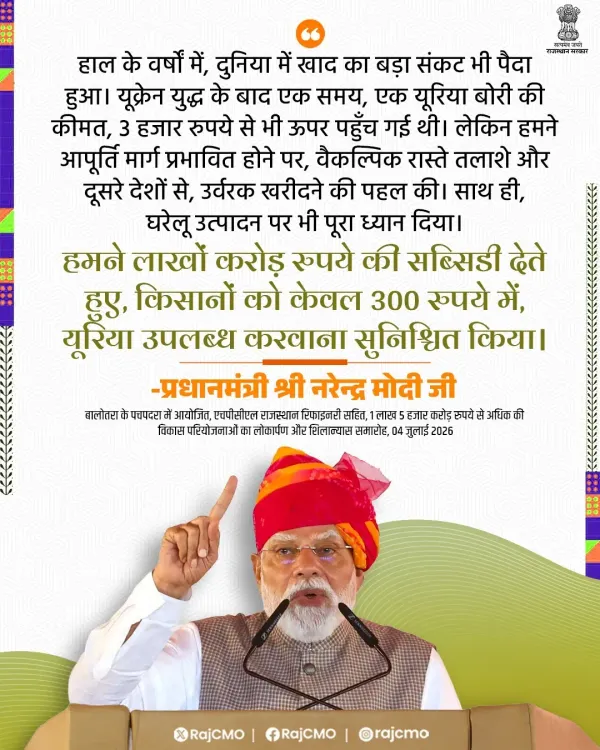
The Chief Minister's Office of Rajasthan on Saturday, 4 July 2026, credited the Narendra Modi-led central government with ensuring that farmers across the state receive urea at just Rs 300 per bag, backed by subsidies running into lakhs of crores of rupees.
The post, shared on the official CMO handle, stated: 'हमने लाखों करोड़ रुपये की सब्सिडी देते हुए, किसानों को केवल 300 रुपये में, यूरिया उपलब्ध करवाना सुनिश्चित किया.' ('We have ensured, while providing subsidies worth lakhs of crores of rupees, that farmers receive urea at just Rs 300.') The message was tagged to Prime Minister Narendra Modi and carried the hashtags #PMModi4ViksitRajasthan and #आपणो_अग्रणी_राजस्थान (Our Leading Rajasthan).
Context
Rajasthan is one of India's largest agricultural states, with millions of farmers cultivating wheat, mustard, and bajra across its vast semi-arid tracts. Urea is the single most consumed nitrogenous fertilizer in the state, making its retail price a direct determinant of farm input costs and, ultimately, rural household income. The CMO's post frames the affordable urea price as a joint achievement of the state and central governments.Policy Backdrop
India has maintained a controlled retail price for urea for over a decade. The Nutrient Based Subsidy (NBS) Scheme, launched in April 2010, delinked subsidies from the maximum retail price for most fertilizers but kept urea under full price control. The urea MRP was fixed at Rs 242 per 45 kg bag from 2012-13 onward, with the central government absorbing the difference between production or import costs and the fixed retail price through rising budgetary allocations. Over successive years, the fiscal outlay for fertilizer subsidies has grown substantially as global natural gas prices — the primary feedstock for urea manufacturing — have fluctuated. India now operates one of the world's largest fertilizer subsidy regimes, with urea receiving the bulk of support. The CMO's reference to 'lakhs of crores in subsidies' reflects this long-running fiscal commitment by the Union government.Stakeholders and Impact
The primary beneficiaries are small and marginal farmers across Rajasthan, who depend on affordable urea to sustain crop yields without bearing the full burden of international fertilizer price volatility. Fertilizer manufacturers receive subsidy payments directly from the central government, allowing them to sell at the government-fixed price without incurring losses. For the Government of Rajasthan, aligning with the central subsidy narrative also carries political weight: it positions both the state administration and the Modi government as partners in farmer welfare, particularly ahead of ongoing rural outreach under the #आपणो_अग्रणी_राजस्थान campaign. Agricultural economists have periodically flagged that heavy urea subsidisation can encourage overuse, distorting nutrient balance in soil, though the immediate affordability benefit to farmers remains significant.What's Next
Attention will now turn to the next Union Budget's fertilizer subsidy allocation and whether the central government revises the urea MRP or expands direct benefit transfer (DBT) pilots to target subsidies more precisely. Any change in the retail price or delivery mechanism would directly affect Rajasthan's farming community, making this a key policy variable to watch in the coming months. The state government's continued amplification of the subsidy message suggests that farmer welfare will remain a central theme in its public communications.Point of View
The state administration is consciously weaving its identity into the Union government's broader agrarian outreach. The framing of 'lakhs of crores in subsidies' serves a dual purpose: it signals fiscal seriousness to rural voters while deflecting scrutiny of whether the subsidy architecture is efficiently targeted. The post arrives at a time when DBT reforms for urea remain a live policy debate, suggesting the government prefers to consolidate the price-control narrative rather than signal imminent structural change.
NationPress
5 Jul 2026
Frequently Asked Questions
What is the price of urea for farmers in Rajasthan in 2026?
According to the Rajasthan CMO's post of 4 July 2026, farmers in Rajasthan are being provided urea at just Rs 300 per bag, made possible by central government subsidies worth lakhs of crores of rupees.
Why is urea so cheap for farmers in India?
India keeps urea prices artificially low through a price-control policy under which the central government pays subsidies directly to manufacturers, absorbing the difference between the cost of production and the fixed retail price. The Nutrient Based Subsidy Scheme, launched in 2010, formalised this arrangement.
What is the Nutrient Based Subsidy (NBS) Scheme?
The NBS Scheme, introduced in April 2010, provides fixed per-kilogram subsidies on nutrients in decontrolled fertilizers while keeping urea under full government price control, ensuring affordable access for Indian farmers.
How much does the Indian government spend on fertilizer subsidies?
The Indian government allocates tens of thousands of crores of rupees annually to fertilizer subsidies, with urea receiving the largest share. The Rajasthan CMO described the total outlay as running into 'lakhs of crores of rupees.'
What crops in Rajasthan depend on urea?
Rajasthan's major urea-consuming crops include wheat, mustard, and bajra, which are cultivated across the state's extensive agricultural belt and are directly supported by the affordable urea pricing policy.