Chhattisgarh CMO: Nano Urea Boosting Farm Yields, Cutting Costs
Synopsis
The Chhattisgarh Chief Minister's Office highlighted on 16 June 2026 that farmers are embracing nano urea, citing improved yields, better produce quality, and lower input costs — underscoring the state's push for modern, sustainable agriculture.
Key Takeaways
The Chief Minister's Office of Chhattisgarh posted on 16 June 2026 promoting nano urea adoption among the state's farmers.
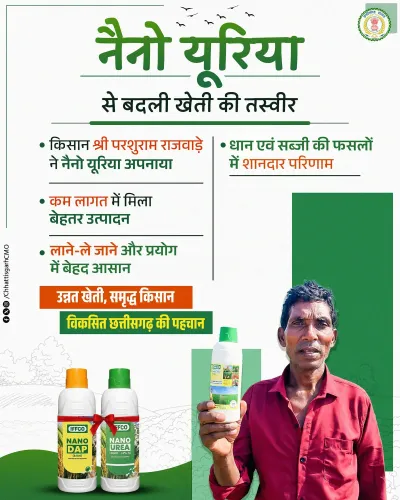
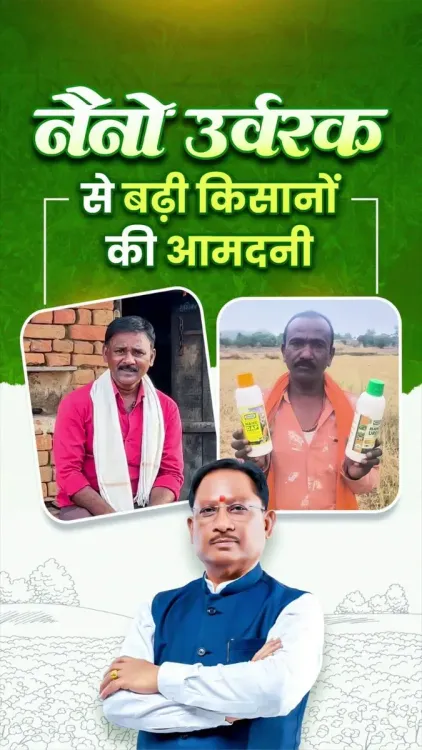
Farmers quoted in the post say nano urea has increased crop yields and improved produce quality.
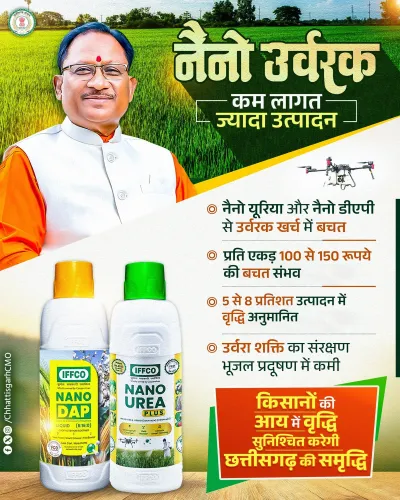
Modern agricultural technology is credited with reducing input costs and raising farm income.
IFFCO commercially launched nano urea in 2021 as a domestically produced, import-substituting alternative to conventional urea.
Central and state governments back nano fertilizers to cut the urea subsidy burden and reduce environmental nitrogen runoff.
Long-term soil-health and yield data from independent studies will be critical to validating wider adoption.
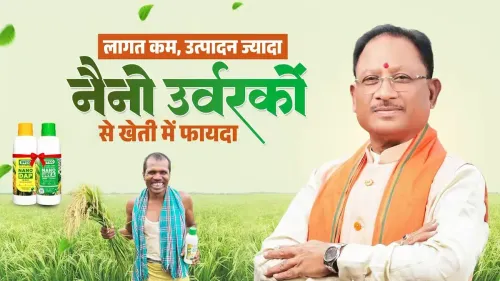
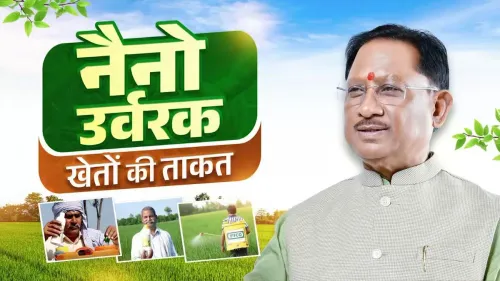
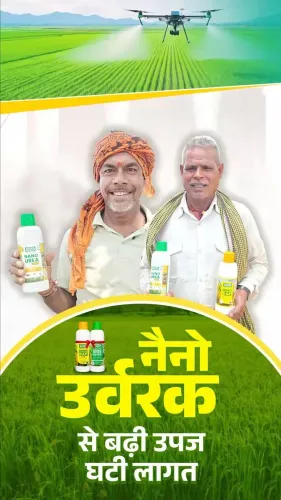
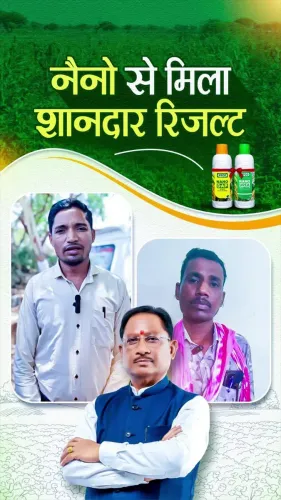
The Chief Minister's Office of Chhattisgarh on 16 June 2026 shared farmer testimonials crediting nano urea with higher crop yields and improved produce quality, positioning the liquid fertilizer as a cornerstone of the state's agricultural modernisation push.
Context
The CMO's post, shared under the hashtags #NanoUrea and #SushasanSarkar ('Good Governance Government'), quotes farmers as saying: 'Nano urvarak ke prayog se paidavar badhi hai aur gunvatta bhi behtar hui hai' ('The use of nano fertilizer has increased output and improved quality'). The post adds that modern farming technology is making cultivation easier, reducing input costs, and raising production and income.
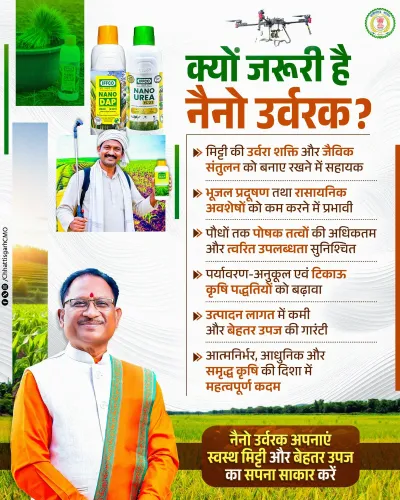
The message reflects a broader state-level campaign to move farmers away from conventional granular urea toward liquid nano formulations that can be sprayed directly on crops, requiring significantly smaller quantities per acre.
Policy Backdrop
IFFCO — India's largest farmer-owned fertilizer cooperative — commercially launched nano urea in 2021 after extensive field trials, marketing it as a domestically produced alternative to imported conventional urea. A 500 ml bottle of nano urea is promoted as equivalent to one bag of conventional urea, drastically cutting transportation and storage costs.
Central and state governments have aligned behind nano fertilizers to trim the country's massive urea subsidy bill, reduce dependence on imports, and curb environmental damage caused by excess nitrogen runoff into soil and water bodies. Chhattisgarh, a predominantly agrarian state in central India, has integrated nano urea awareness and demonstration drives into its existing fertilizer distribution network.
The initiative also dovetails with the national goal of sustainable agriculture, which seeks to lower chemical input loads while maintaining or improving productivity for small and marginal farmers — the primary beneficiaries of such schemes.
Stakeholders and Impact
Small farmers stand to gain the most from nano urea adoption. Lower per-acre input costs, easier storage in liquid form, and the potential for better yields could meaningfully improve net farm incomes in a state where agriculture remains the primary livelihood for a large share of the population.
Fertilizer retailers and cooperative societies are key intermediaries: their willingness to stock and demonstrate nano urea products determines how quickly adoption scales. State-run awareness programmes and farmer producer organisations play a parallel role in building confidence among first-time users.
What's Next
Independent agronomic studies on long-term yield outcomes and soil-health effects of nano urea remain an important benchmark for validating the claims being amplified by the state government. Researchers and farm-policy observers will watch whether Chhattisgarh moves to include nano fertilizers as a mandatory or subsidised component within its fertilizer supply chain.
If the state formalises procurement or subsidy targets for nano urea, it could serve as a replicable model for other central Indian states with similar agro-climatic profiles, accelerating the national shift toward precision nutrient management.
Point of View
Perhaps, to reinforce the ruling dispensation's agrarian credentials. The post fits a national pattern in which both central and state governments use social media to build grassroots visibility for input-cost-reduction programmes ahead of policy reviews. The real test lies beyond the testimonials: independent yield data and soil-health assessments will determine whether nano urea can justify a permanent, subsidised place in state supply chains. Until that evidence consolidates, the campaign remains as much a political communication exercise as an agricultural one.
NationPress
19 Sept 2026
Frequently Asked Questions
What is nano urea and how does it differ from conventional urea?
Nano urea is a liquid fertilizer developed by IFFCO that delivers nitrogen to crops in nanoparticle form via foliar spray, requiring far smaller quantities — a 500 ml bottle is promoted as equivalent to a full bag of conventional granular urea — thereby cutting storage, transport, and input costs.
Is the Chhattisgarh government promoting nano urea for farmers?
Yes. The Chief Minister's Office of Chhattisgarh actively promotes nano urea as part of the state's agricultural modernisation agenda, sharing farmer testimonials on official channels and running awareness programmes through cooperative networks.
When was nano urea launched in India?
IFFCO commercially launched nano urea in 2021 following field trials, positioning it as a domestically produced solution to reduce India's dependence on imported conventional urea and lower the government's fertilizer subsidy outgo.
What are the benefits of nano urea for small farmers?
Small farmers can benefit from lower per-acre input costs, easier liquid storage, reduced environmental runoff, and — as claimed in farmer accounts shared by the Chhattisgarh CMO — improved crop yields and produce quality.
What are the concerns about nano urea adoption in India?
Independent agronomists caution that long-term data on soil health and sustained yield performance is still limited. Wider adoption also depends on reliable supply through retail and cooperative channels and on farmer training in correct application techniques.