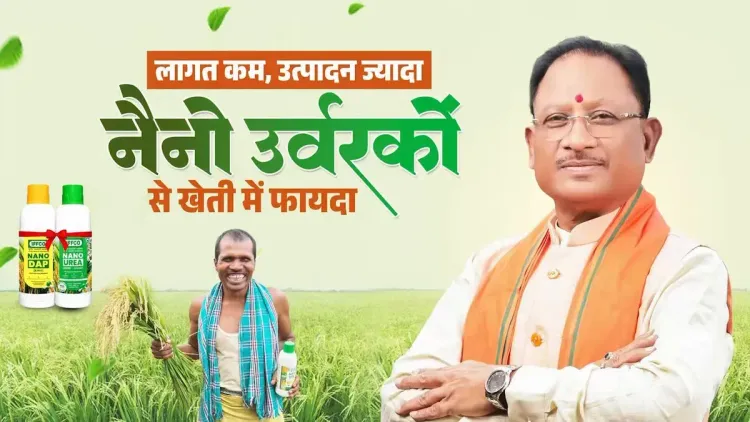
CM Sai Hears Farmers Praise Nano DAP, Urea on DD Chhattisgarh
Synopsis
Progressive farmers told Chief Minister Vishnu Dev Sai on DD Chhattisgarh's Kisan Samvad that Nano DAP and Nano Urea have reduced input costs, raised production, and improved crop quality — reinforcing the state's push to mainstream nano fertilisers ahead of Kharif 2026.
Key Takeaways
The Chief Minister's Office of Chhattisgarh shared farmer testimonies from the DD Chhattisgarh programme Kisan Samvad on 17 June 2026 .
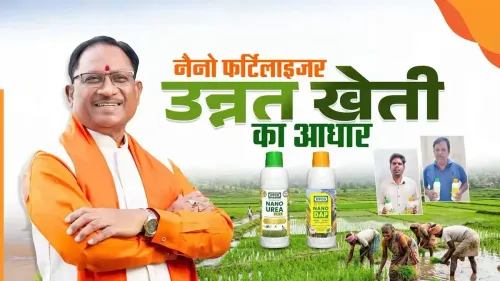
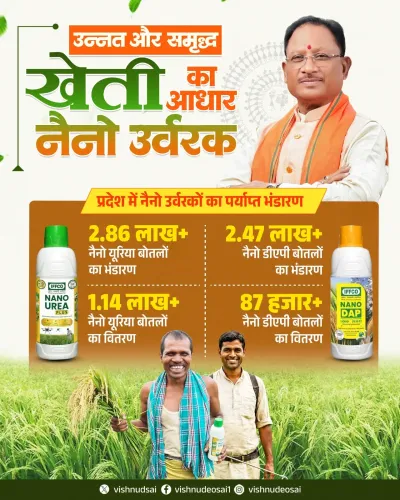
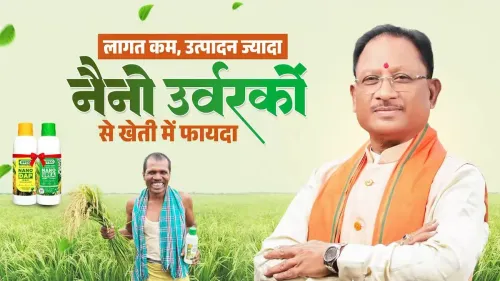
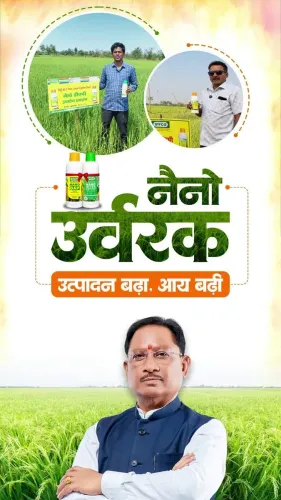
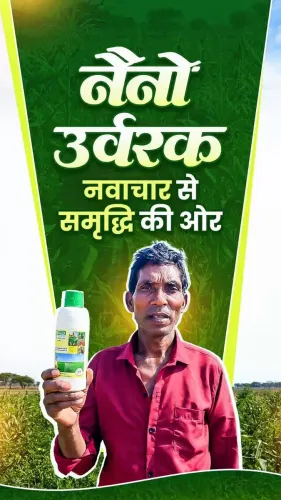
Progressive farmers reported that Nano DAP and Nano Urea have lowered input costs, increased production, and improved farming quality.
Chief Minister Vishnu Dev Sai was present during the special broadcast, lending direct political visibility to the nano-fertiliser push.
Nano Urea was commercially launched by IFFCO in 2021 under the Atmanirbhar Bharat programme to reduce urea imports and fertiliser subsidy outgo.
Chhattisgarh's adoption fits a national pattern of states integrating nano fertilisers into agricultural extension and PM-KISAN platforms.
Kharif 2026 district-level yield and cost data will be the next key indicator of the programme's real-world impact.
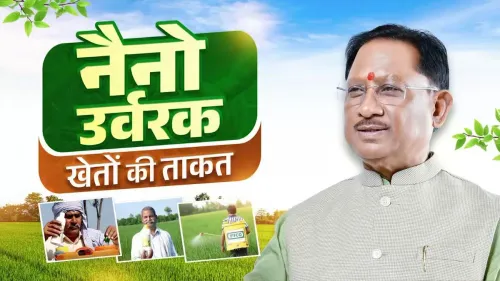
The Chief Minister's Office of Chhattisgarh shared on 17 June 2026 that progressive farmers from across the state told Chief Minister Vishnu Dev Sai on the special programme Kisan Samvad (Farmer Dialogue) — broadcast on DD Chhattisgarh — how nano fertilisers are transforming their agricultural practices by cutting costs and raising yields.
Context
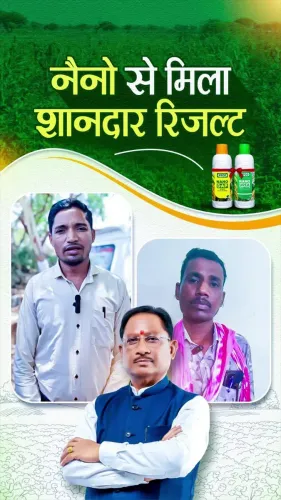
During the Kisan Samvad episode, farmers testified directly to Chief Minister Sai that adoption of Nano DAP and Nano Urea has produced three measurable outcomes: lower input costs, higher crop output, and a positive improvement in overall farming quality. The CMO quoted farmers as saying that 'nano urea aur nano DAP ke prayog se lagat mein kami, utpadan mein vriddhi tatha kheti ki gunvatta mein sakaratmak sudhar' — meaning reduced costs, increased production, and qualitative improvement in cultivation — are now visible on the ground.
DD Chhattisgarh, the regional Doordarshan kendra, has been running farmer-focused outreach programmes like Kisan Samvad as part of a broader public broadcasting mandate to connect state policy with rural communities.
Policy Backdrop
Nano Urea is a liquid nano-fertiliser developed to improve nitrogen-use efficiency and reduce dependence on conventional urea. It was commercially launched by IFFCO in 2021 under the Union government's Atmanirbhar Bharat push to curb urea imports and lower the national fertiliser subsidy burden. Nano DAP, a nano-technology-based diammonium phosphate fertiliser, followed as part of the same effort to enhance nutrient absorption while reducing the quantity of fertiliser needed per acre.
Since 2021, the Union government and fertiliser cooperatives have scaled nano-fertiliser production and field demonstrations nationally, with the dual goal of reducing subsidy outgo and addressing soil and water pollution linked to over-application of conventional fertilisers. Several states have woven these products into existing agricultural extension networks and PM-KISAN outreach platforms.
Stakeholders and Impact
The primary beneficiaries highlighted in the programme are Chhattisgarh's progressive farmers — early adopters who have demonstrated that nano fertilisers can deliver tangible economic gains. Their on-air testimonies carry weight as peer validation, which extension workers typically find more persuasive than government messaging alone.
For the state government, the endorsements align with a broader agenda of improving farm incomes and reducing input costs — two metrics central to Chief Minister Sai's agricultural agenda since he assumed office in December 2023. Lower per-acre input expenditure directly improves net farm income without requiring a price increase in output markets.
What's Next
Attention will now turn to Kharif 2026 yield and cost data from Chhattisgarh districts, which will offer the first large-scale, season-level evidence of nano-fertiliser impact under the current administration. Analysts and farmer organisations will watch whether the state announces subsidised nano-fertiliser distribution or integrates these products with the existing Soil Health Card scheme in an upcoming budget or policy statement.
If ground-level results from this Kisan Samvad outreach translate into measurable productivity gains, Chhattisgarh could emerge as a model for other agricultural states seeking to reduce conventional fertiliser dependence while sustaining or improving crop output.
Point of View
The Chhattisgarh government is deploying a well-worn but effective communication strategy: peer-to-peer validation that sidesteps scepticism about top-down policy claims. The episode fits a national pattern in which BJP-governed states have actively championed IFFCO's nano-fertiliser products as a visible deliverable under the Atmanirbhar Bharat agricultural agenda. For CM Sai, whose tenure has coincided with pressure to demonstrate farm-income improvements, positive Kisan Samvad coverage provides both policy momentum and electoral optics ahead of the Kharif season. The real test, however, will be whether district-level yield and cost data from Chhattisgarh corroborate the on-air testimonies at scale.
NationPress
19 Sept 2026
Frequently Asked Questions
What is Nano Urea and how does it help farmers in Chhattisgarh?
Nano Urea is a liquid nitrogen fertiliser developed by IFFCO that delivers nutrients at the nano scale, improving absorption and reducing the quantity needed per crop cycle. Chhattisgarh farmers told Chief Minister Vishnu Dev Sai on DD Chhattisgarh's Kisan Samvad that it has lowered their input costs and raised production.
What is Nano DAP and how is it different from conventional DAP?
Nano DAP is a nano-technology-based diammonium phosphate fertiliser that enhances phosphorus absorption in crops while requiring smaller quantities than conventional DAP granules. Farmers on the Kisan Samvad programme reported qualitative improvements in crop health after switching to Nano DAP.
What is Kisan Samvad on DD Chhattisgarh?
Kisan Samvad is a special farmer-focused programme broadcast on DD Chhattisgarh, the regional Doordarshan channel, designed to connect state agricultural policy with rural cultivators through direct dialogue, including interactions with senior officials and the Chief Minister.
When did India launch Nano Urea commercially?
IFFCO commercially launched Nano Urea in 2021 under the Union government's Atmanirbhar Bharat initiative, aimed at reducing India's dependence on imported urea and cutting the national fertiliser subsidy bill.
What are the expected next steps for nano fertiliser adoption in Chhattisgarh?
Observers will watch Kharif 2026 yield and cost data from Chhattisgarh districts for large-scale evidence of impact. The state may also announce subsidised nano-fertiliser distribution or link these products with the Soil Health Card scheme in upcoming budget or policy announcements.